Growing tomatoes can be a very rewarding and frustrating experience, especially for a northern garden with a growing season of around 100 days. But with a moderate consumption rate of tomato products throughout the year, they are one fruit I feel the need to grow. However, without a greenhouse to do the growing in, the experiences are ever changing and so experimentation with varieties is key. With so many tomato varieties available, each having their own attributes regarding ripening rates, fruit size, pounds per plant, pH, flavor and peel thickness, to name a few, finding the perfect tomato or combination of tomatoes for eating and/or preserving creates a yearly garden of experimentation and trial. But with so much experimenting going on, it seemed prudent to document the results as I continue with The Tomato Trials.
The Tomato Trials - Context
As I explored in The Tomato Trial - Results of 2023 Tomato Trial and What's New for 2024, there are many categories of tomatoes ranging from paste to slicing. Depending on what one is planning to do with the tomatoes, each category can bring a different element to the variety selection process. Although I enjoy a fresh tomato, preservation is my main focus. So although I grow a number of paste type tomatoes, I find that the diversity of flavors is more varied in heirloom tomatoes that fall into the slicing and beefsteak categories. A supplemental focus is also being able to keep tomatoes as far into winter as possible so that I do not need to buy tomatoes from the store or as I would likely do, do without.
But finding those varieties to trial in the local greenhouses is difficult. And so, as I explored in Tomatoes - A guide to choosing tomato varieties, a number of selection criteria are employed to decide on the varieties to plant. These criteria were used to decide on the varities I planted in 2023. Fast forward to 2024, based on the performance of those varieties, I was able to add that information to the selection process for 2024 as I discussed in The Tomato Trial - Results of 2023 Tomato Trial and What’s New for 2024. Also added to this are new varieties that I learned about and added to the equation. After all was said and done, I planted 14 varieties in 2023 totaling 165 plants and the following year I put in 22 varieties, some the same as 2023, totaling 166 plants.
Following a similar process I did in 2023, the 2024 varieties were started indoors under grow lights on March 31, 2024, five days later than in 2023. My thinking was that I would have less leggy plants if I started later. And although this would have worked well, I ended up not getting the tomatoes into the ground until June 24 and June 25. As a result, the plants were quite leggy to say the least. Not a big deal though, just plant them a bit deeper and tie to the trellis I use to support the tomato vines. I go into my trellising method more in depth in The Tomato Trial - Results of 2023 Tomato Trial and What's New for 2024. By August 1 the tomatoes were established and starting to put on some good growth.
It is worth mentioning that I do not prune my tomatoes. Rather, I simply tie up the runners as they immerge to maintain air flow and a walking path. Some removal of lower branches that touch the ground does happen in the early season.
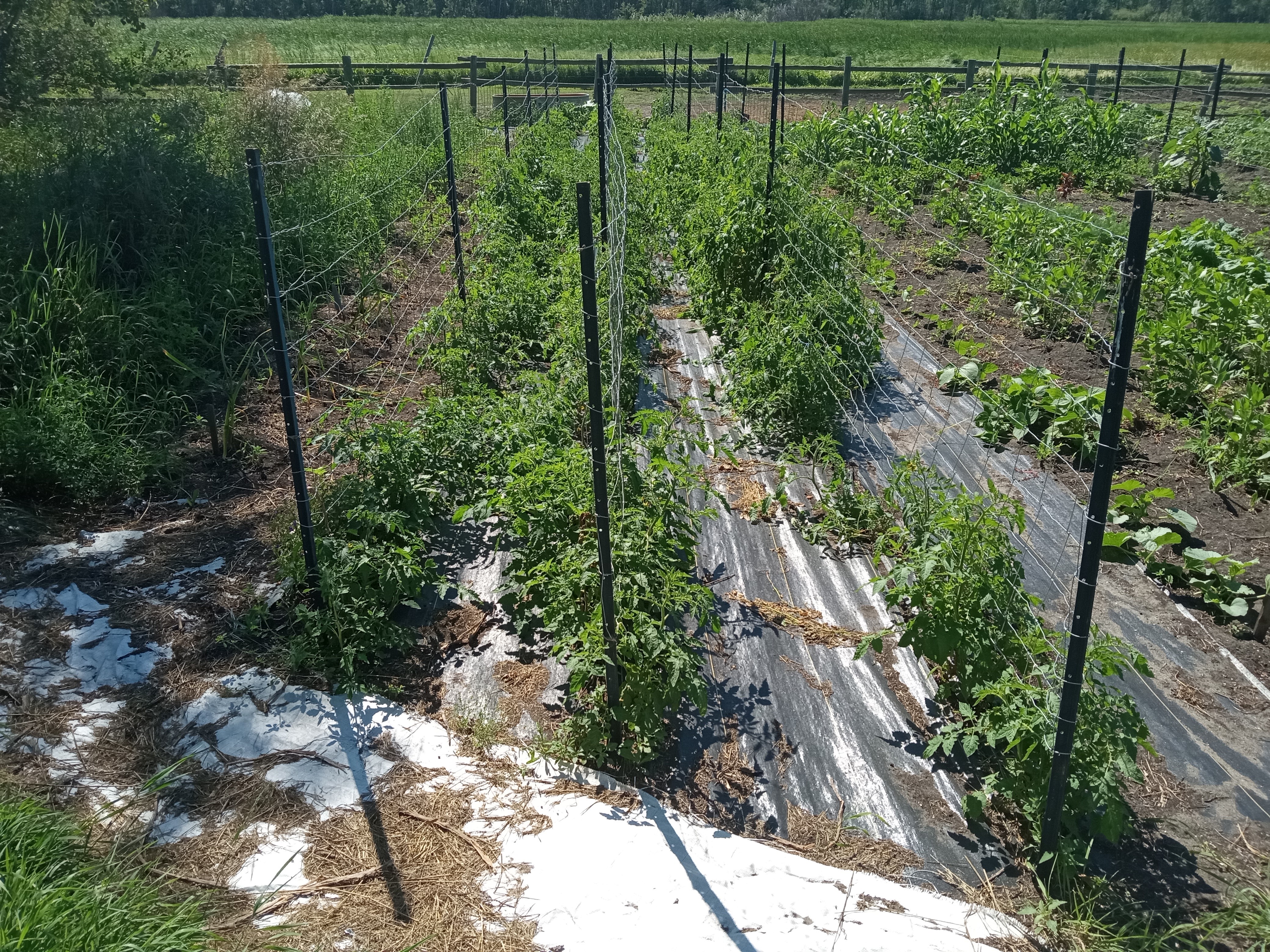
By August 16, things had really taken off. With the tremendous growth, I was able to harvest my first vine ripened tomatoes by September 12.
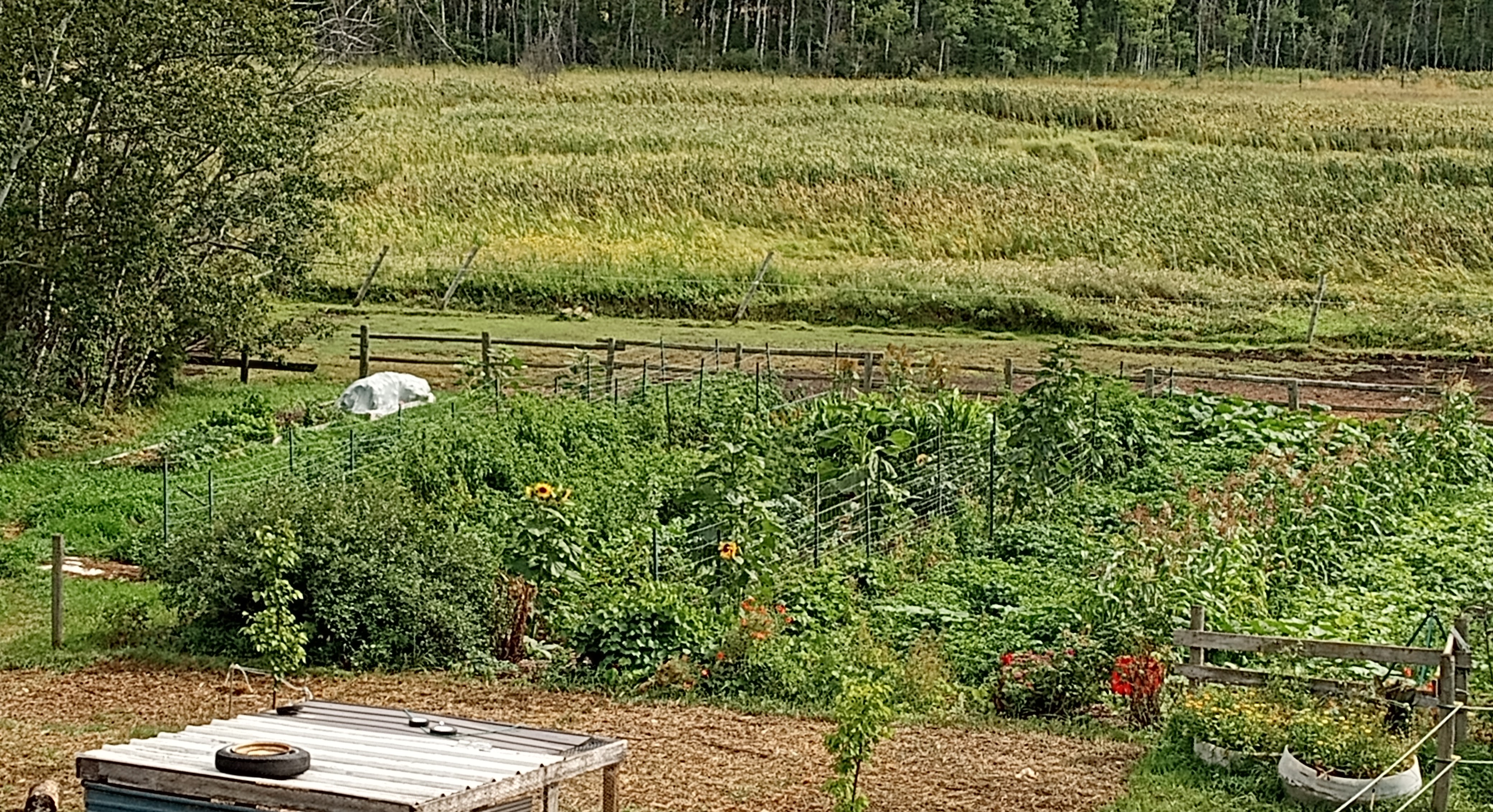
The Tomato Trials - Harvest
With not owning a green house or having built a row tunnel in which to grow tomatoes, I am left to the affects of nature. But despite those affects I do get a few vine ripened tomatoes. In 2023 I was able to harvest 5.57% of my total harvest as vine ripened. However, in 2024, due to planting the tomatoes approximately 10 days later, that percentage dropped to 2.13% despite having more frost free growing days at 104 versus the 95 days in 2023. Although I recorded a number of specifics, I neglected to record which varieties ripened on the vine. I will have to remember to do this in 2025.
With such a low percentage of vine ripening, picking the tomatoes green and ripening them indoors is the only way for me to get ripe tomatoes. And that is what I did from September 25 to September 28, 2024, an average of 104 days from planting. My house became over run with tomatoes once again;
my bedroom,
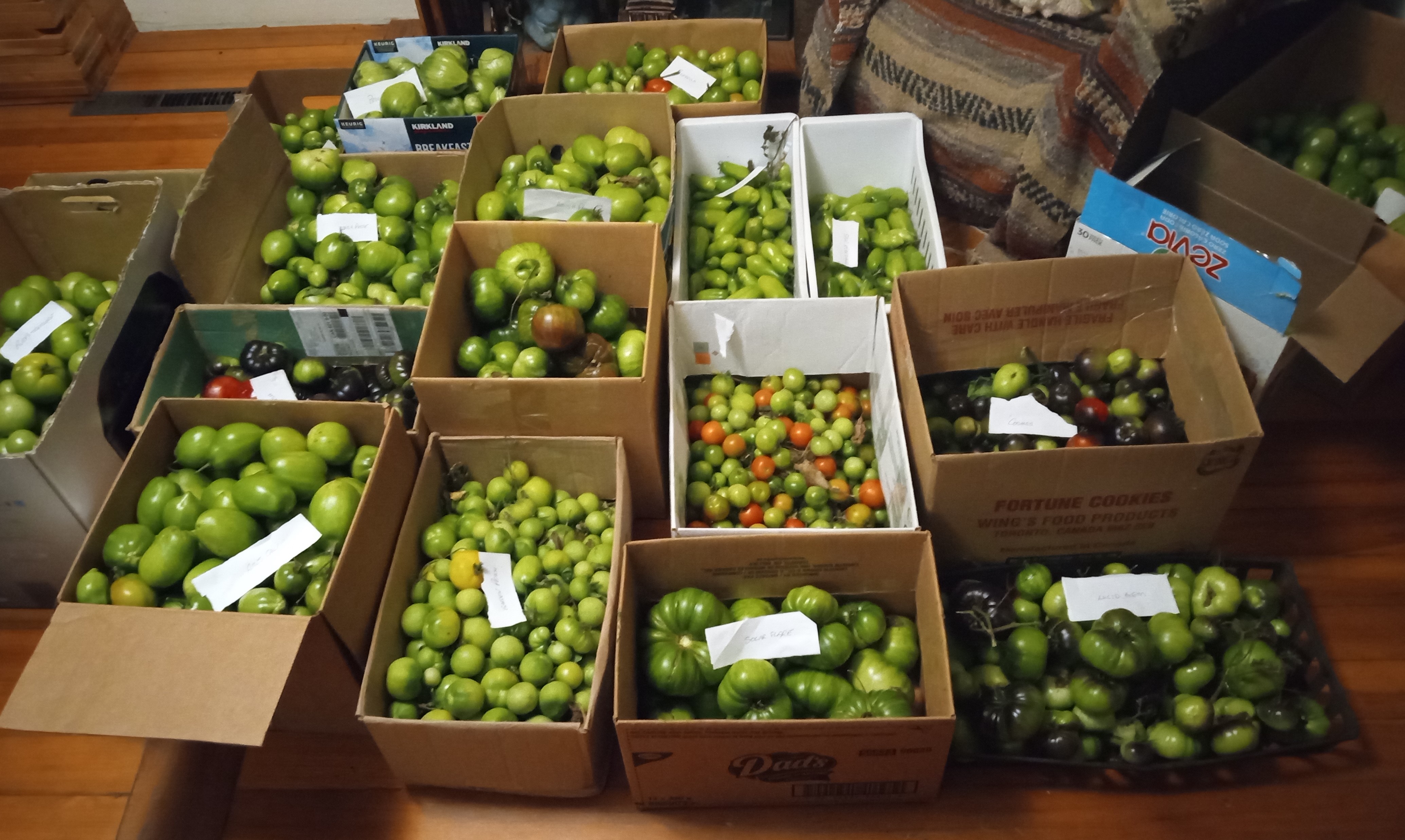
the bathroom,
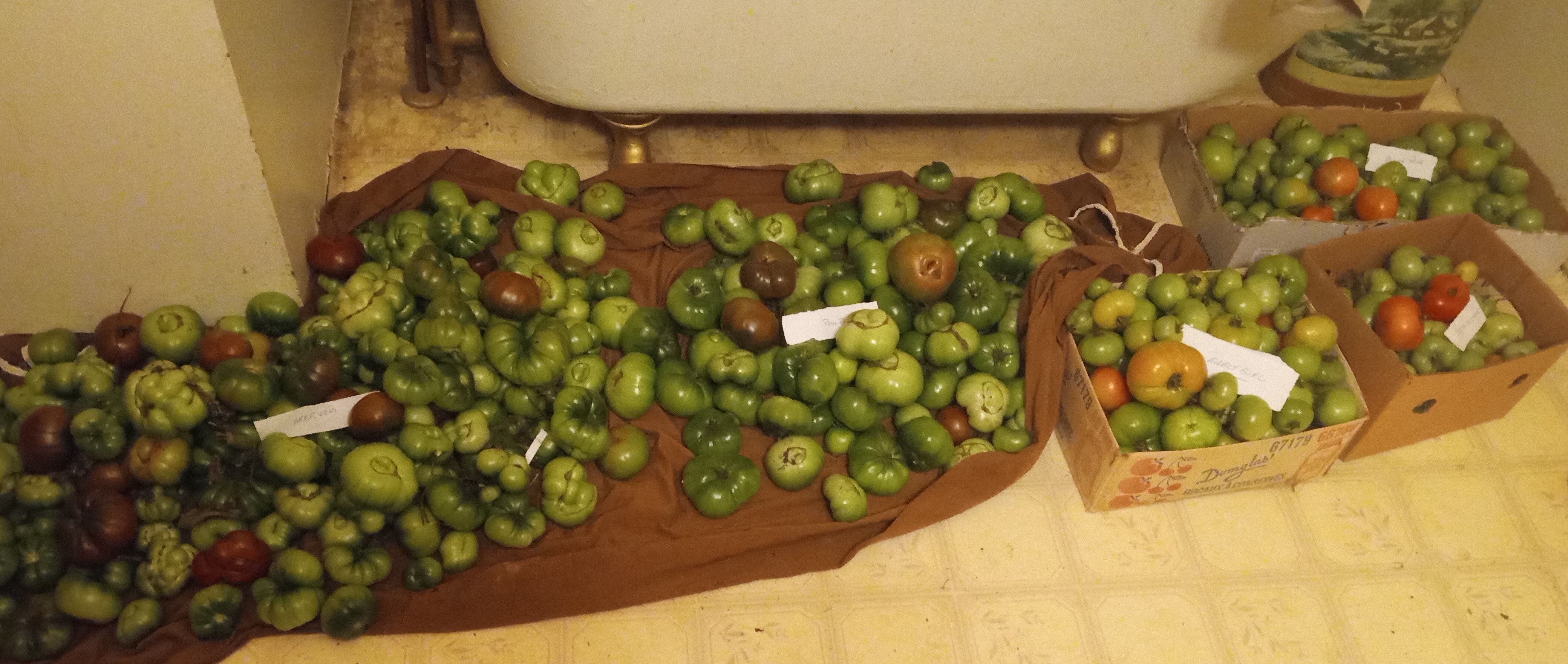
and the spare bedroom.
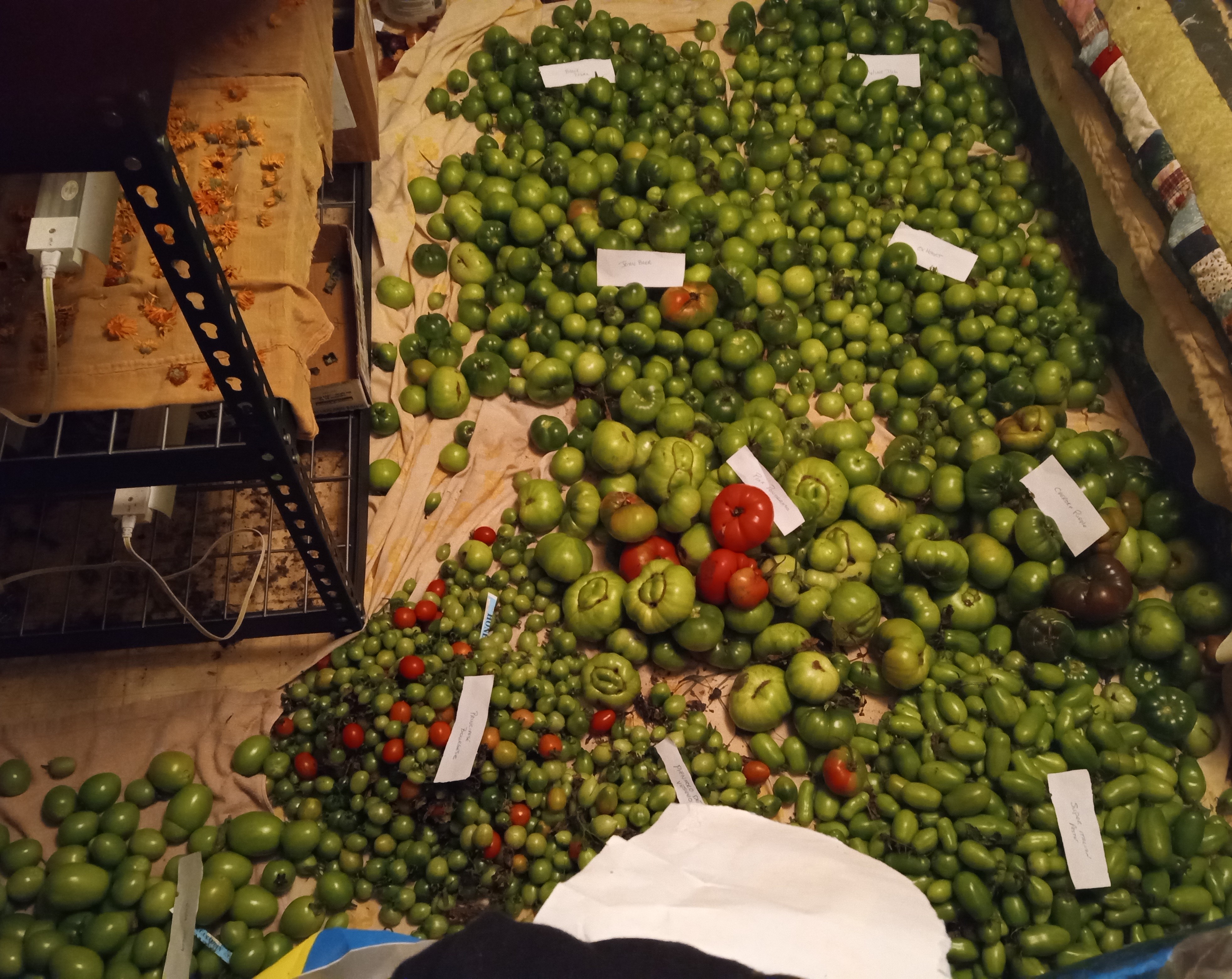
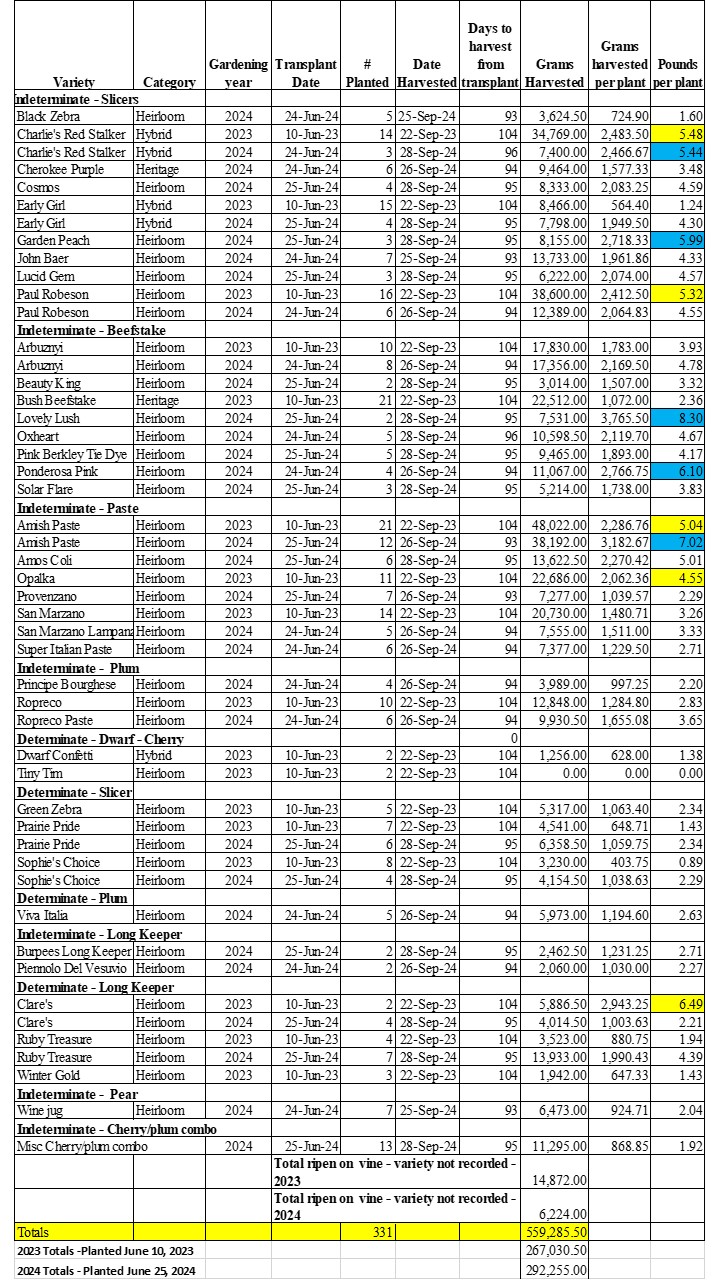
In total, I harvested 292,255 grams (644.3 pounds) from 166 plants, a slight increase from 2023 where I harvested 267,030.5 grams (588.7 pounds) from 165 plants. A 2024 increase in harvest of 25,244.5 grams (55.6 pounds) with only an extra nine days additional growing time. But as the table below illustrates, this is also due in part to the varieties planted.
The Tomato Trials - Weight harvested per plant
In order to present the findings of the various tomato varieties, the tomatoes were sorted into the category of tomato (indeterminate – beefsteak, Indeterminate – slicer, etc) with each variety specific to the category listed below the category heading. Information about starting date, number of plants planted, number of growing days, and weight in grams harvested was included about each tomato variety. This information was then analyzed to determine the weight in grams harvested per plant, converted to pounds per plant.
In 2024, of the top five varieties that produced the most per plant, illustrated by blue highlight in the table below, Lovely Lush produced the most per plant at 3765.5 grams (8.3 pounds) per plant and Charlies Red Stalker produced the least at 2,466.67 grams (5.44 pounds) per plant. Garden Peach, Ponderosa Pink and Amish paste are also included in the top five. But as the table below illustrates there was also a notable variance in harvest between the varieties in each of the two years. But of interest to me is that Charlies Red Stalker and Amish Paste were in the top five for production per plant in 2023 as well, as illustrated by the yellow highlight.
For pictures of these tomatoes, be sure to check out The Tomato Trials - In Pictures.
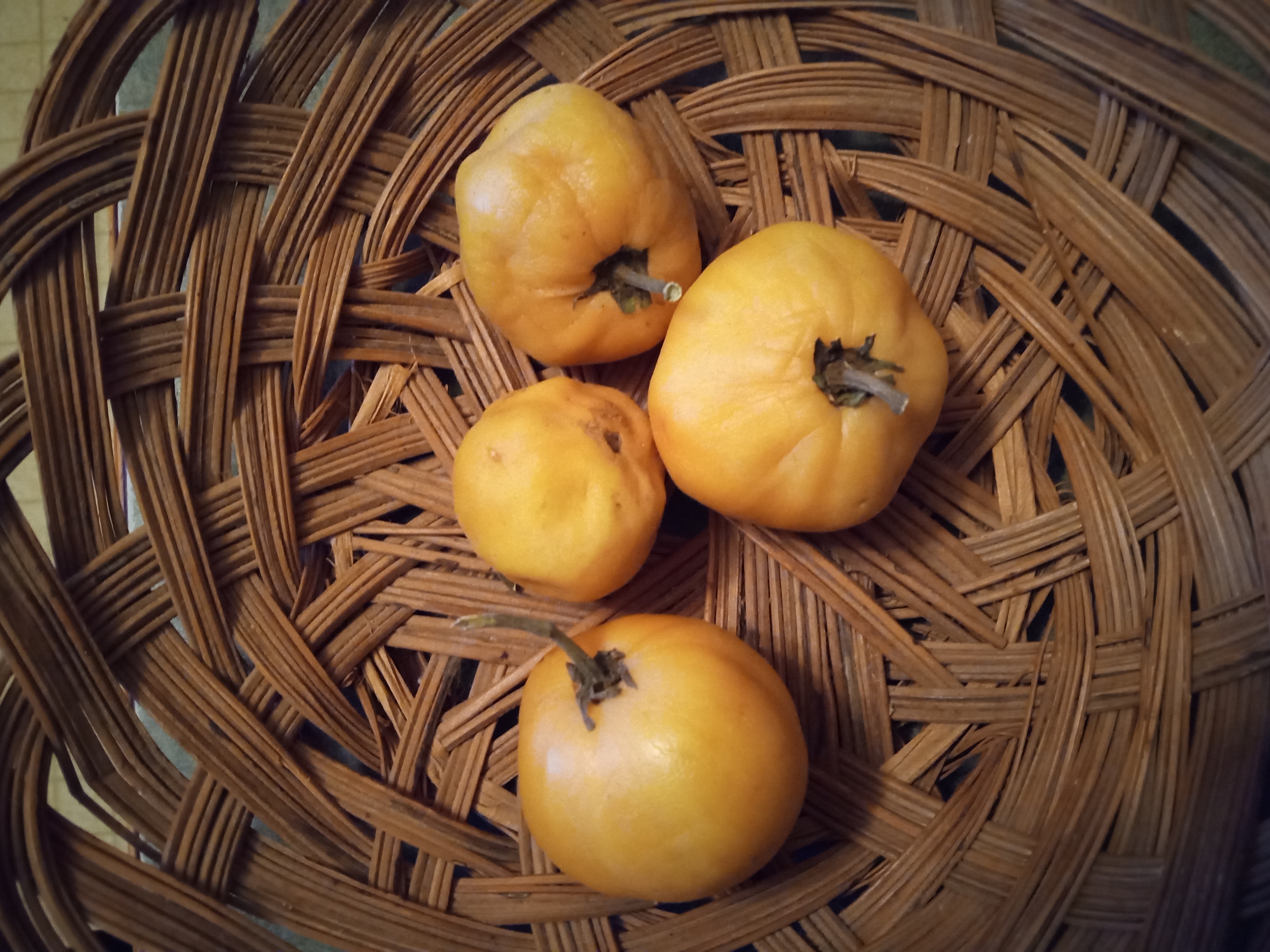
Of additional interest is that the long keeper variety, Clare’s, made the top five in 2023 at 2,943.25 grams (6.49 pounds) per plant. However it fell off the leader board in 2024. The other long keeper varieties, Ruby Treasure, Burpees Long Keeper and Piennolo Del Vesuvio made a less than average contribution in 2024 but despite not producing a lot, I was still able to enjoy “fresh” tomatoes well into late March, early April, with no special handling. Over the last couple years I have been growing them, I have simply stored them in a box in the spare room and/or on the kitchen counter. I will continue my exploration into the world of long keeper varieties. But so far, I am enjoying having reasonable tasting tomatoes this late into the winter season.
The Tomato Trials - Average weight of fruit, pH and Taste rating
As I explored in Tomatoes - A guide to choosing tomato varieties, I have a number of criteria for selecting new varieties. Although things like heritage vs hybrid, days to maturity and availability, to name a few, are important in the selection criteria, I have been focused on the end goal of the ultimate sauce and canning tomatoes. But this initial goal soon morphed and as I explored in The Tomato Trial - Results of 2023 Tomato Trial and What's New for 2024, “Its more than about the sauce”. Fruit size, ph and flavor profile are all contributing factors to the end goal.
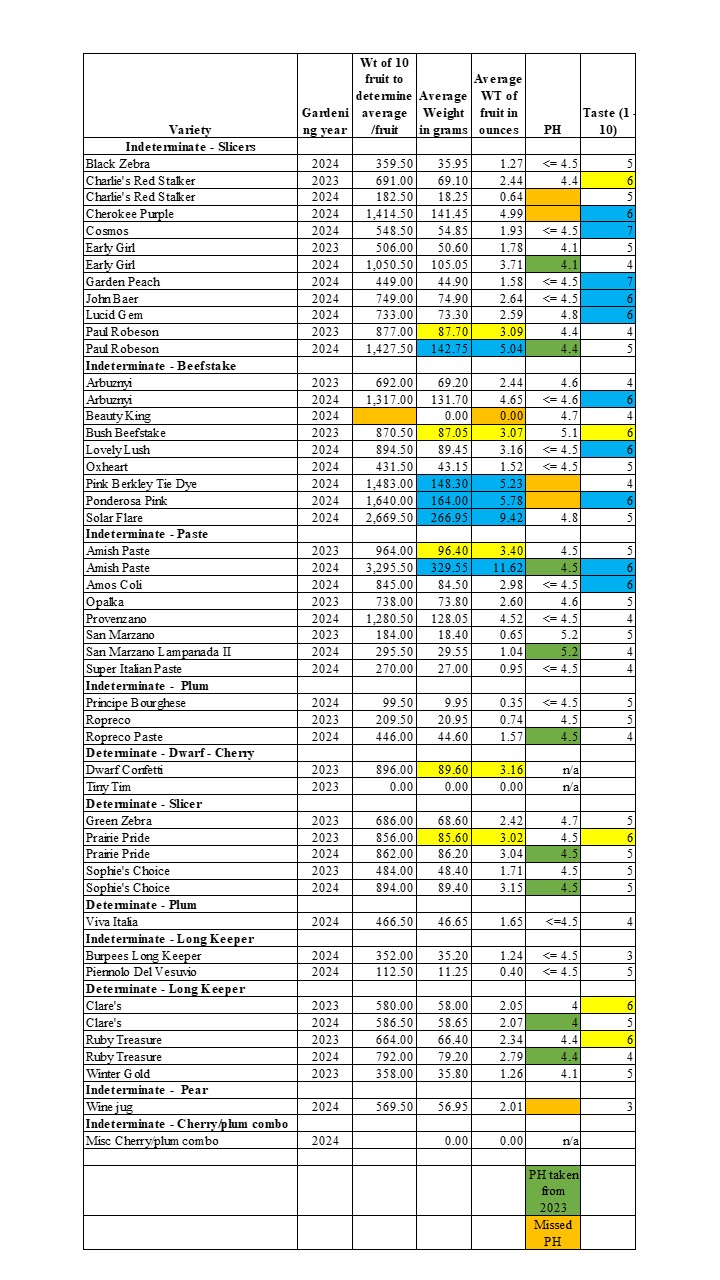
To illustrate fruit size, pH and flavor ratings, the data was again compiled by category with the applicable varieties being listed below each category and is presented in Table 2 - Average Fruit Weight, pH and Taste of Tomato Varieties.
Fruit Size of Tomato Varieties
Fruit size may not seem that important to most. But I have found that I prefer the larger fruit for making sauces and because I also interchange usage of the fruit, handling of the fruit for peeling is easier when the fruit is larger. Not saying I don’t use the smaller fruit, as they can be more flavorful, but I do lean to the larger fruit.
The thing about fruit size is that it can be affected by pruning. But being that I do not prune tomatoes, my fruit size may be smaller than those that prune. I am okay with that as I am not spending time pruning.
To determine the average size, I randomly selected 10 tomatoes from each variety and weighed them. The average fruit size in grams was then determined from this data and converted to ounces. It is presented in Table 2 below. I did mess up somehow though and forgot to record the data for Beauty King. But from the remaining data, the top five from 2024 (blue highlight) and the top five from 2023 (yellow highlight) are identified. Of interest is that although the Amish Paste tipped the scale at 329.55 grams (11.62 ounces) in 2024 and that it also made the top five in 2023, although not nearly as large of fruit. Similarly, Paul Robeson made the top five both years, tipping the scale at 142.75 grams (5.04 ounces) in 2024.
pH of Tomato Varieties
As I explored in The Tomato Trial - Results of 2023 Tomato Trial and What's New for 2024, I can a lot of tomatoes and so pH is important to me. As I mentioned in the article, there is not much information available about the pH of various tomato varieties. The general consensus is simply stated that tomatoes are typically right on the border between acidic and basic at 4.6. Although pH has an affect on taste and storage ability, the main reason this is important is that it makes the difference between water bath canning and pressure canning for safe canned product. Although tomatoes can be pressure canned, not everyone has a pressure canner and so it is a widely accepted practice to acidify the tomatoes by adding an acid, such as lemon juice, to the tomatoes. This acidification allows the home canner to then process using a hot water bath canner.
Because I have never added lemon juice to my tomatoes in the past and there is little to no information about pH specifics, as I explored in The Tomato Trial - Results of 2023 Tomato Trial and What's New for 2024, at the time I owned a OakTon pH2+ pocket pH meter and decided to put it to use and record the pH of each variety. I carried on this process through the harvest of 2023 and started to use it in 2024 but soon after the processing of the harvest noticed that my pocket pH meter was malfunctioning. So for the remainder of the harvest season, I used a standard broad range pH test strip.
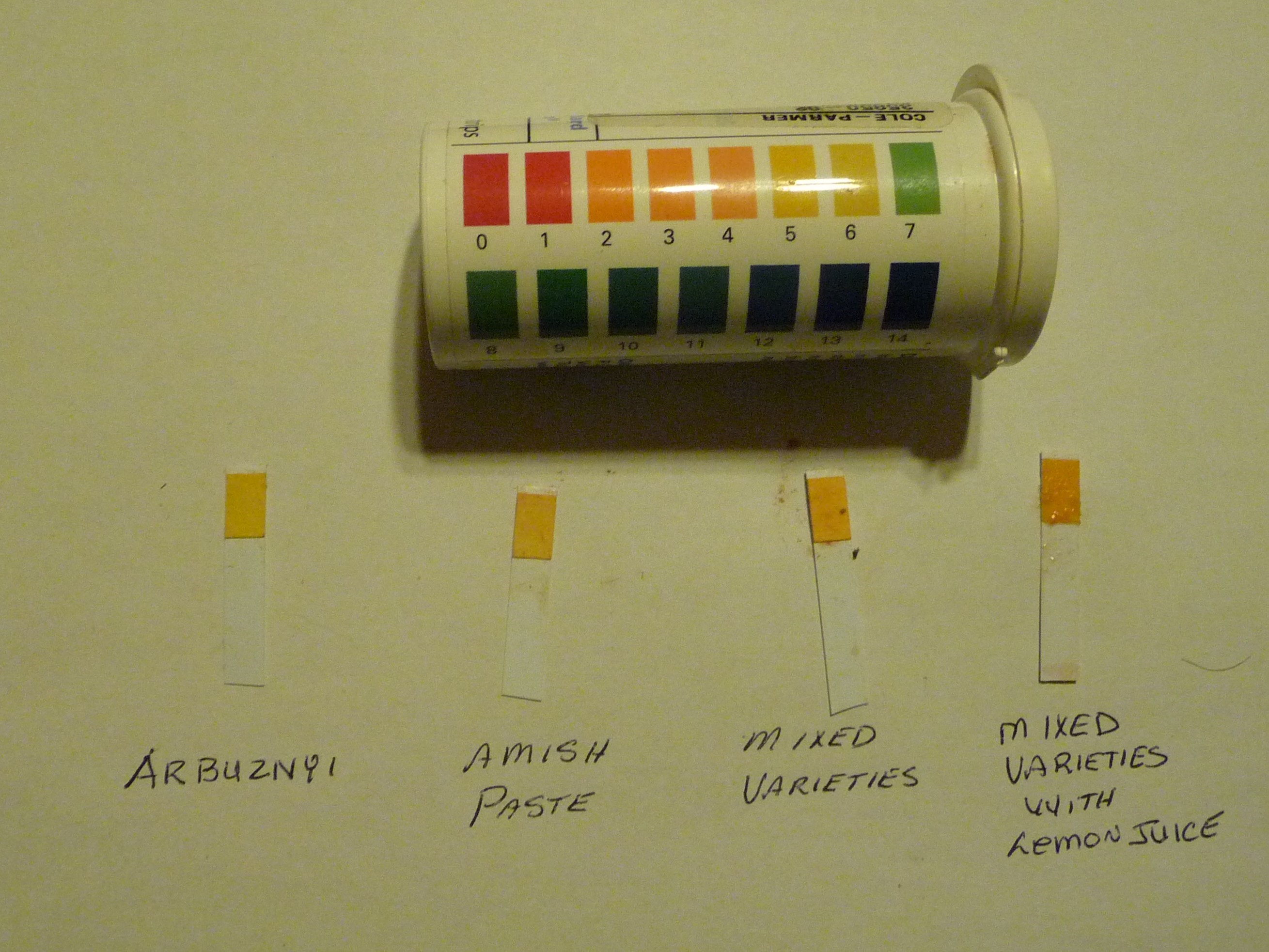
The problem with these specific testing strips is that they are somewhat subjective as to color representation and narrowing down the pH to smaller steps of pH (4.4, 4.5, 4.6, etc) is all but impossible. However, late in the 2024 season I was able to find the Advantec Narrow Range pH Paper Booklet, Bromocresol green (4.0-5.6 pH) that I will be using for the 2025 season.
Rather than discussing the pH for each specific variety, and for ease of reference, I have included the pH of the various tomato varieties in the table below. Although it does show that some varieties do tend towards being borderline basic, I found it interesting that when various varieties were combined into a sauce the pH was always less than 4.6.
Taste Rating for Tomato Varieties
If one researches the making of tomato sauces in places like Italy, they will quickly find that traditional sauces are not made with just one variety of tomato. Rather, a number of varieties are used and usually include non paste varieties. Non paste varieties are typically more flavorful and bring in notes of sweetness, smokiness and in some cases wine. Although taste is a purely subjective rating and can be affected by harvesting time, growing conditions and whether the fruit was vine ripened or not, I thought it a good idea to rate each tomato variety.
Although my rating system is purely subjective, it clearly shows that the non paste varieties do add a complexity of flavors to the mix. I have made notes about these flavors in the next section and identified the top five for 2024 in blue highlight, and yellow highlight for 2023. Using these flavor profiles and what was ripe at the time, I was able to mix varieties and can in such a way to determine if I like one combination more than the other. Amish paste, my top performing paste tomato variety, was typically added as the base to the sauce but additional varieties were added to affect flavor profile. Combinations I did in 2024 include:
- Arbuznyi, Amish Paste;
- Paul Robeson, Earley Girl, Garden Peach, Amish Paste;
- Prairie Pride, Early Girl, Sophies Choice, Amish Paste;
- Principe Bourghese, Piennolo Del Vesuvio, Cherokee Purple, Amish Paste;
- Ponderosa Pink, Pink Berkley Tie Dye, San Marzano, Amish Paste;
- Lucid Gem, Beauty King, Solar Flare, Italian Paste, Amish Paste;
- Lucid Gem, Garden Peach, Amish Paste;
- Ropreco Paste, Lovely Lush, Amish Paste;
- John Bauer, Oxheart, Black Zebra, Amish Paste;
- John Bauer, Oxheart, Wine Jug;
- Provenzano, Burpees Long Keeper, Lucid Gem, Italian Paste, Lovely Lush, Black Zebra, Amish Paste;
- Claire’s, Amos Cali, Amish Paste;
- Miscellaneous Cherry, San Marzano.
Although I have not tasted all the combinations thus far, the Paul Robeson, Early Girl, Garden Peach and Amish Paste combo has been my favorite so far. It provides a hint of sweet and smoky with the traditional tomato flavor.
I go through the process of converting the tomatoes into sauce in the article The Tomato Trial - Results of 2023 Tomato Trial and What's New for 2024. But new to me this year I also decided to use a counter top roaster oven to complete the process from start to finish. It worked well. I also decided this year to save all the juice from processing each combination of tomatoes and can it up for use in soups and in my Vegan Beans I regularly can up.
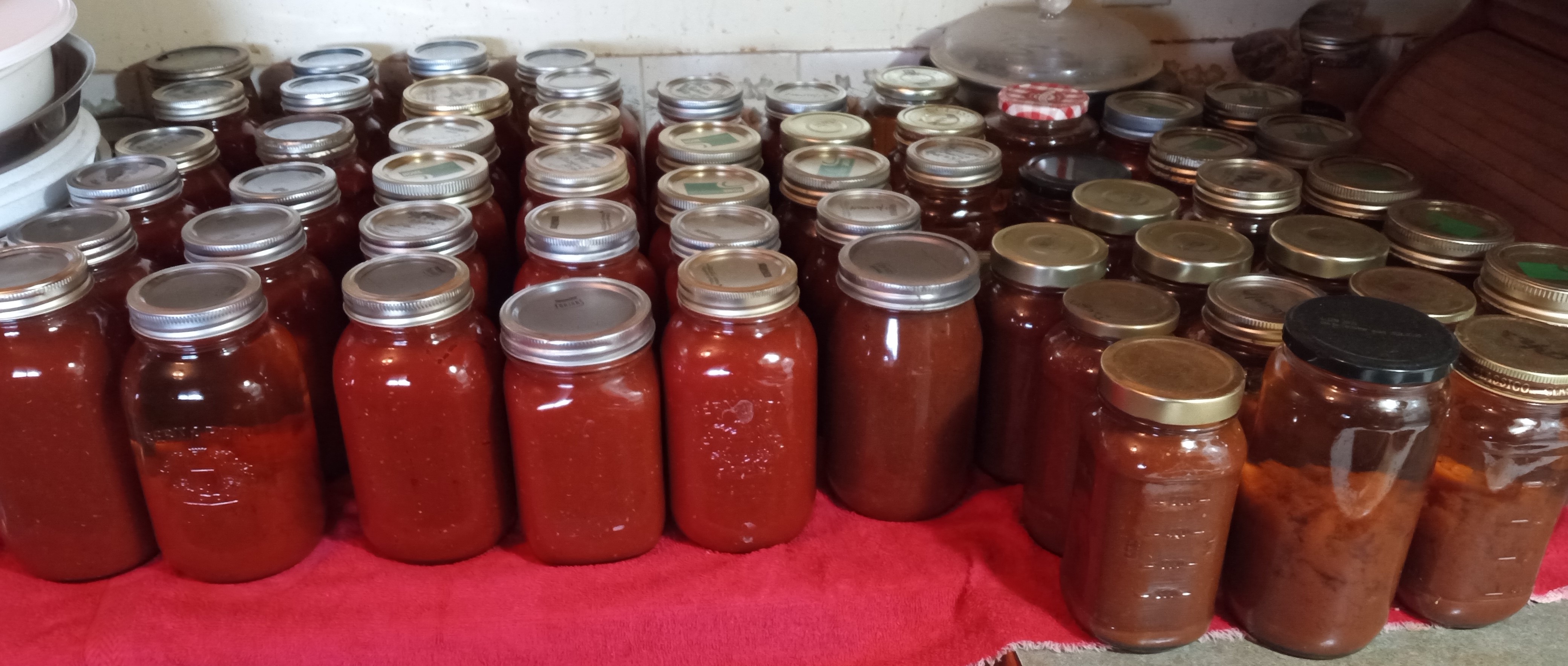
Table 2 - Average Fruit Weight, pH and Taste of Tomato Varieties
For visual representation of pH, please refer to The Tomato Trials - pH in Pictures.
The Tomato Trials - Ripening, peels and more
Although most folks want all their tomatoes to ripen on the vine, in my Zone 3 garden it is all but impossible without a greenhouse. Selection of varieties with a shorter days to maturity is one way to achieve this but even then, it could prove difficult to get everything to ripen on the vine. And besides, it would severely limit my options.
As it is currently, in 2023 I was able to harvest 5.57% of my total harvest as vine ripened and in 2024 that percentage dropped to 2.13%. But not to worry, I just ripen everything indoors. No special treatment, just dump them on the floor.
For the indoor ripened tomatoes, there may be some factors at play that I am not aware of but I noticed that some varieties ripened faster than others, long keeper varieties as I discussed above excluded. To document this ripening I decided that 10 days after picking I would determine a rating based on an estimation of the percentage that were ripe. This would be recorded as follows:
- Slow – 10 – 35% ripe
- Average – 35.1 – 65 % ripe
- Fast - >65 % ripe
This rating schedule came in handy because although the tomatoes are in the main living areas, I don’t always do a thorough inspection. In 2023 due to not keeping a close enough eye on them, I lost a large amount of the Arbruzyni because they ripened and rotted. Having notes about this helped to remind me in 2024 to watch them closely and in so doing found out that the Paul Robeson and Cherokee Purple were the same for ripening times.
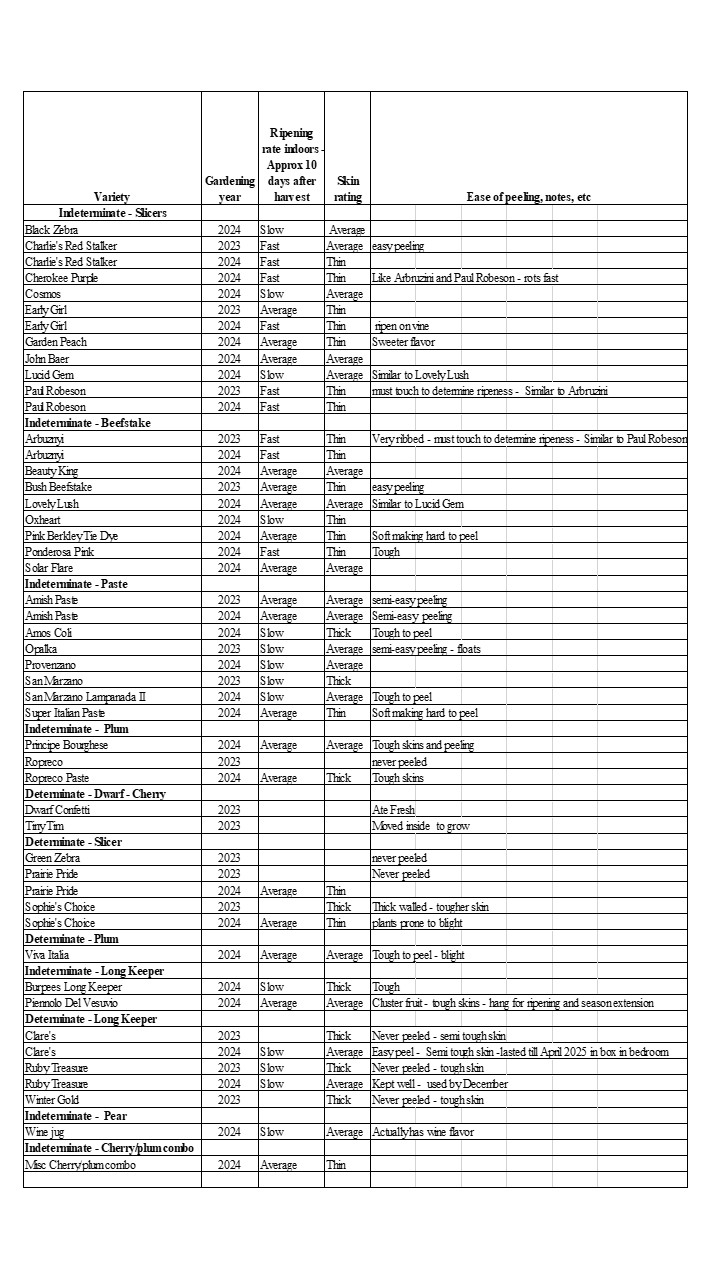
Part and parcel to the ripening rating identified in table 3, below, is the ease with which the various tomato varieties peeled. Because I use tomatoes for more than just sauce, I noticed that some peel easier than others. The ratings are a subjective rating based on years of peeling tomatoes, some of which were easy to peel and some that were difficult. No scientific process involved in the ratings. Just an opinion. But I do find it useful as I can avoid the thicker skinned tomatoes for peeling to use in canned products and save them for sauce where I am running them through a food mill anyway.
Although it really came as no surprise, it bears mentioning that there is a definite relationship between the ripening rating and the thickness of the skins, the peeling rating.
With there being other things of interest, I have also included some notes, where applicable, about anything that did not fit in the ratings and/or some qualifying information about a variety. These notes were helpful in planning which varieties to plant in 2025 as it reminded me of things like which varieties seemed to be prone to blight, amongst other things.
This data was again compiled by variety sorted by category and is presented in Table 3 - Ripening rates, Peel rating and general notes of tomato varieties, below.
Table 3 - Ripening Rates, Peel Rating and General Notes of Tomato Varieties
The Tomato Trials - Information to determine 2025 plant
These tomato trials are generating a lot of data. A lot of helpful data. But unless I use this data for something productive, it is just that, data. So although this blog is being written after the 2025 tomato crop has been planted, I can assure you that I used it to make a decision on which varieties to plant.
First making the cut were Amish Paste and Paul Robeson. Both varieties were in the top five for weight per plant, fruit size and flavor. Although the Paul Robeson does ripen fast I like the flavor contribution it makes to the sauces and/or for fresh eating. And for this reason Arbuzyki made the cut as well. But in addition, this variety is listed on the rare and endangered list. Preserving these old varieties is important and so I included Arbuzyki in the 2025 tomato trial.
Garden Peach was also included this year not only for it’s uniqueness but also because of its flavor profile and weight per plant, despite it’s other less than desirable attributes. Weighing all the attributes of the remaining tomato varieties, I also decided to grow Early Girl, Lucid Gem, Amos Cali, John Baer, Bloody Butcher, Pink Ponderosa, Sophie’s Choice and Principe Bourghes.
For the long keeper varieties I decided on Burpees Long-Keeper, Clare’s and Ruby Treasure.
I couldn’t just stop there and so I had to try a few new varieties for me. But I limited it to 3 so as to keep my overall patch smaller than normal. The three varieties are:
- Manitoba - a heirloom determinate slicing tomato developed in 1956 in Manitoba, Canada. Said to be early ripening with fruit averaging 170 grams (6 ounces);
- Old German – a rare heirloom indeterminate beefsteak tomato developed in the 1800’’s. Fruit has a bicolored appearance with yellow skin and red marbling averaging 454 – 907 grams (1 – 2 pounds);
- Silvery Fir Tree – a heirloom determinate slicing tomato developed in Russia. Known for its Ferny type foliage, it is said to ripen early, producing medium sized fruit 2 – 4 inches (5 – 10 cm) in diameter.
Although I did plant some Charlies Red Stalker, the seeds did not germinate. I should also mention that contributing to the decision to make the planting list was the rareness of the variety.
At the end of it all, I ended up planting only 66 tomatoes, down from the 166 I planted in 2024.
The Tomato Trials - Final Thoughts
One hole that I realized while compiling the data is what varieties were the first to ripen on the vine. With some varieties having a relatively short days to maturity, I would expect vine ripened tomatoes from them, but I will also be keeping track in 2025 of when the other varieties start to ripen on the vine. This information will be key to being able to ripen a larger percentage on the vine vs on the floor in my house. With this year’s plantings based on the findings from the criteria over the last two years already, If it proves that some of them are ripening on the vine earlier than others, I will then plant them in 2026 so as to better ensure no cross pollination with plans to save seeds and localize the genetics. I may just save the seed this year too. Will see how that goes.
Although there is a lot of data within this article, I thought it best to contain it all in one place rather than splitting over a couple blog posts. I hope that you find the information to be interesting and somewhat helpful as you decide on which tomato varieties to plant. I know I have found the information to be valuable during the 2025 garden planning and look forward to seeing how some of the new varieties perform. I will be updating this data with the 2025 findings as it becomes available. But I am curious, do you have favorite tomato varieties that you plant year after year?
If you enjoyed this blog, please consider joining the My Boreal Homestead Life community. By supplying your email address at the bottom of the page and hitting "sign up" or by clicking Join the community, you will ensure you get an email notification when I post new blogs to the My Boreal Homestead Life site.
Thank you for joining me on the front porch of My Boreal Homestead Life as we explore this Homegrown, Homestead life, In a Modern World.
Additional Resources
- Tomatoes - University of Saskatchewan
- Growing Tomatoes in Cold Climates (7 Tips for Success) - Homesteading Family
- The 10 Best Tomatoes to Grow - The Seasonal Homestead (Note This homestead is in zone 6B)
- How to Pick the Best Tomato Varieties for Your Garden - Shifting Roots