Every year I plan out the garden, start the seeds and try to get the garden in the ground before the middle of June. Some years go better than others. But unlike is often recommended for newer type gardeners, I rarely only plant what I can use up in a year. Certainly for things where I am only using fresh or storing in a root cellar type methodology, I only plant what I will use up by the following spring, plus a little extra as a buffer. But for everything else, preserving the excess is part of the process. When you put the garden in, you don't know what will happen over the next months and having that buffer can become important. Especially when you have an interesting gardening year like I did in 2025.
Interesting Summer Garden - The start, seed starting
Some time ago I made an investment into some shelving and some Monios-L T8 LED full spectrum Grow Lights to create a seed starting space in a spare room. Because it is an investment I also use it to grow greens and such throughout the winter. I have not bought lettuce and such for years as a result. But the main reason for the investment was to start my bedding plants for the summer garden. And so, as in years past, the gardening year starts around the beginning of March with things like celery, onions, brussels sprouts and peppers, to name a few. This year I planted those on March 5.
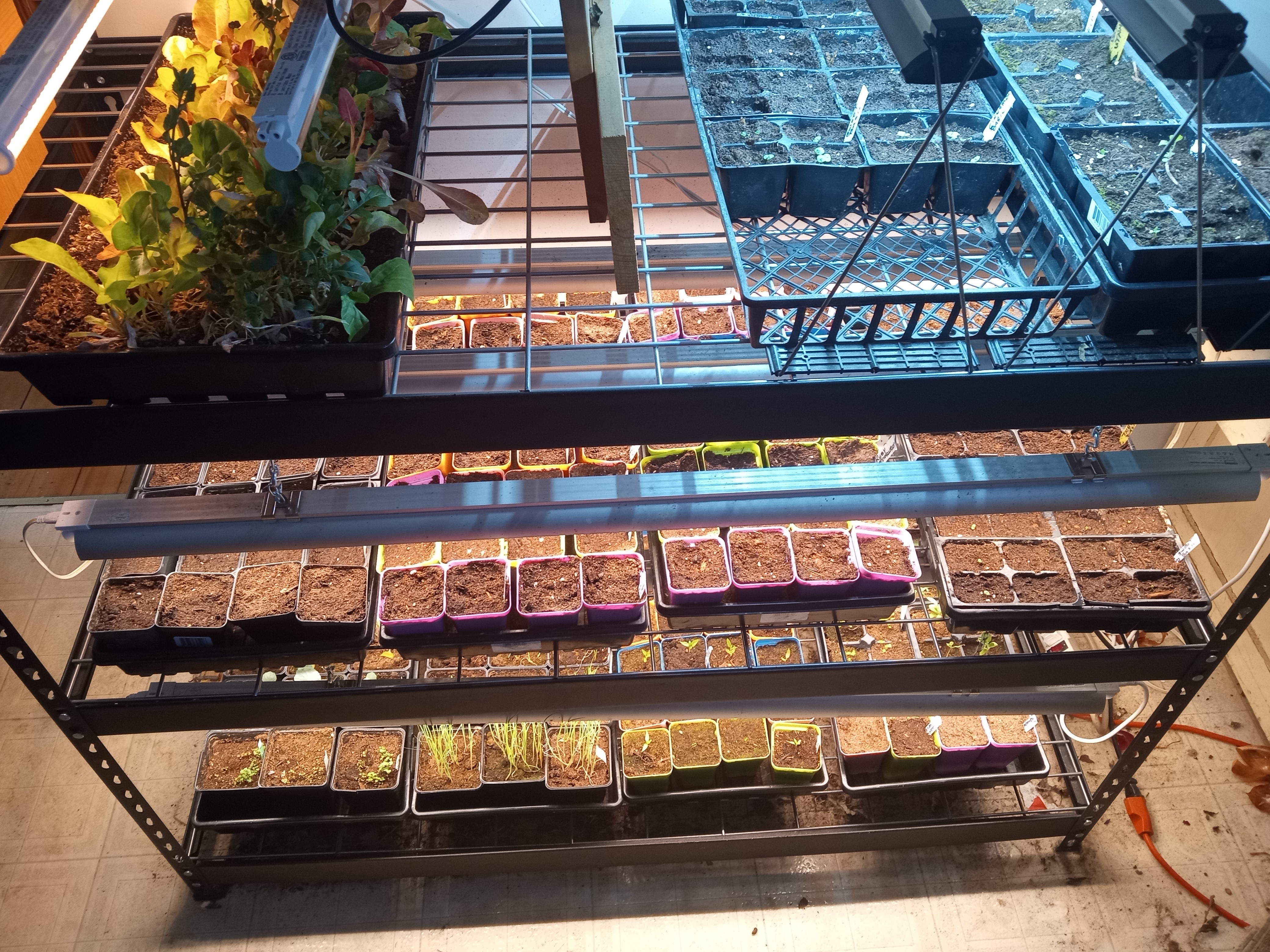
Throughout the weeks that followed, I continued to start seeds in preparation for planting out the garden around the end of May, beginning of June. And while things were popping out of the ground, after the first true leaf appeared they seemed to just stall out and grow very slow. Not everything, but certainly a large percentage. I lowered the grow lights in thinking that perhaps they were not getting sufficient light and fertilized using both fish emulsion and a commercial type fertilizer. None of it seemed to make a difference. The peppers while having a good color only put out a couple leaves through out their time under the grow lights. The tomatoes which normally get huge, for the most part never outgrew the grow shelves.
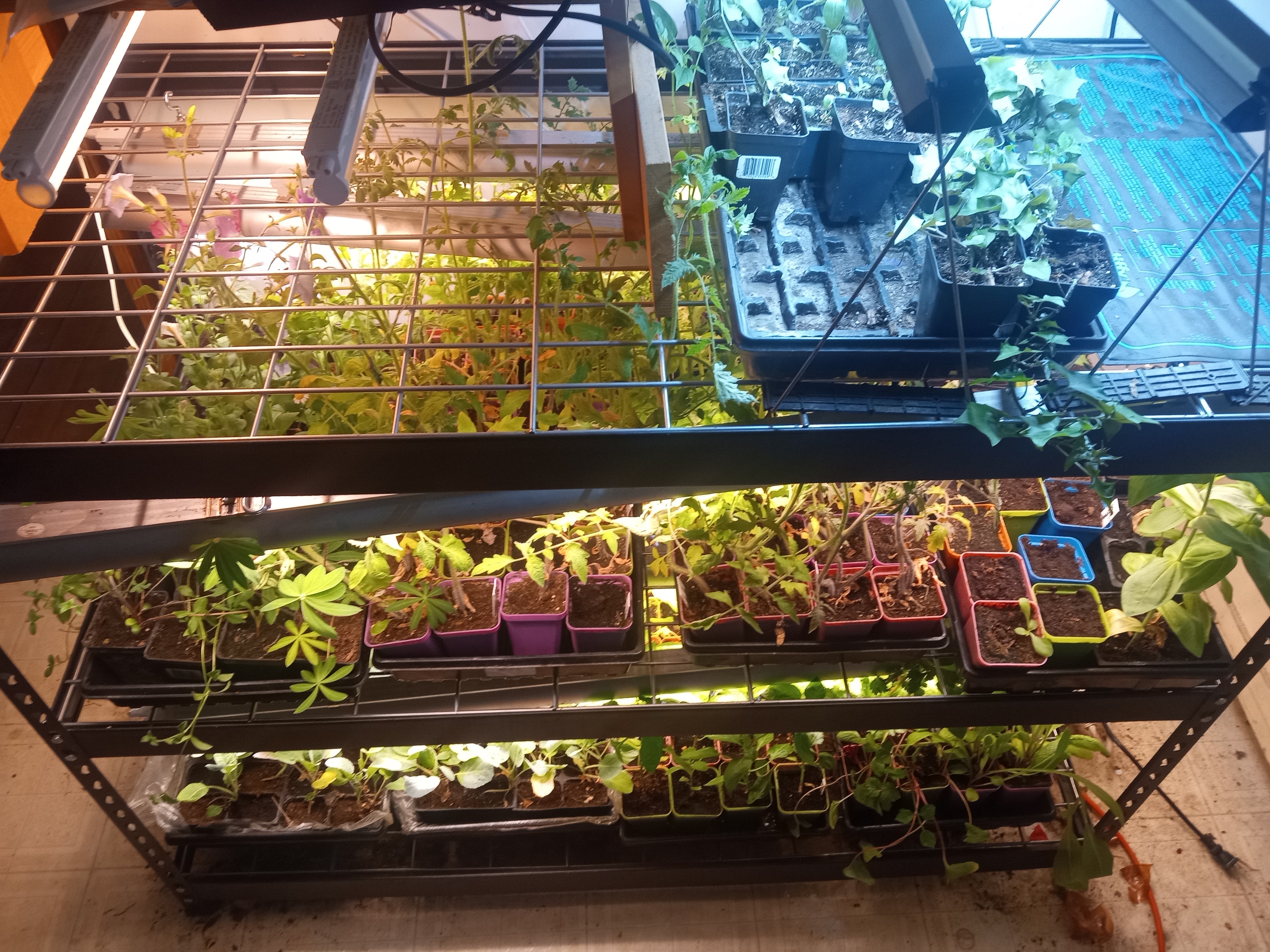
The later started brassica's remained tiny right up until planting. I thought it might be the soil I used from the store but never tested it to be sure. I also thought it might be that I used reverse osmosis water with fertilizer to water. But being I had watered in this manner before, I didn't think this was it. Regardless of the cause, I just plugged along knowing that once I got things in the garden, they should take off.
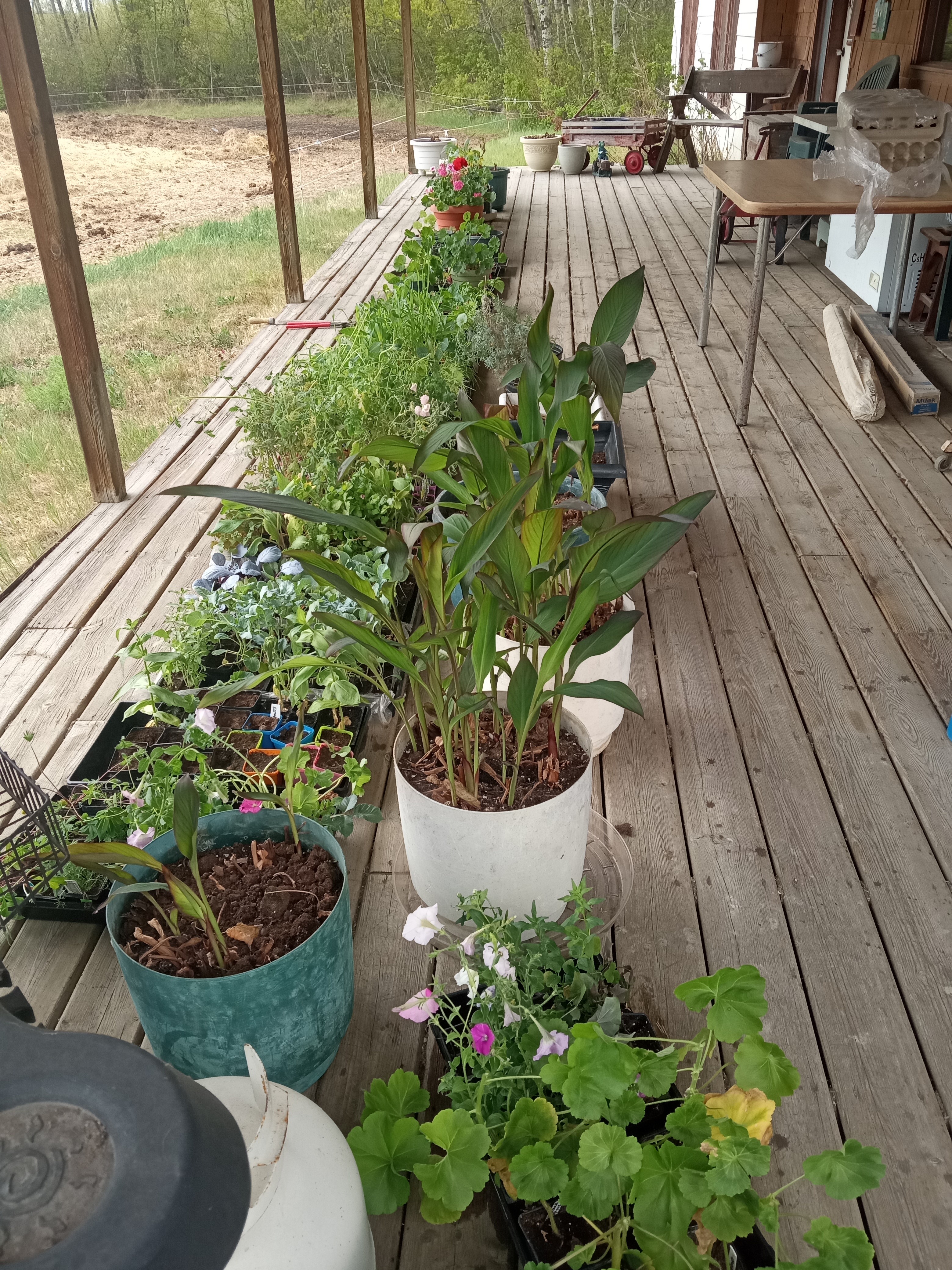
So plug along I did and on May 20 I put them out on my covered veranda to harden off. And while they seemed to do a bit better, lack of spring rains meant that I had to continue with my watering regime using reverse osmosis water. The plants stayed out on the deck save for one brief weekend when I brought them in due to cooler type temps.
Interesting summer garden - Main crop garden
When I started the seedlings the planting date that I used to determine seed starting was the end of May, beginning of June. But as often happens in the spring, I got busy weeding, rehabilitating my Food Forest Orchard Garden, planting my raised beds, planting my larger containers and just doing life. Although some things got put out, the first planting of tomatoes did not go in until June 13 and although they had gone somewhat leggy, I knew they would catch up. The struggling peppers were put in on June 15. Again figuring that once they got rooted in the soil, they would take off. I wasn't worried though. After all, as I documented in Does Gardening Save Me Money - A Year In Review - 2024 Edition, I never got the garden in till June 28 in 2024 and did very well.
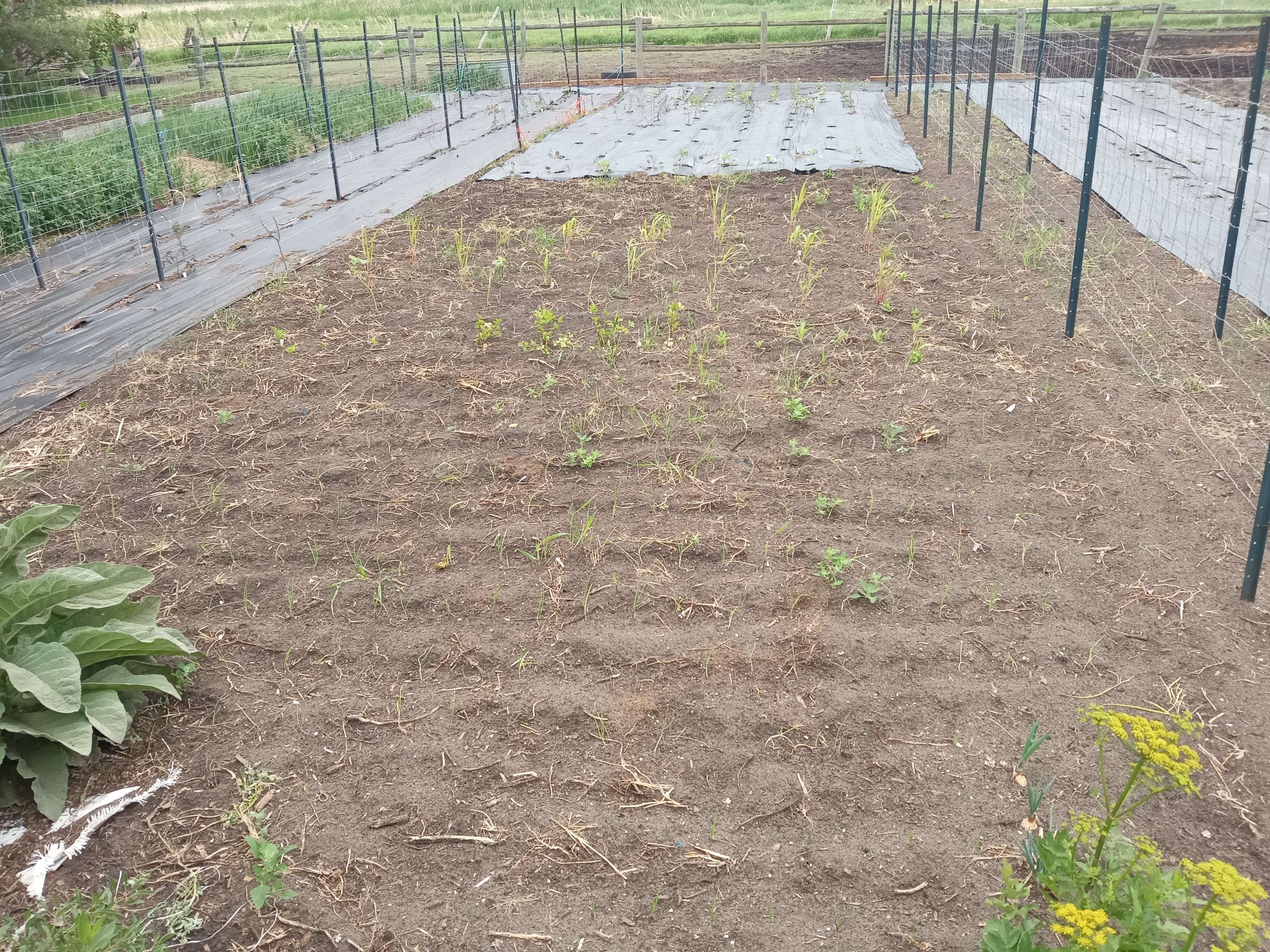
The rest of the garden was planted between June 17 and June 21, with the piddly brassica's being put in on June 21. They were sad looking, but I had to try.
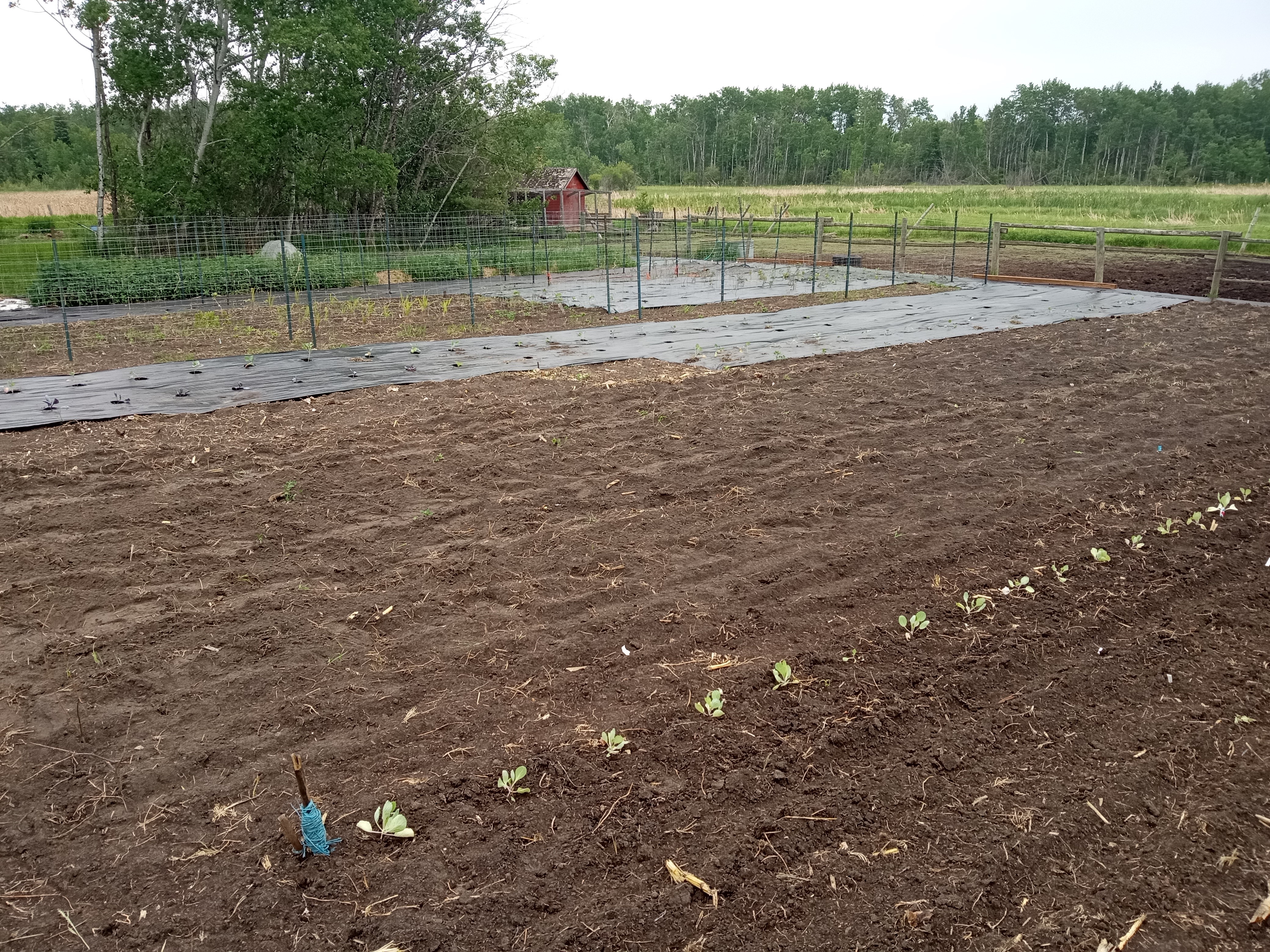
Although normally I like to water in my seeds using water I pump from the dugout developed in Rainwater collection - essential water for use on the homestead, this year because of problems with my pump I was not able to do so. This inconvenience coupled with lack of rain forced me into using the well water to water in the bedding plants. I was not happy about having to do this, but it was either water with the poor quality well water and keep the plants alive or let them die. I chose the former. To learn why I was not thrilled with using the well water, I go over the water analysis of the water in Will a water analysis give all the answers?.
Despite the lack of water, the bedding plants established and the deeply planted seeds started to germinate, albeit spotty. We did get a small shower that helped, but with the previous lack of rain it really did not do much to improve the moisture levels in the soil, something that is needed for germination. Finally, after a week or so fighting with the pump I was able to figure out the problem with my pump and start a deep watering of the garden.
When I water my garden I prefer to put the sprinkler on for hours to put a large volume of water on. This year was no different and the pump was allowed to run for about 5 hours (tank of gas) with me thinking I was deep watering my garden. But unbeknownst to me, because I water at night, the sprinkler head was stopping its rotation and was not watering the entire circle of the sprinkler head. By chance, I discovered this one early evening when I put the sprinkler on to water. I tried to find a new head, but none were available that would work for watering out of a dugout. When you are watering from a dugout, small invertebrates and algae can enter the line and plug the sprinkler. There are ways to mitigate this uptake, such as a burlap sack over the intake, but they are not fool proof. Because of this, I prefer to simply use a pulsating sprinkler heads and as I mentioned, none were available locally. Fixing what I had was the only option, short of hand watering or flooding the garden. Neither of those were really good options and so I tore into the sprinkler head and gleaning some parts from a broken sprinkler head, I was able to get it working. Let the deep watering commence. I was now into the middle of July and although some stuff was up, the garden was pretty abysmal. It needed water! Even the weeds that were showing themselves looked parched.
With watering five hours at a time, it takes two to four days to water the garden, depending on what is going on. And with the drought like conditions of the soil, the initial watering was quickly gone. Although more things were starting to respond, the weeds certainly were benefitting from the initial watering. But without clear evidence of where the rows were, weeding risked uprooting the germinating garden plants. So I watered again. And although more plants germinated and the bedding plants were starting to respond, the weeds took off. It was a race between the weeds, the quack grass and the garden. The quack grass and weeds won.
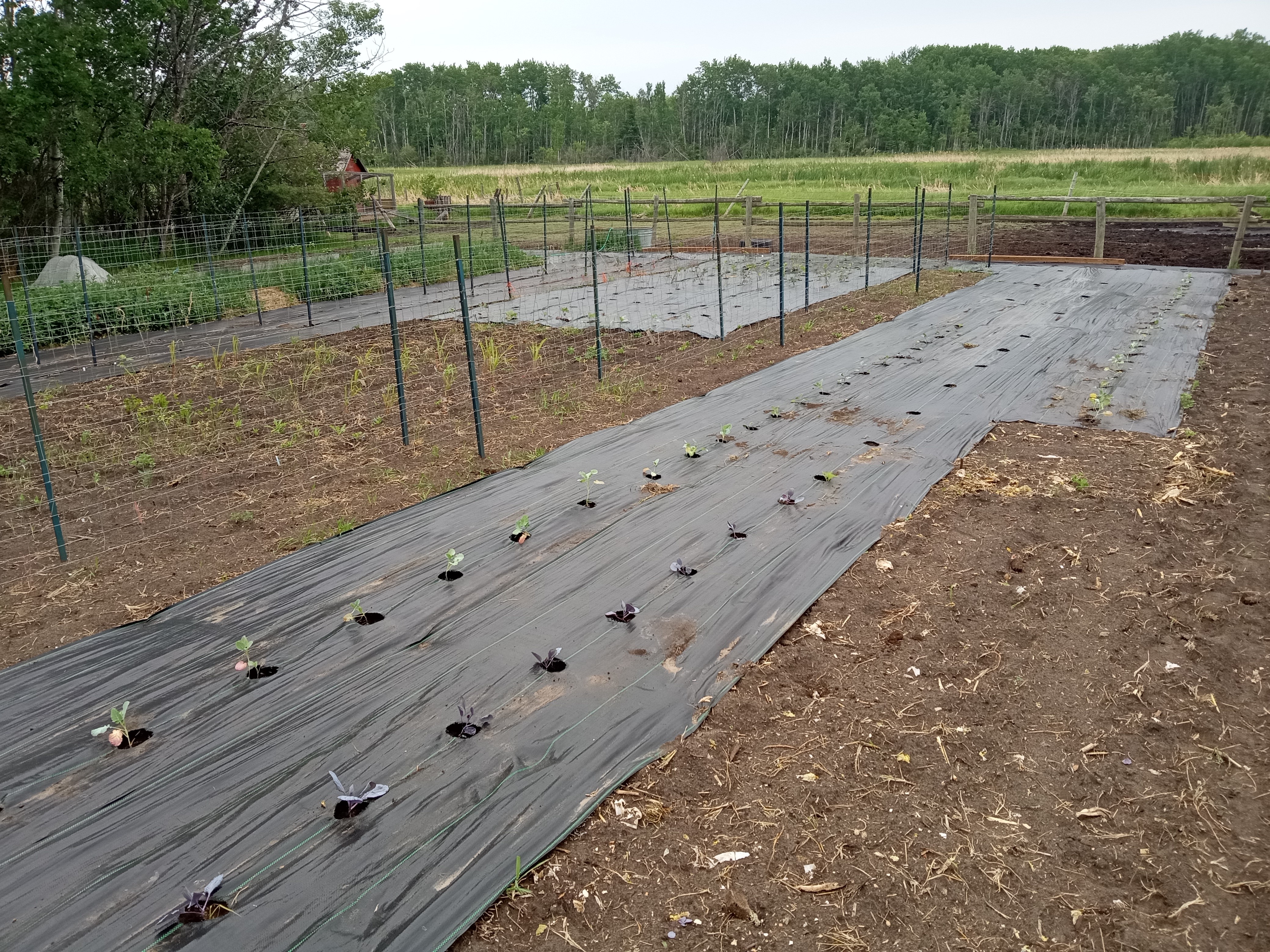
The only place where the plants were able to do well was in those areas of the garden where I had layed down landscape fabric. This is my third season of using landscape fabric in the tomato and squash patches but this year, due to quack grass pressure, I decided to buy another roll and install in one of the worst areas for quack grass. The quality of the landscape fabric was not as good as the older fabric, but it still did a good job of keeping the weeds and grass down. I wish I could say the same about the rest of the garden.
I worked at getting things weeded but extreme heat and air quality, combined with work schedules, allowed the weeds to get ahead of me big time! Every spare minute I had was spent trying to get ahead of the weeds. But again unbeknownst to me, hidden in that forest of weeds was something that was causing more damage than I could have imagined. Only to be found as I weeded.
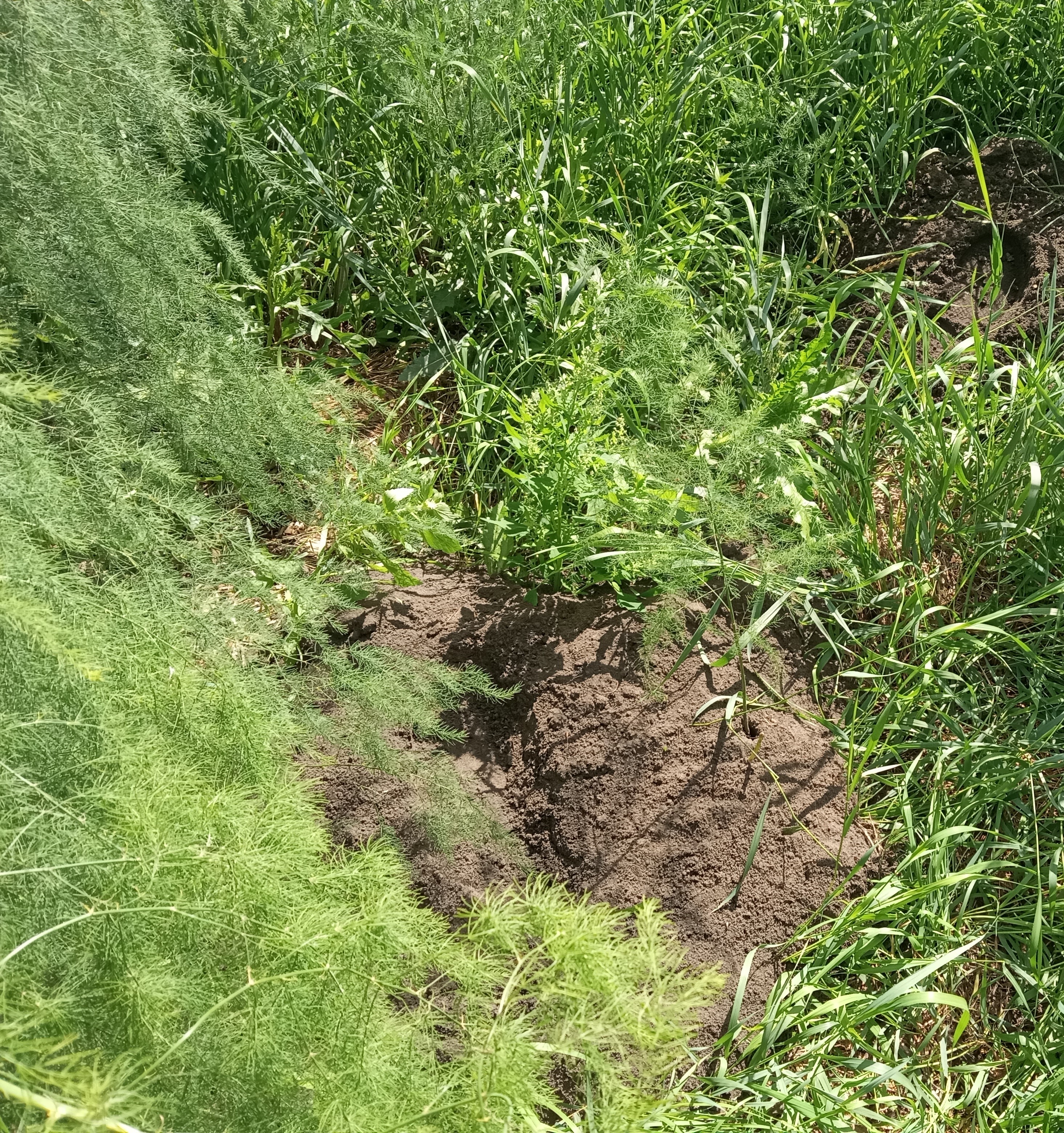
The first clue was when I hit the potato patch and the ground caved in under my weight. I knew right away what had happened. The moles AKA Northern Pocket Gopher had moved in. As part of their destruction, they will chew off the bottoms of the plants, dig tunnels like crazy and effectively destroy plants in no time at all. Only leaving behind a mound of dirt.
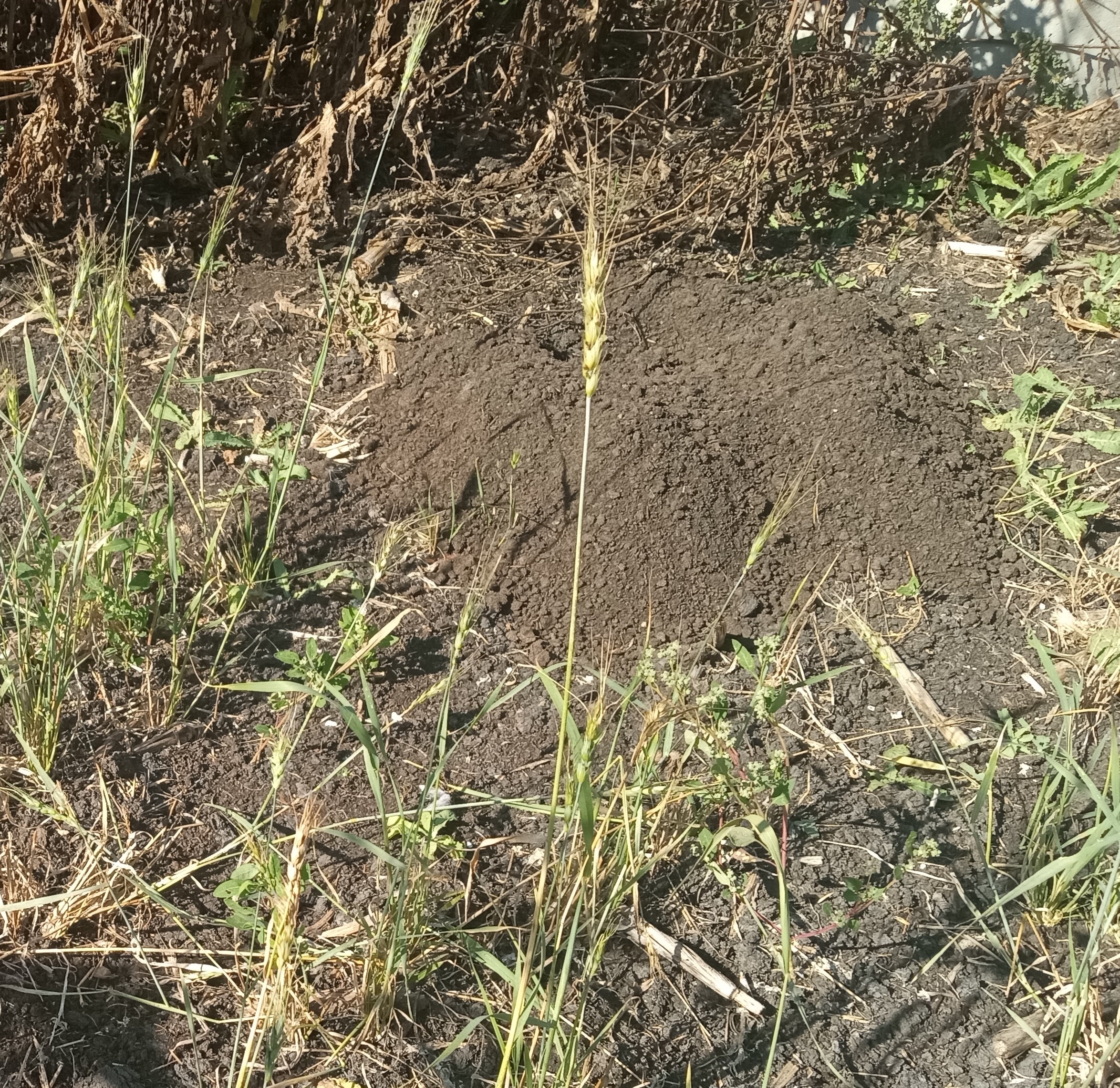
Although they are quite effective at mixing and aerating the soil, they are not something I like to see. I used to have quite the mole problem until about 20 years ago when the the foxes moved in and I spread the dirt from digging my dugout. This combination of activities meant that I was mole free until 2024, seeing only a couple. But this year they have decided to go crazy and with the ground being so dry, it has made trapping them difficult. They were even up by the house.
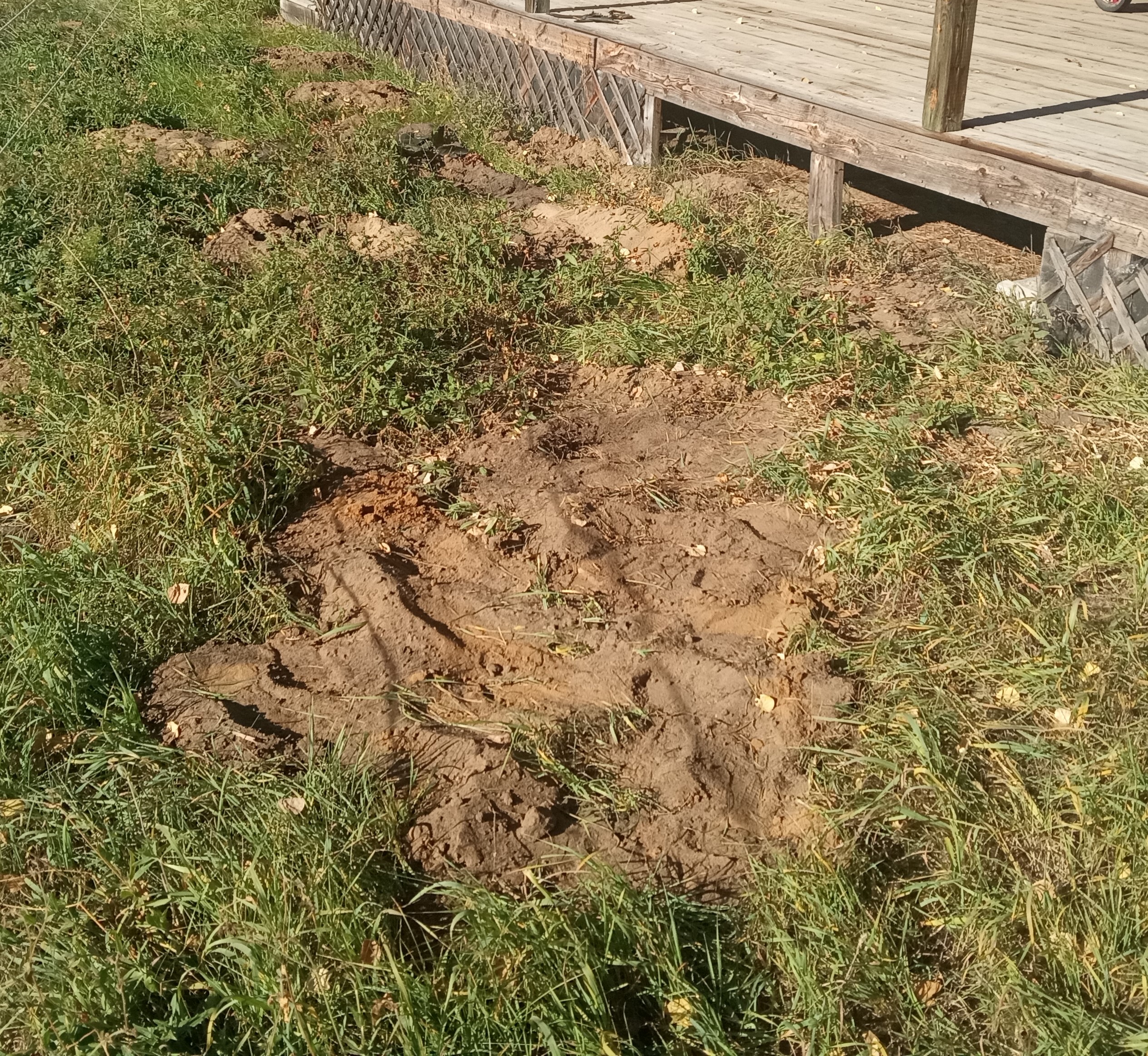
They did show up in other parts of the garden including coming through a hole I had burned in the landscape fabric for planting but the main damage was in the potato patch. I lost ½ - ⅔ of the patch to either stunted plants or plants that had totally disappeared.
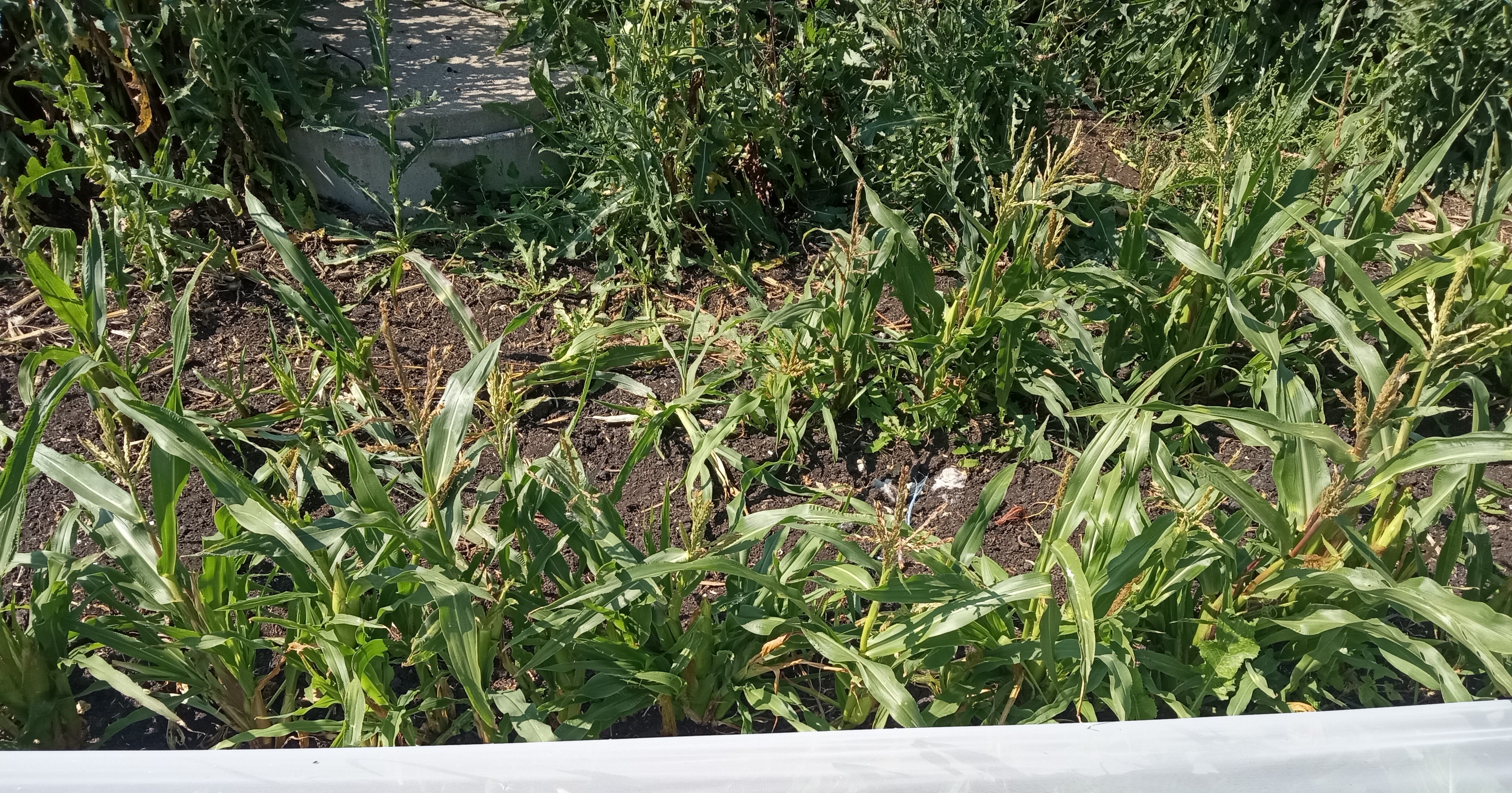
But as I weeded, I also noticed some grasshopper damage. Not extensive, but damage none the less. But the most frustrating damage was to the corn, climbing dry beans, brassicas and wheat crop. Not by grasshoppers or by moles but by what I assume is a gopher AKA 13 stripe ground squirrel. This is one critter I don't want at all but unfortunately I did see one this summer around the pens. I only seen him or her once so I am hopeful that it has moved on, but not before taking out a bite from most of the corn stalks,
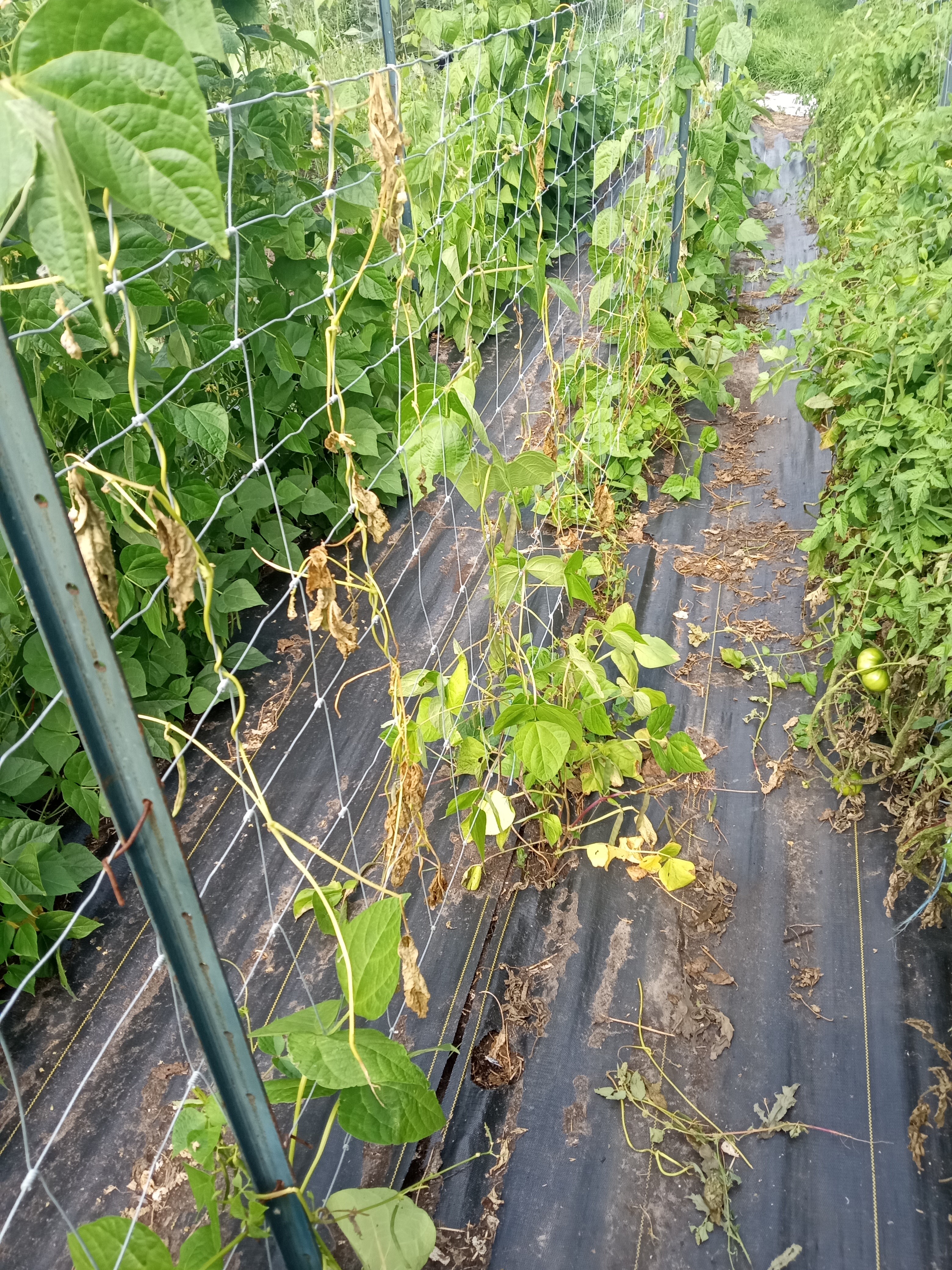
girdling a section of the climbing dry beans,
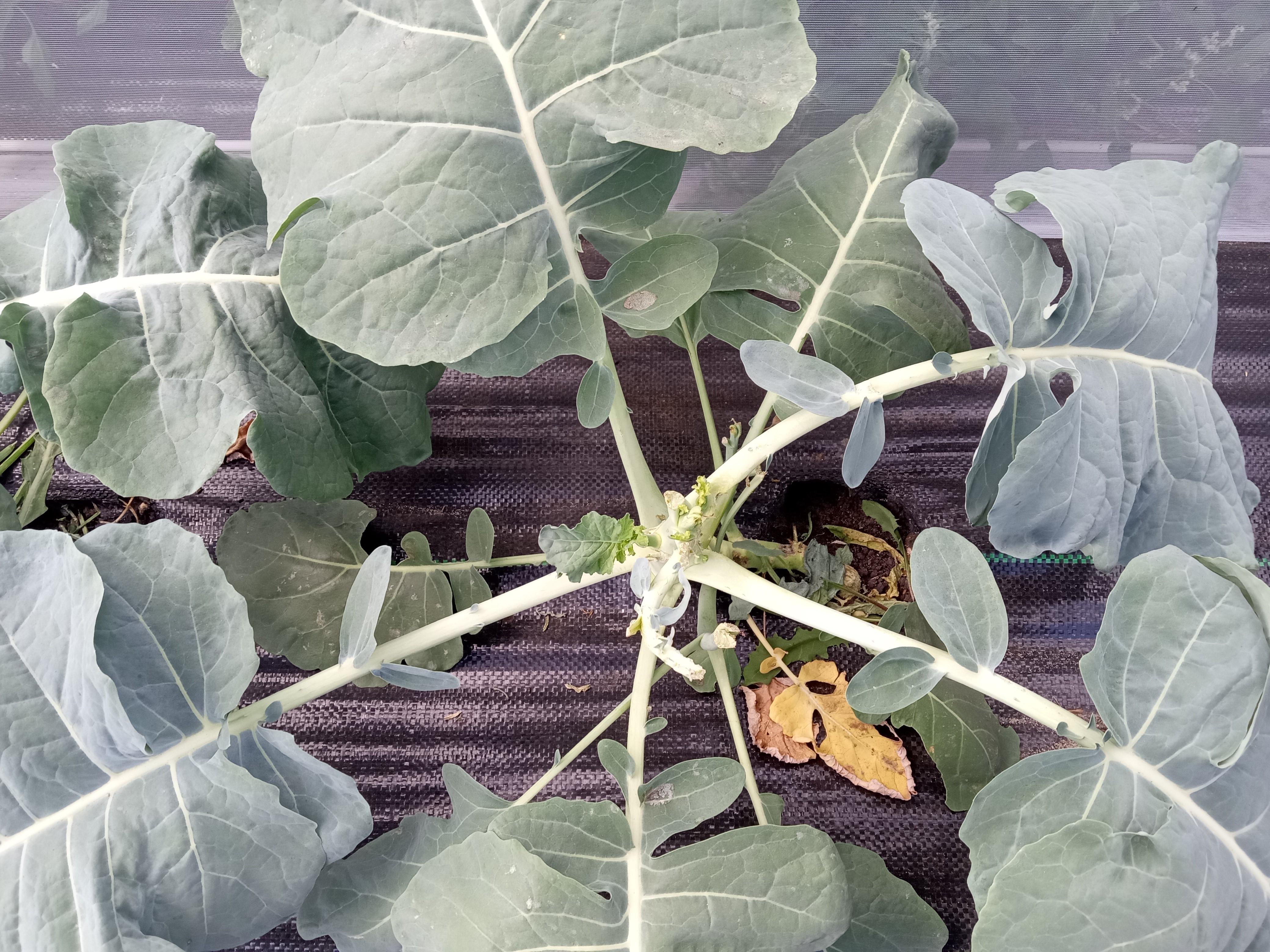
eating the centers out of the broccoli (luckily they are sprouting broccoli),
and wiping out the Prelude wheat crop I was trialing to within a couple inches of the ground.
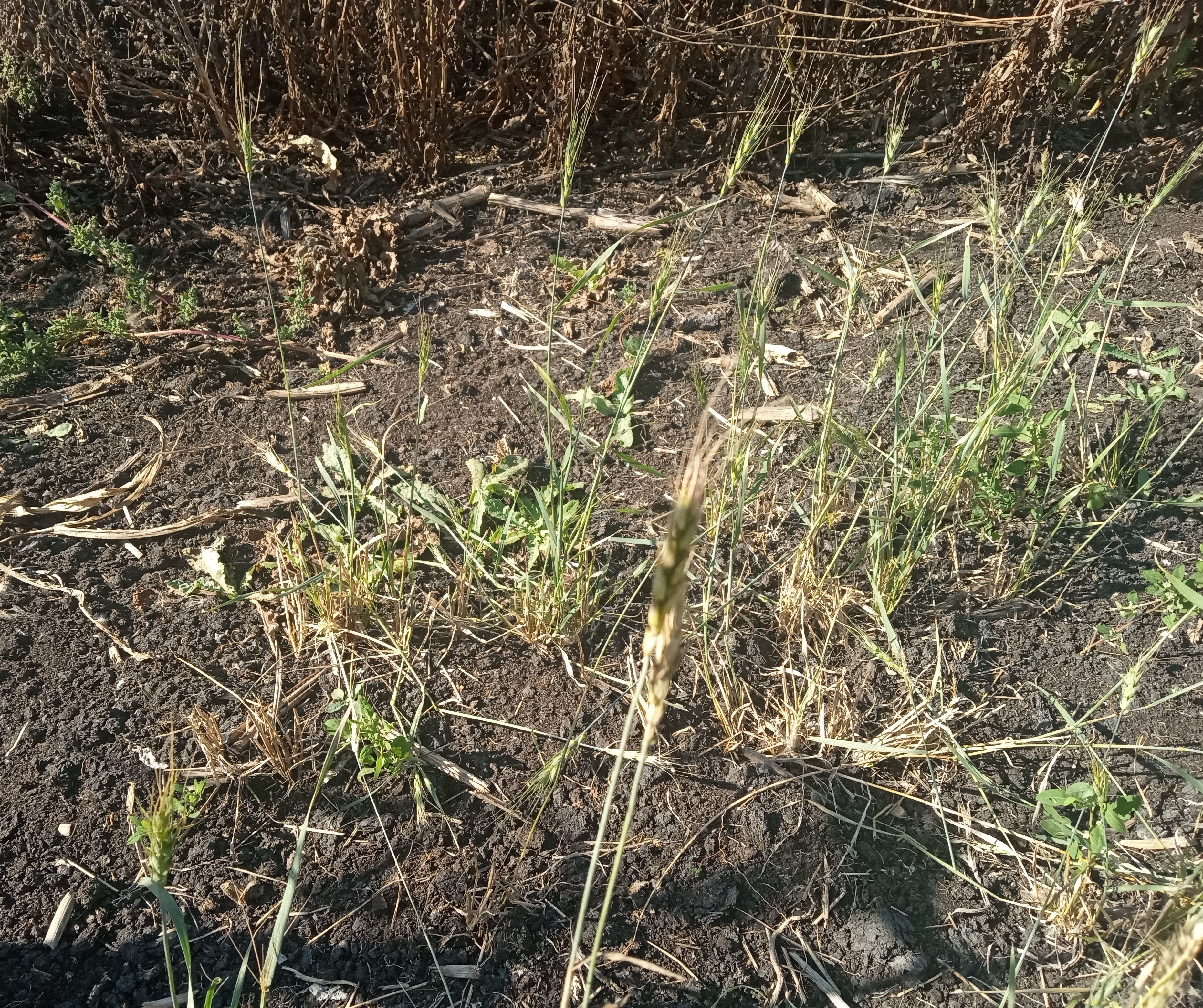
I suppose there is a chance that it could be a plain old Red squirrel or field mice because I have a number of them around here and they have done some sizeable damage, but this type of destruction to the garden is not something I have seen from them. Regardless, the damaged corn and beans were done. But the wheat did send up the odd sprig again. The broccoli sent out side shoots and produced well. And luckily, I had seeded corn in different blocks so it was not all damaged.
The one thing I did not have though was cabbage root maggot or cabbage loppers. As I discussed in DIY Floating Row Cover Tunnel for Cabbage Root Maggot and Cabbage Moth Control the floating row covers have allowed me to grow brassica's quite nicely. Although they did save my less than perfect plants from the bugs, including flea beetles, they had the added bonus of keeping them cooler for the brassica's planted in holes burnt into the landscape fabric. I will take the win!
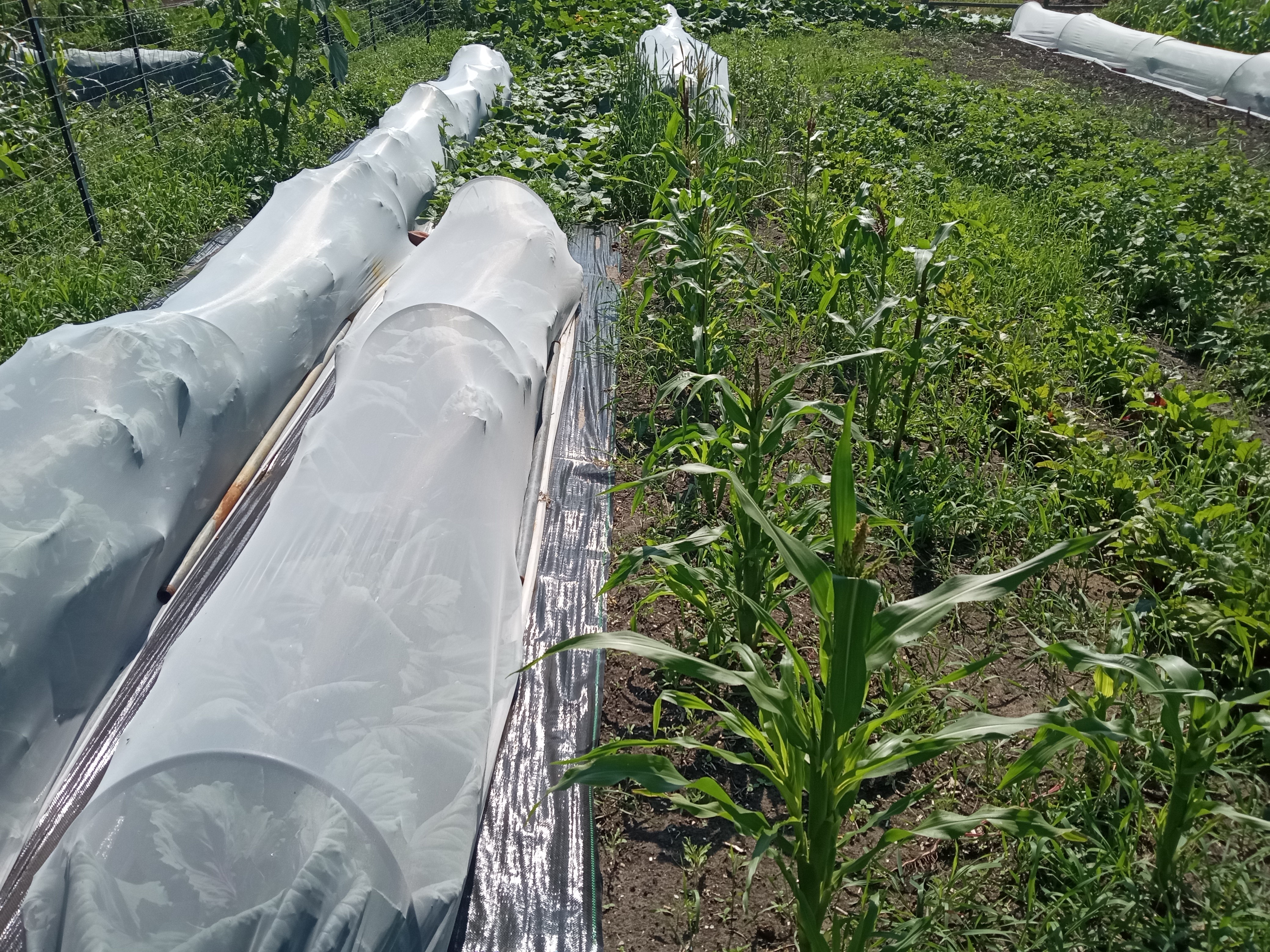
I finally got things weeded and things were coming along nicely. But with the watering, the smooth brome and quack grass was loving it. Although I was able to keep ahead of most things with my Scuffle Weeder from Homestead Iron, the smooth brome and quack grass was relentless. I decided then and there that I would limp through this summer but next spring will be putting landscape fabric down to deal with it.
Although things were certainly showing signs of stress, they were growing. The squash had gotten a foot hold and for the most part was doing well.
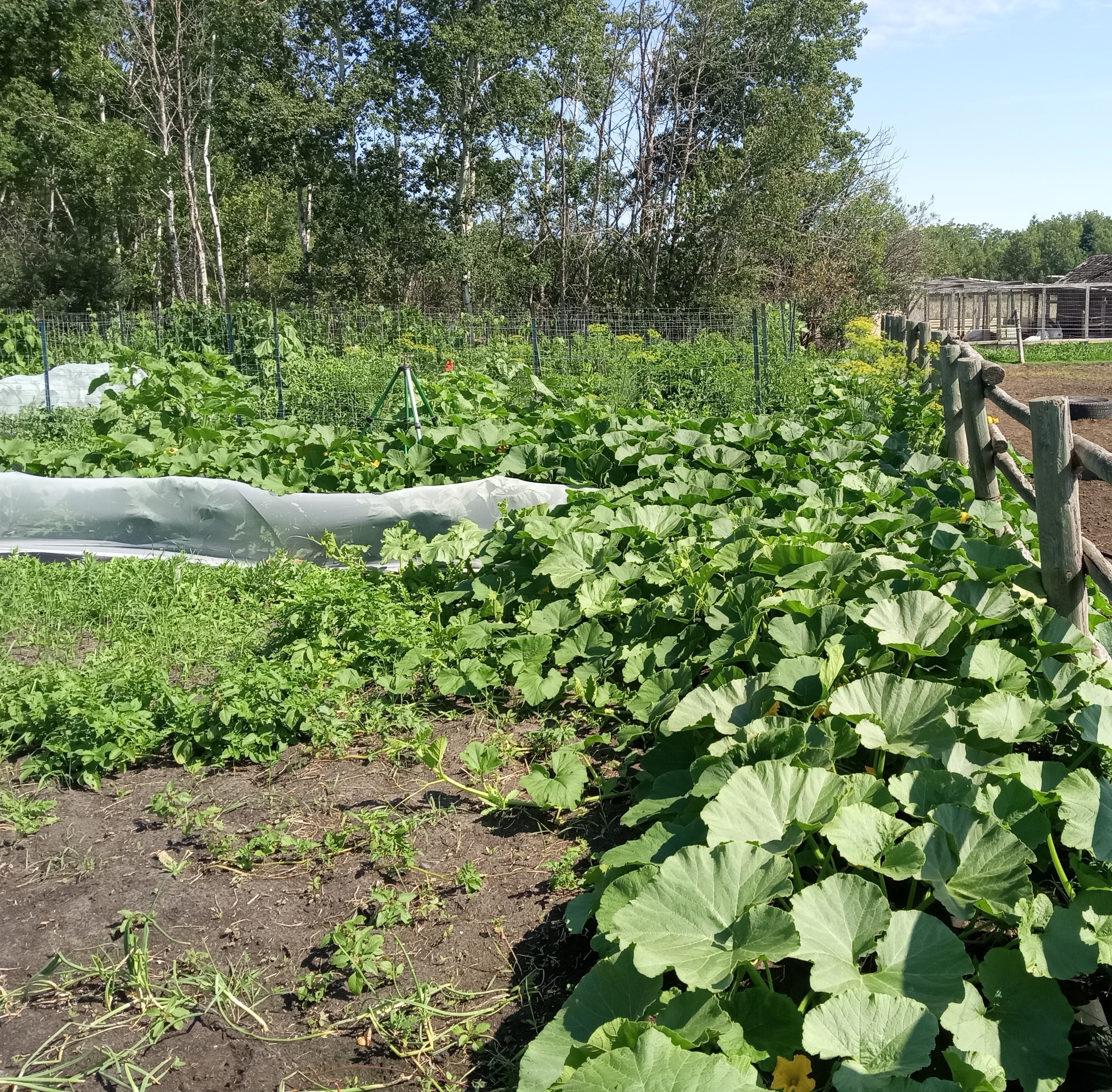
The peppers started to set fruit on smaller type plants, the tomatoes started to set fruit and the tomatillos were starting to fill. The brassica's were starting to produce really well.
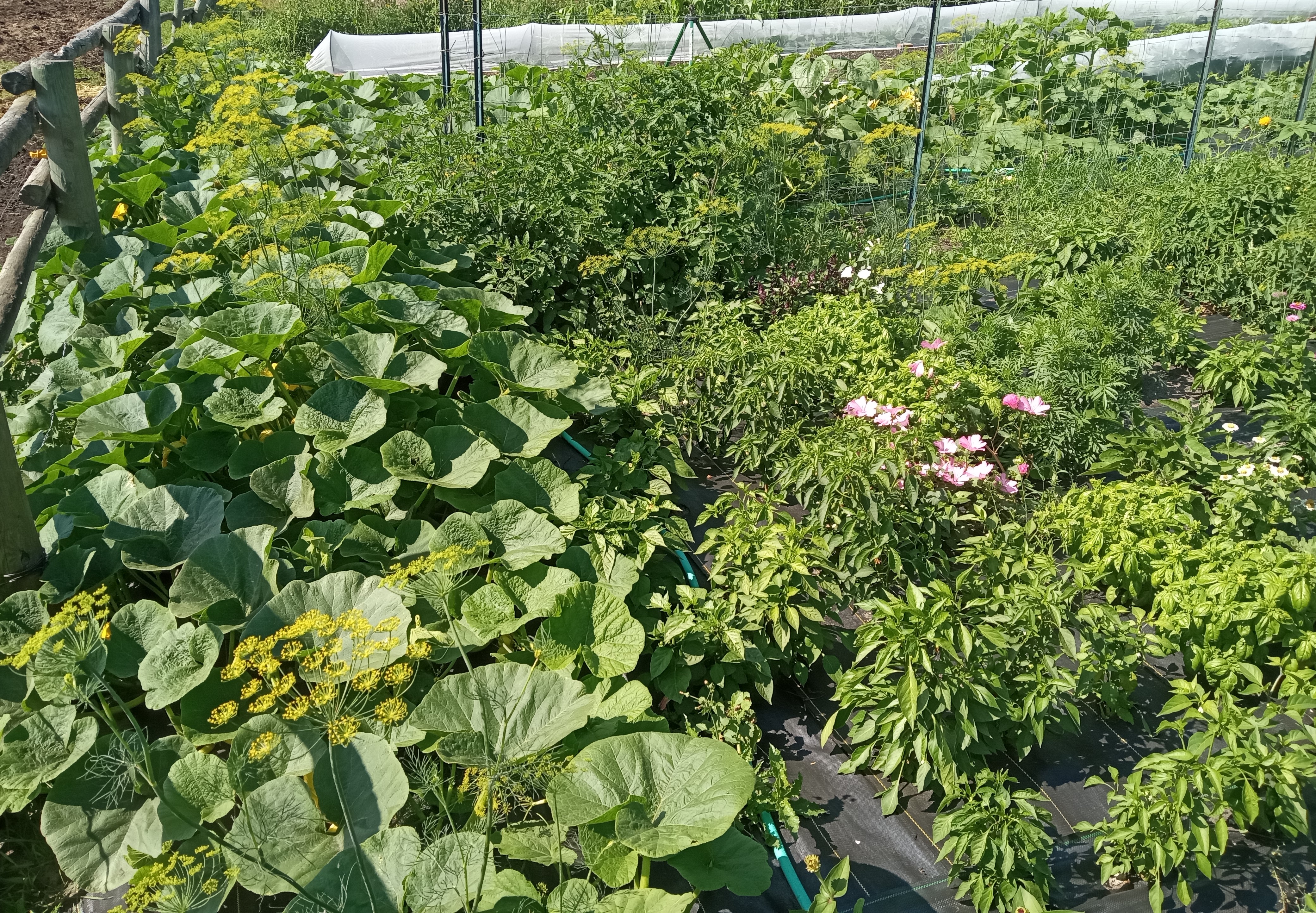
I was seeing some signs that I was going to get something out of the gardens. Even a few carrots that were hidden amongst the weed were looking promising. The second sowing of the carrots were not going to make it though.
Interesting summer garden - The raised bed garden
Some time ago, I built myself three 4X8 foot (1.2 X 2.4 m) raised beds at the very edge of the garden. As I explored in How to container garden, I was tired of battling tree roots and grass in this area and raised beds set on some old feed bags seemed like a good idea. And it was. Not only am I able to typically plant things a wee bit earlier because the soil warmers faster, there is typically not the weed pressure that I face in the main crop garden.
Over the years I have experimented with growing a number of things in these beds including planting perennials and garlic. And what I have generally found is that because I do nothing special to them going into winter, the perennials may survive in the centerish of the beds. But only if there is sufficient snow to protect them. As a result of the 2024 winter this was proven true as all the strawberries I had planted in two of the beds all but died. I was able to salvage about eight plants to transplant elsewhere. There is one very hardy Valerian plant that has continued to grow, but it also may be self seeding too.
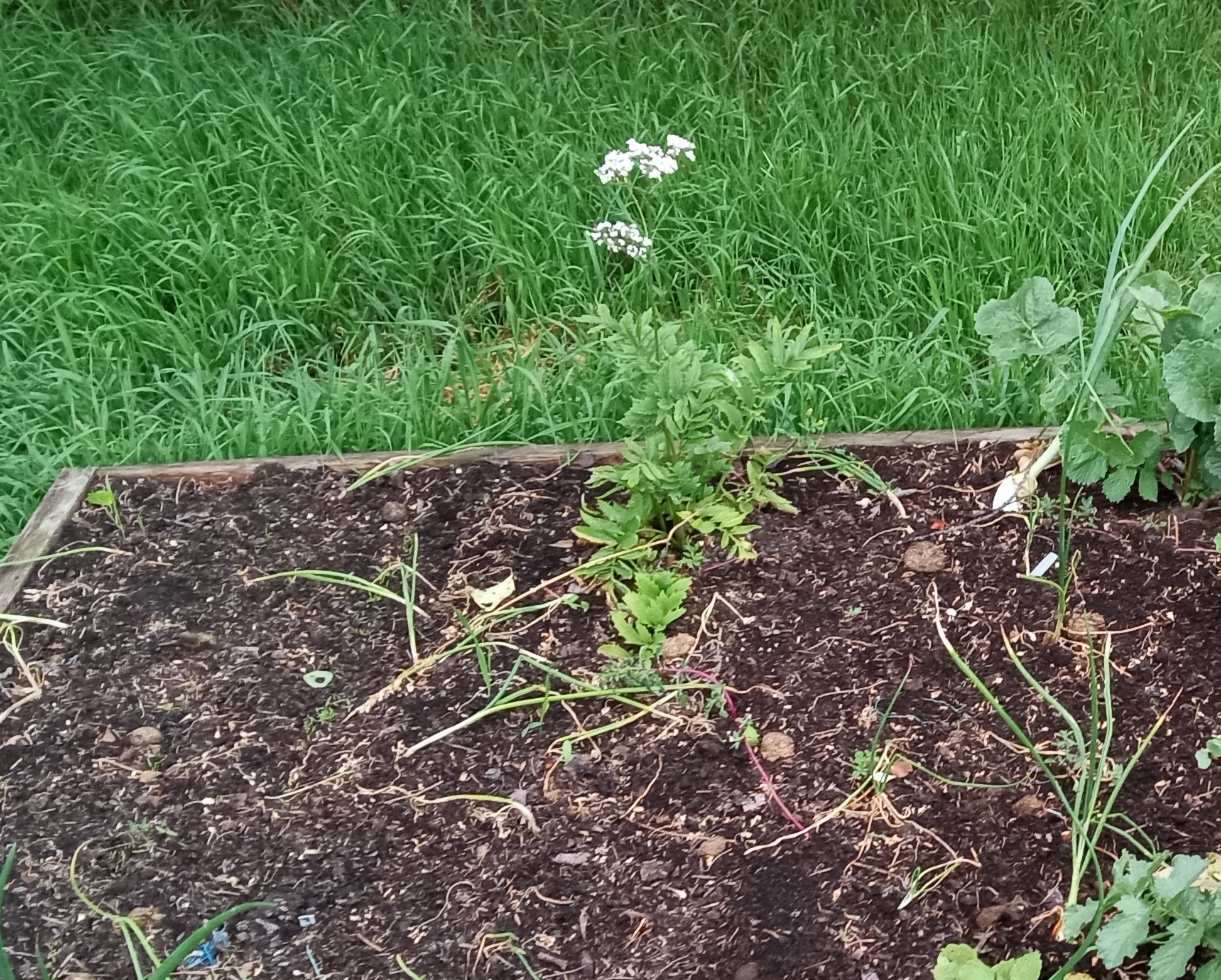
With past experience in mind, in the spring of 2025 I decided to remove what strawberries that survived, keep the Valerian in place, top dress the beds with some old horse manure and plant the three beds as if they were all I had to garden in. The main driver for this decision was to see if a small scale garden can save money, similarly to the results I found in Does Gardening Save Me Money - A Year In Review - 2024 Edition. I will be exploring this in future blog entries.
I have always planted greens in these beds and they have always done well. So when I planted these beds on June 4, one bed would certainly have lettuce and greens in it. And in the remaining spaces and beds things like early cabbage, zucchini, carrots, beets, celery, peppers, onions, tomatoes and basil were planted.
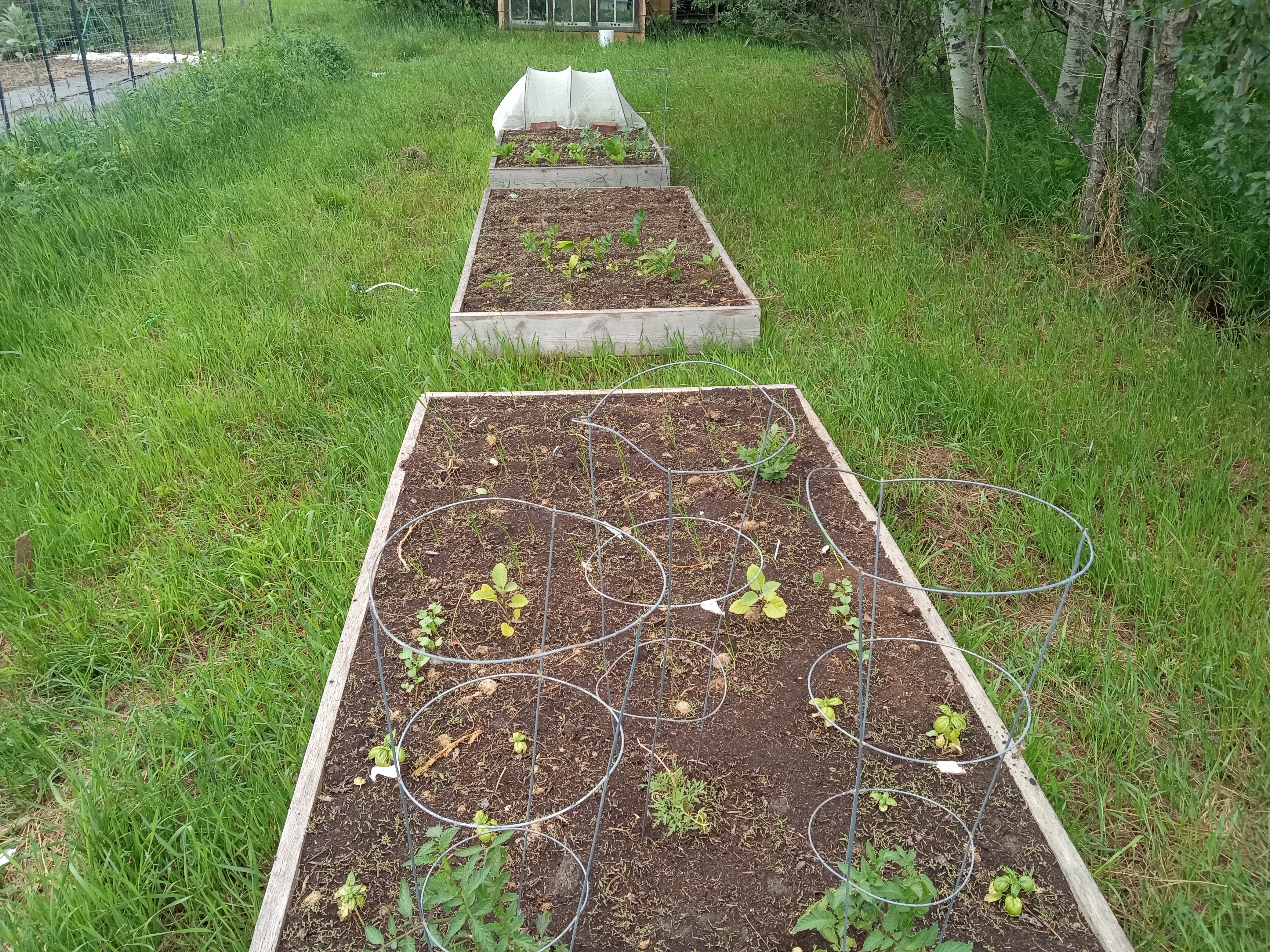
But there is one major draw back to raised beds, or at least mine, and that is that they dry out very fast. And with the pump giving me grief in the spring, I failed at keeping it sufficiently hand watered. As a result, pretty much all the onion starts I planted died and so I reseeded with some late carrots and radishes. The tomatoes, peppers and celery, although struggling, were able to get a good foot hold. However being there is only 11 inches (0.3 m) of soil in these beds, I did find it they did not perform as well as I thought they might. Luckily, when I got the pump and sprinkler head working I was able to keep things watered better and things started to do much better.
By the end of July, the lettuce bed provided many meals including some kale I transplanted from my indoor growing;
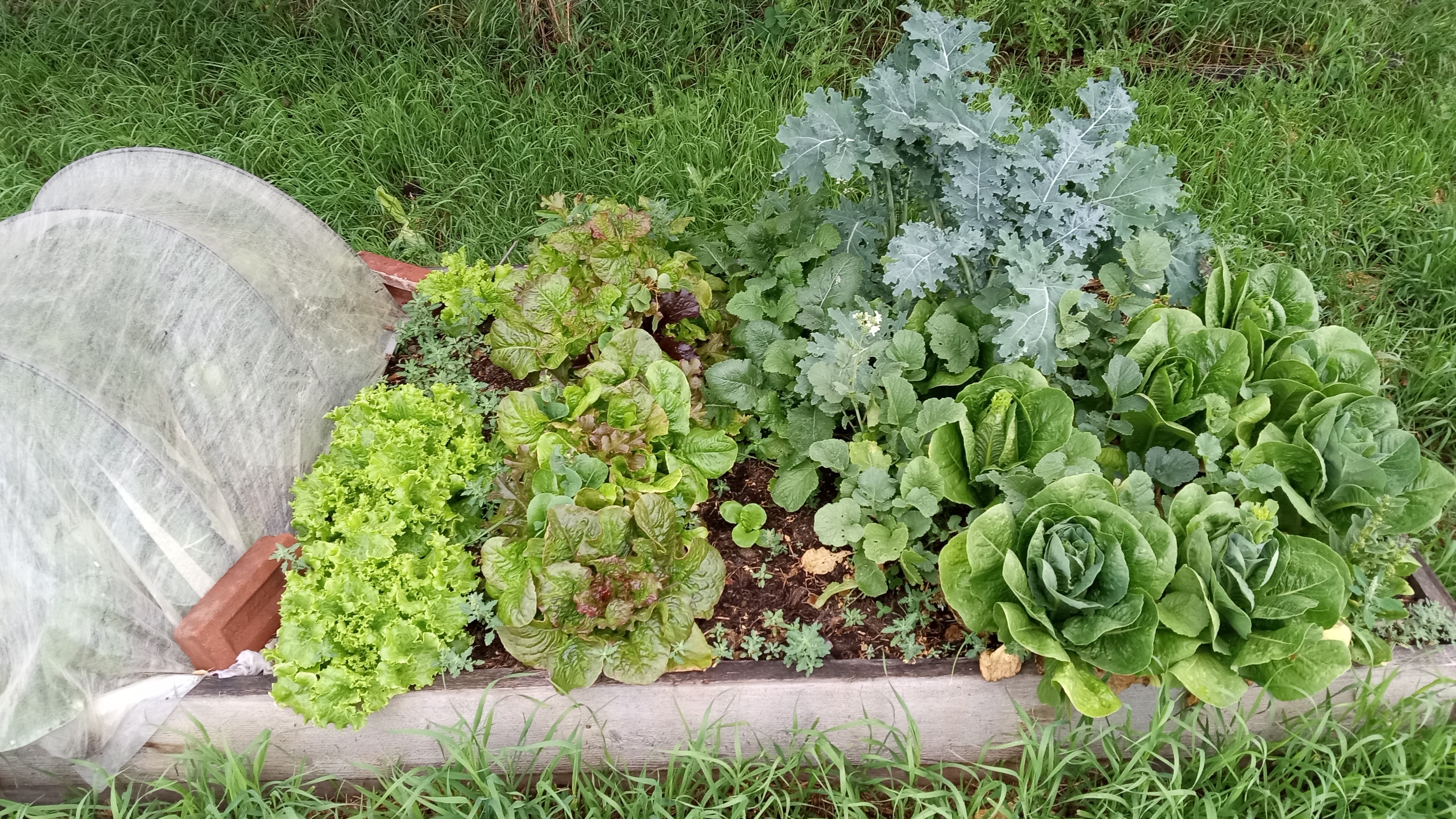
the second bed with zucchini, beans, beets, carrots, etc. did okay, although I did need to reseed some things;
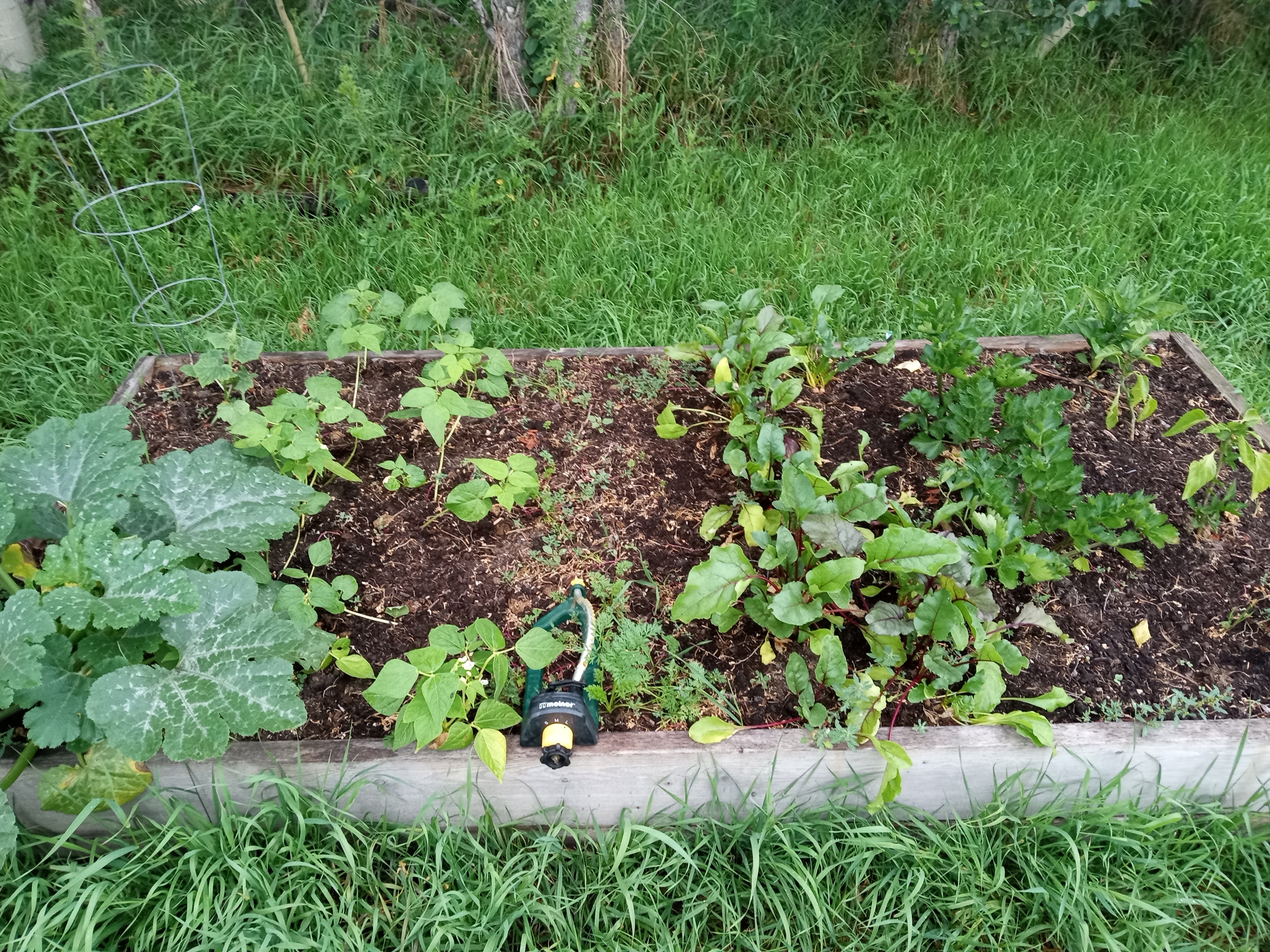
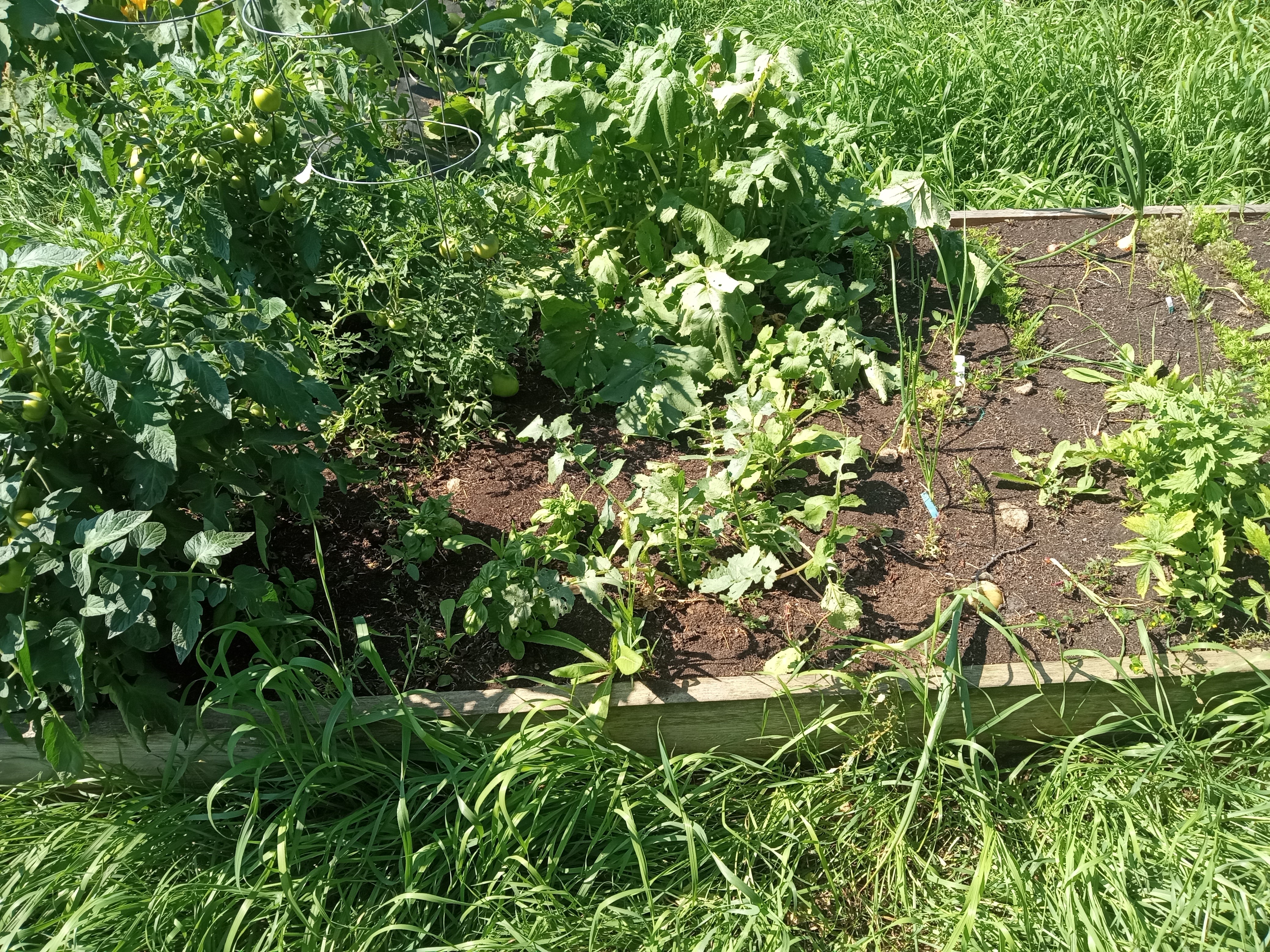
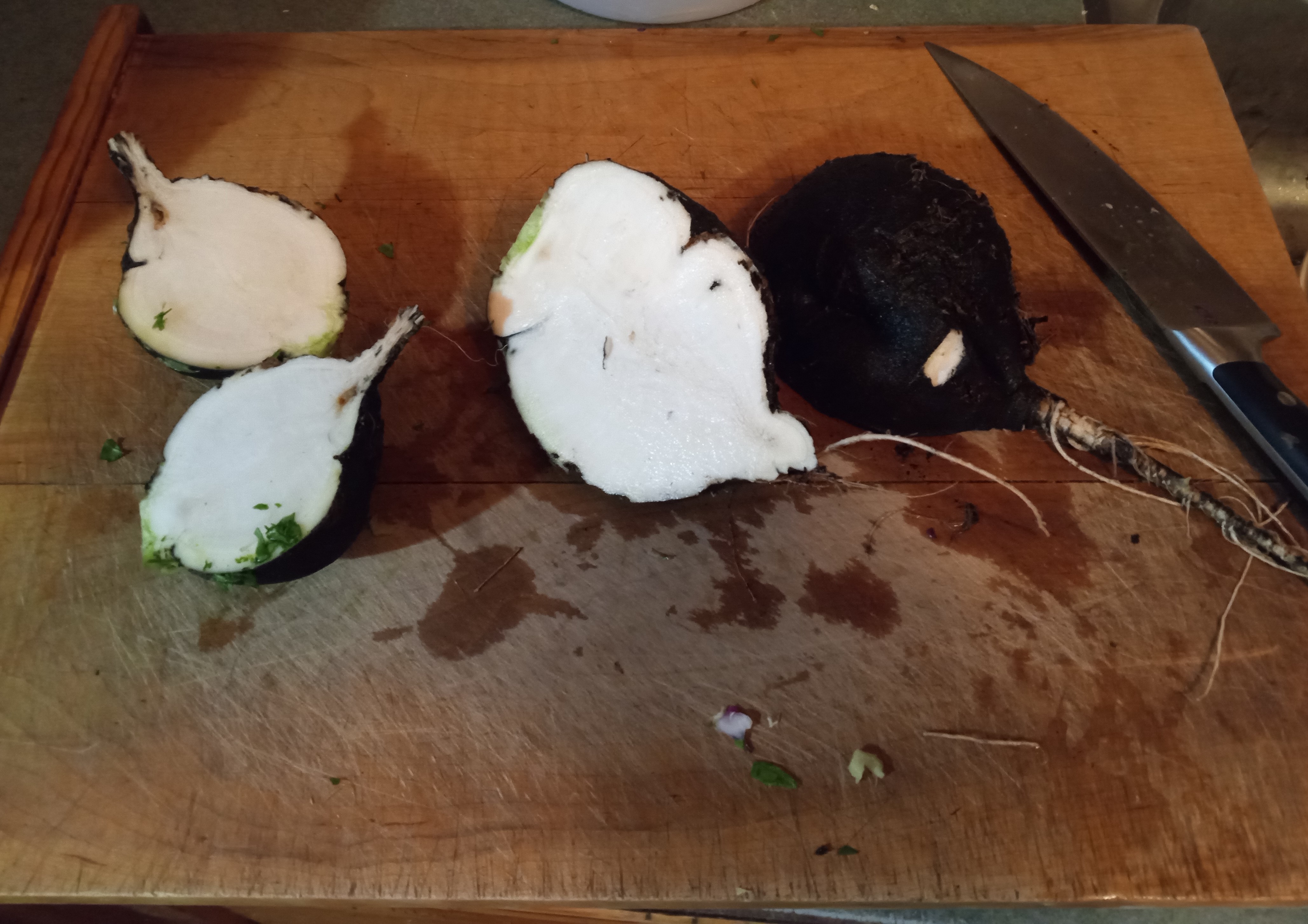
and the third bed was pretty pitiful, for the most part. By the end of August, the tomatoes did okay but I ended up reseeding the entire onion patch in this bed with carrots and because I was able to keep it watered, I actually ended up with a small amount of small carrots. But the Black Radish (Nero Tonada) were impressive and loved the bed. This was the first time growing these as a friend sent me the seed. I will be certainly growing them again.
Interesting summer garden - The food forest orchard garden
The food forest orchard garden is something that I have been working on for many years since I established it in Establishing a Food Forest Orchard Garden - But Will it Save Me Money. Although there are a number of perennial plants within the boundaries of this garden, I also like to plant a number of annual type vegetables. This year was no exception. But before completing the planting I decided to top dress the various beds with some rotted horse manure. Planting this year involved a number of summer squash, soft neck garlic, North Georgia Candy Roaster winter squash, Glass Gem corn, more perennial flowers and herbs, some annual flowers and two beds of experimental heritage wheat, Red Fife and an Alaskan bred Ingal variety. I also planted the strawberries from the raised beds in one of the mounds within the boundaries of this garden.
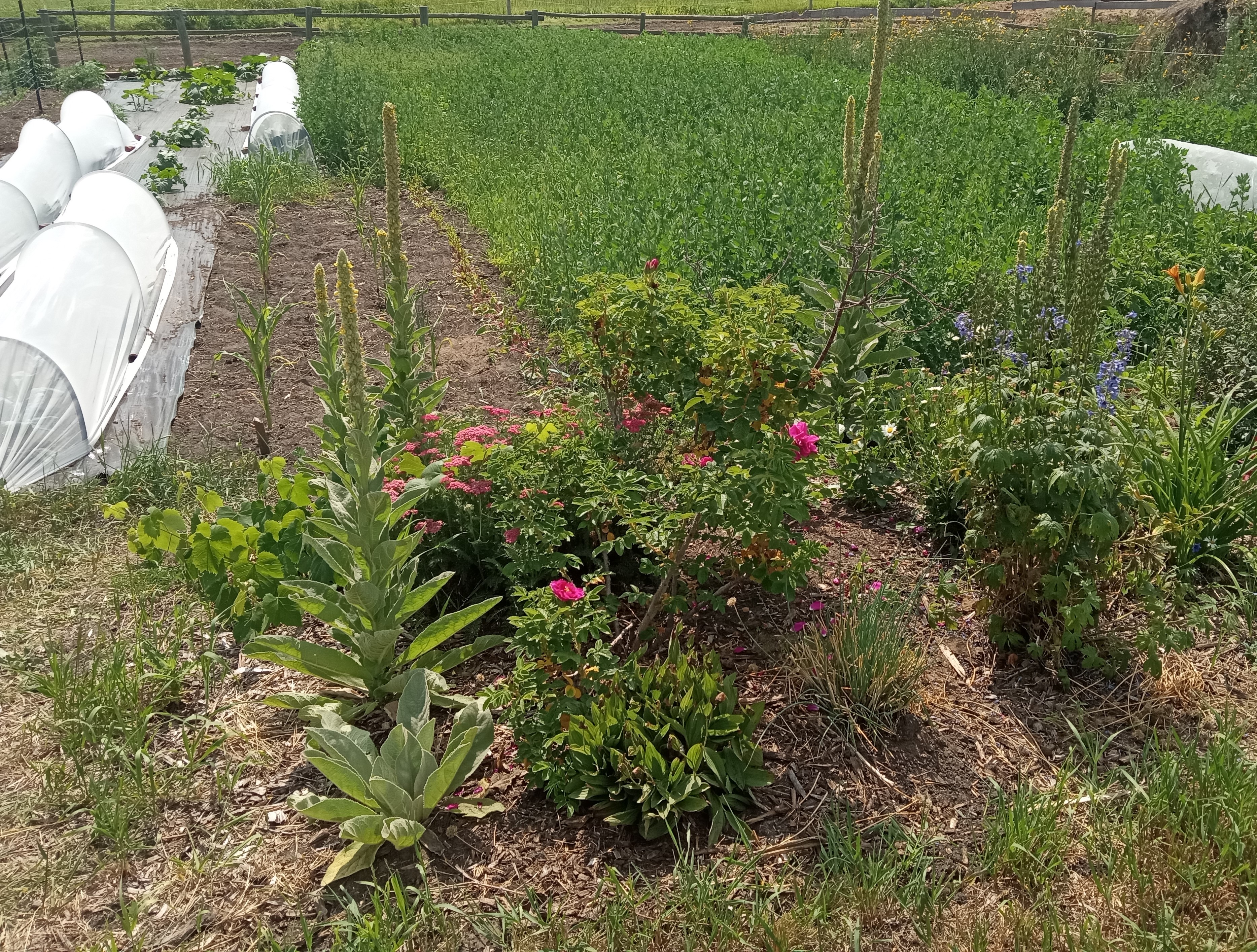
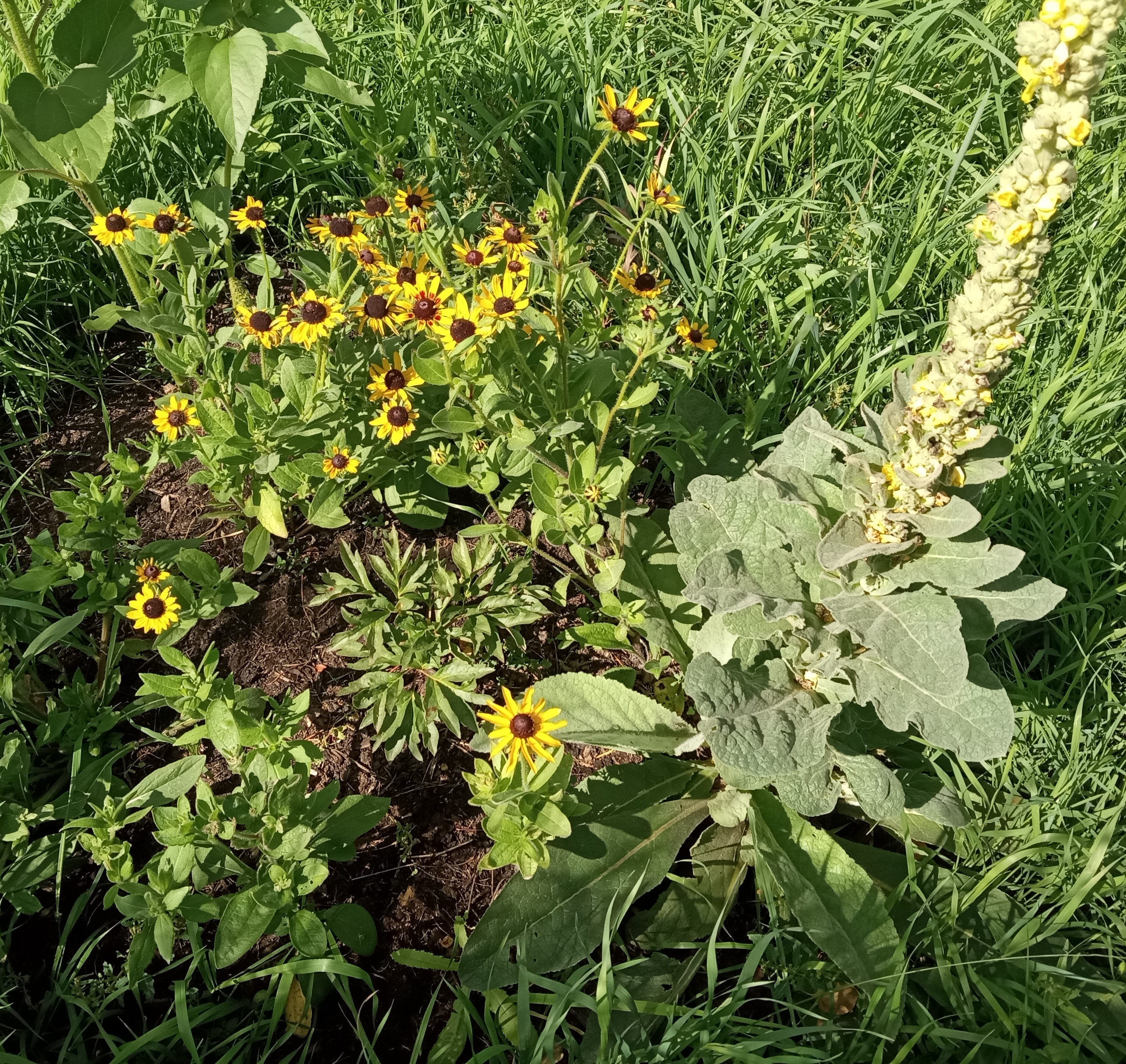
With my inability to properly water the food forest orchard garden many things did not come up well or if they did, they were stunted. Very few corn came up. The Red Fife bed had almost no germination while the Ingal bed had minimal germination. And the other beds were a bit of a hit and miss. However, a couple of them were show stoppers like this bed of Black Eyed Susan (Rudbeckia hirta) and Mullein, both of which I grow for medicinal purposes. The flowers are pretty too.
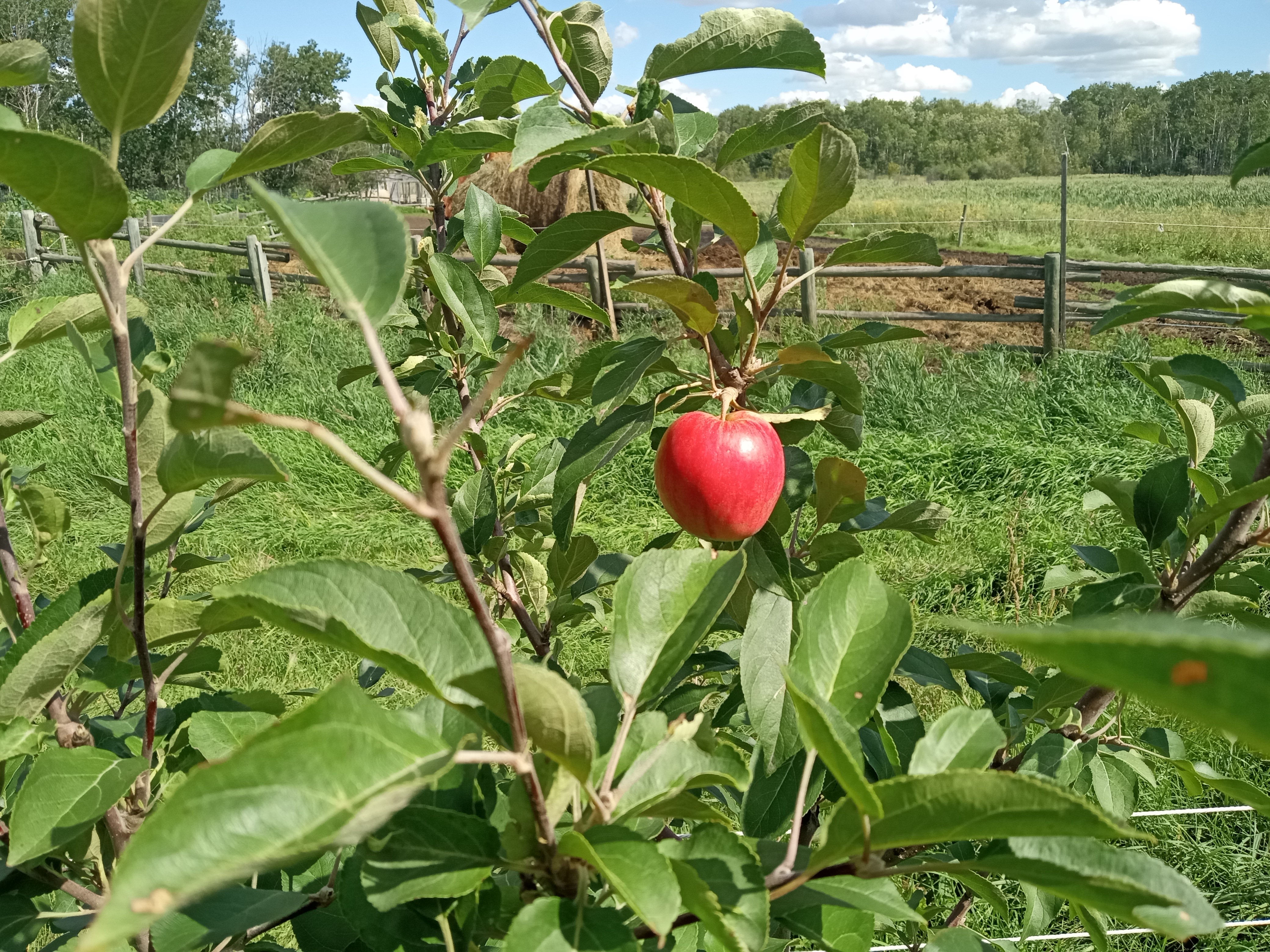
Although the primary layer of the food forest orchard garden is the fruit trees, only a few of the trees actually bloomed. Despite watering extensively when able, the drought and weather really hurt the trees. And like others were saying, I did notice there seemed to be fewer pollinators. So whether it was lack of pollinators, the weather or the drought, what flowers there were dried up pretty much right away. Making me think that I was not going to get any apples this year. But low and behold the Kerr apple set some fruit despite looking like it was drought stressed and possibly having some branches dieing off.
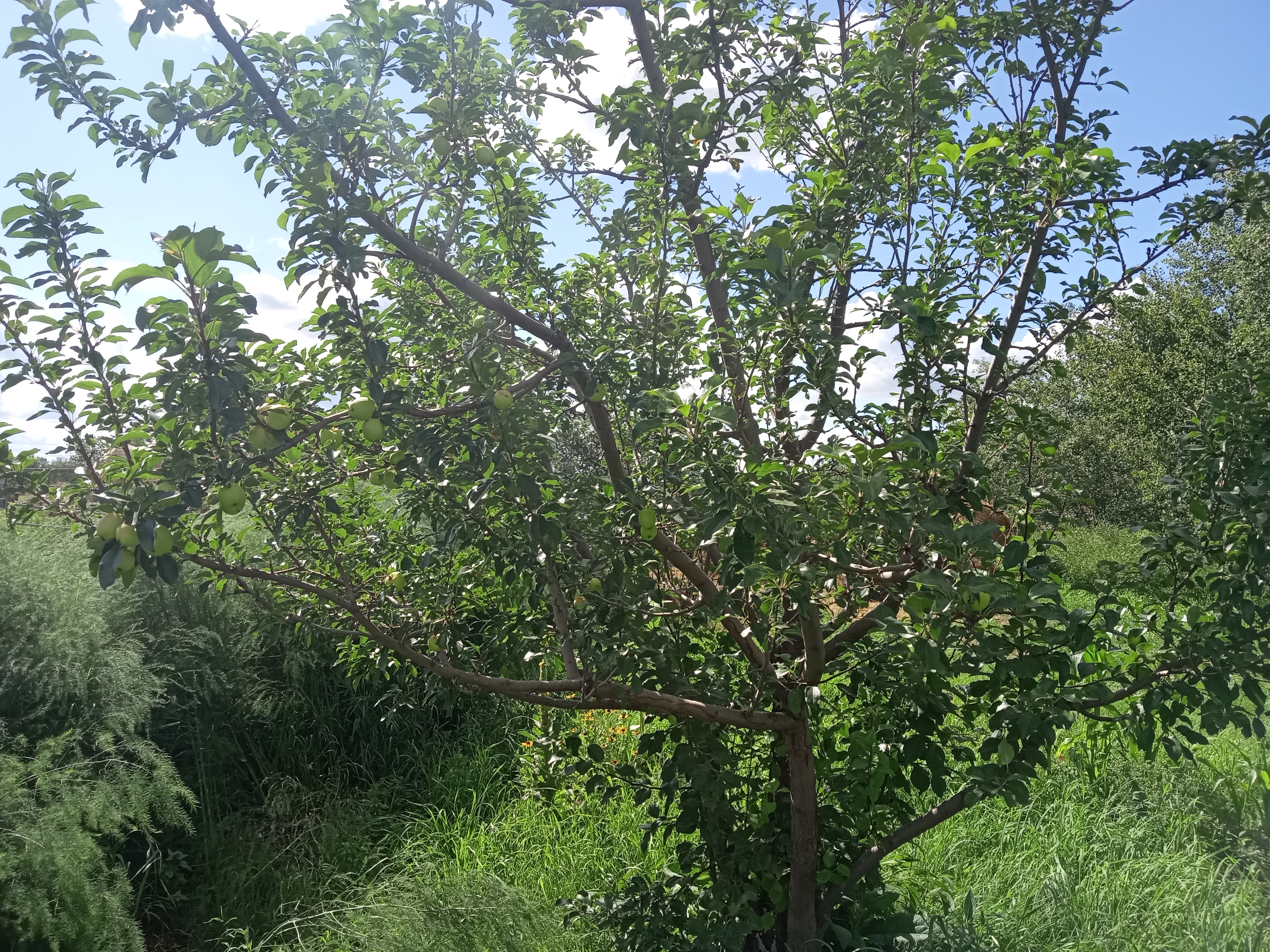
And the Norland apple produced enough delicious, juicy apples that I could munch on one each day for a week or so while I did chores.
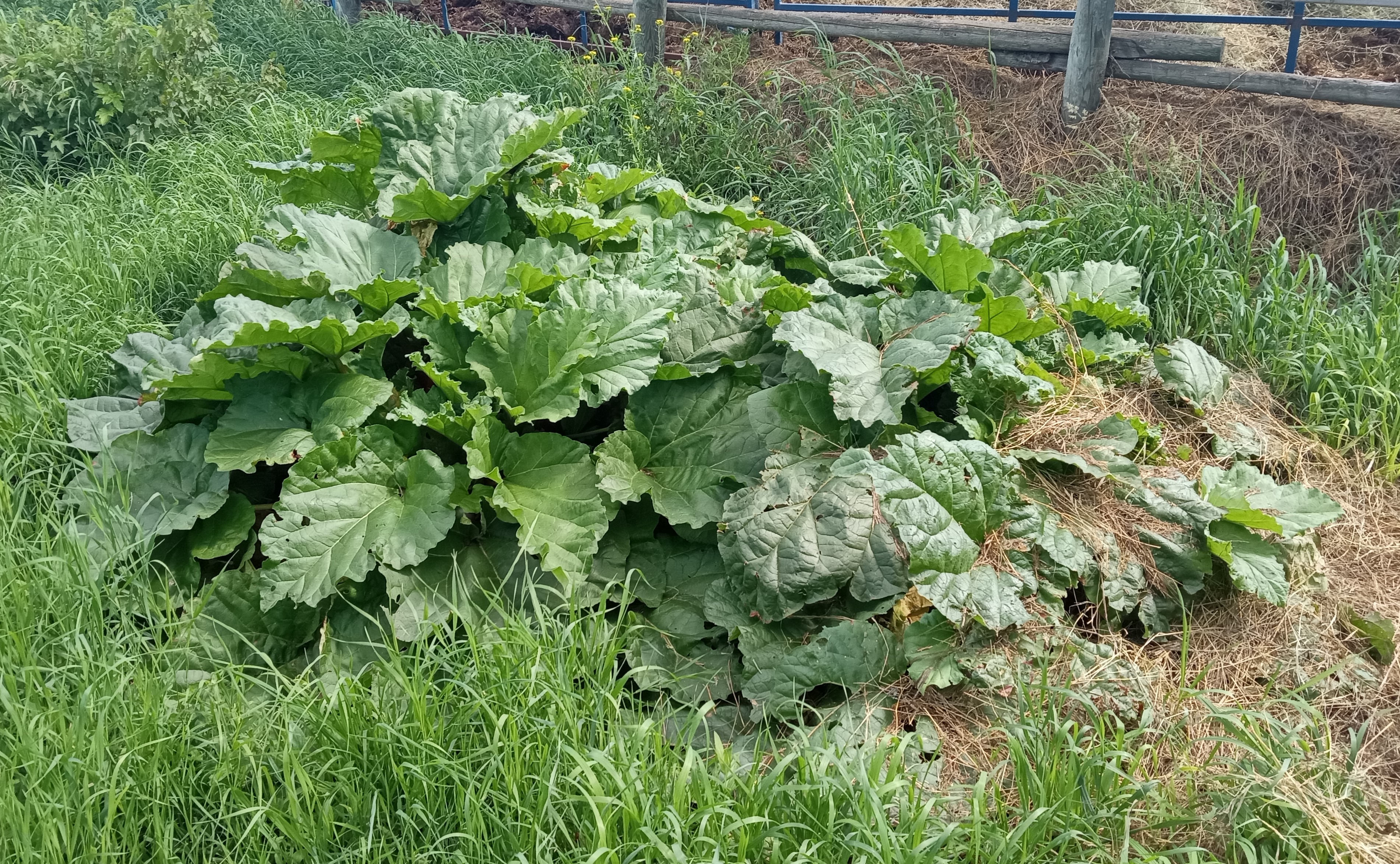
The Saskatoon bushes produced some but not sufficient enough for me to pick any for the freezer. Between the birds and drought, but mostly the birds, I only got a few feeding. But there was really two things in his garden that impressed me. One without a doubt was the rhubarb. As I covered in Every garden should have this perennial vegetable I believe every home should have one because drought or wet it just keeps producing. Mine has been in this spot for 30 plus years and has grown in size with little to no care. A definite keeper. I did not even harvest any this year as I have lots in the freezer from this huge plant.
The other impressive thing was the asparagus which despite everything going on in my Food Forest Orchard garden continued to produce in abundance. Not even the moles caused it to take pause.
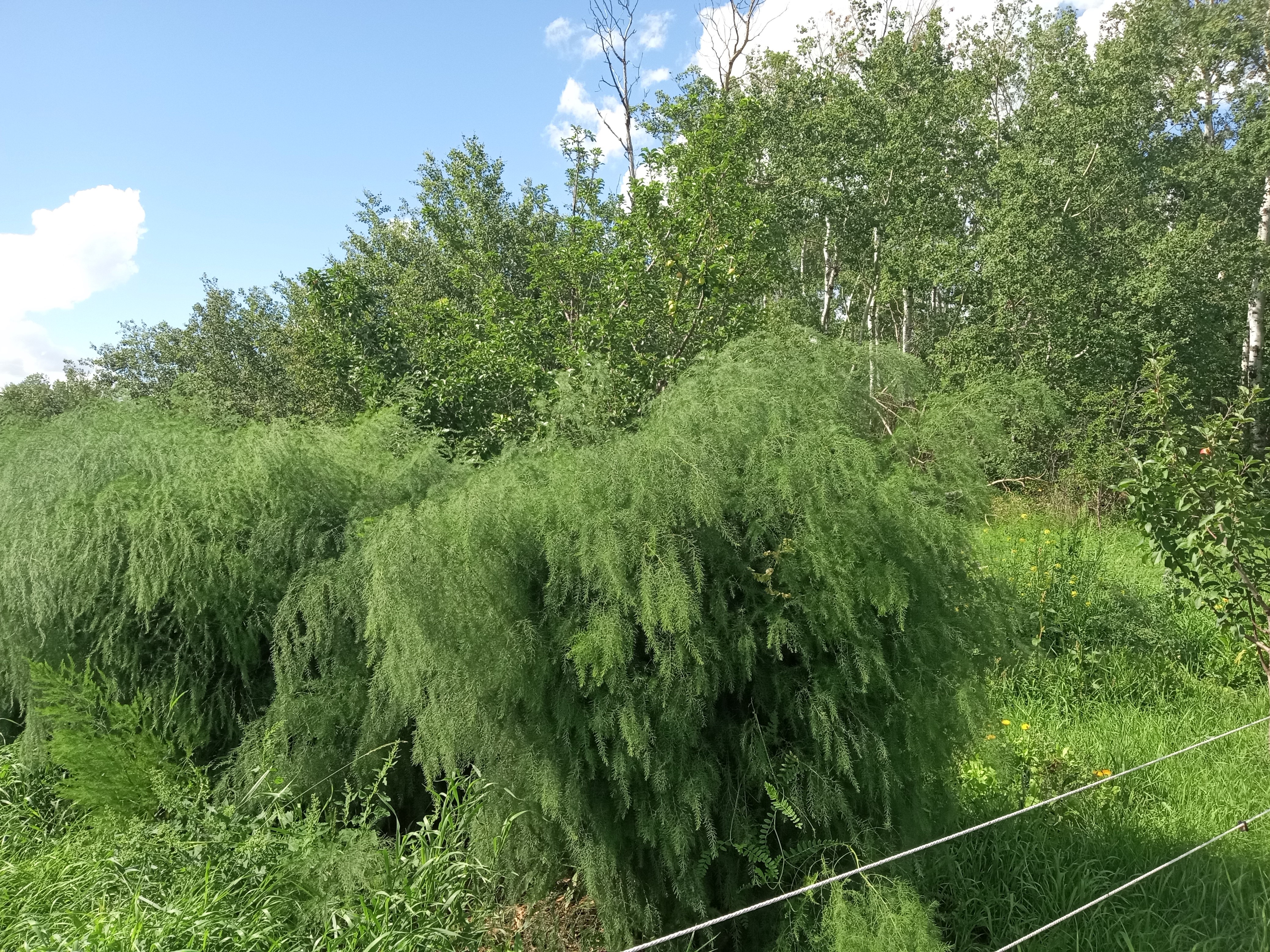
It produced in such abundance that I was picking spears every couple days whether to eat fresh or cooked. They just did not want to quit. I should have made some pickles but decided against it and simply froze the spears. Very early into the summer I had enough that I simply quit picking. But without me picking it, the fronds soon took over and over the summer it turned into quite the hedge.
Interesting summer garden - Fruit tree guild
As I covered in Creating a Fruit Tree Guild with Hardscape using Permaculture, in the spring of 2024 I decided to create a fruit tree guild in a section of the yard up by the house. It's purpose was to supply some beauty, allow for a location to grow some additional fruit trees and add a bit of a wind break from the north east winds that like to come down my driveway in the winter. By the time late fall came along, I did a late season weeding of the quack grass and it was tucked in for the winter.
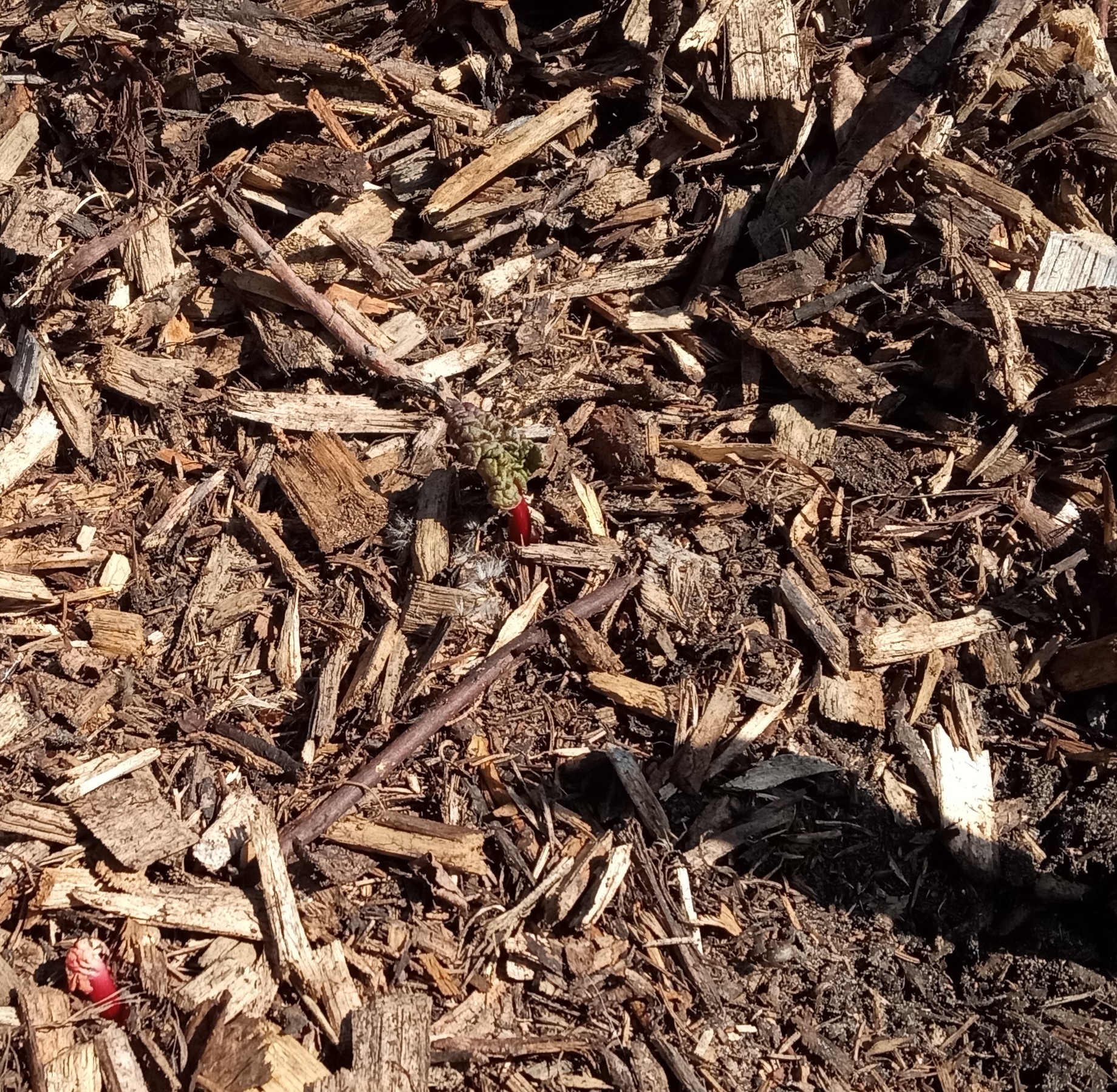
That was until I brought home some red rhubarb from my parents home. This rhubarb is off a plant that lived for years on my Dad's generational farm and then was transplanted to their in town home when the farm was sold. With the in town home now selling, I wanted to be sure I had a piece of that history. Besides, it is really good rhubarb. I dug up a couple pieces the third week of November and put them into the tree guild in hopes that they would make it through the winter. Shortly after planting we got a sizeable snowfall and the whole thing was put to bed for winter.
So come spring I was really excited to see some little shoots of the rhubarb plant emerge.
And over the summer it continued to grow well. The elderberry, perennial herbs and plum trees also decided to do well. I did loose the top of the one plum tree but luckily it did send out some new sprouts that I will be able to train. As I wanted to create this into a highly productive, picturesque guild, a mini food forest, I decided to plant a number of perennial lilies I dug up from my folks place,
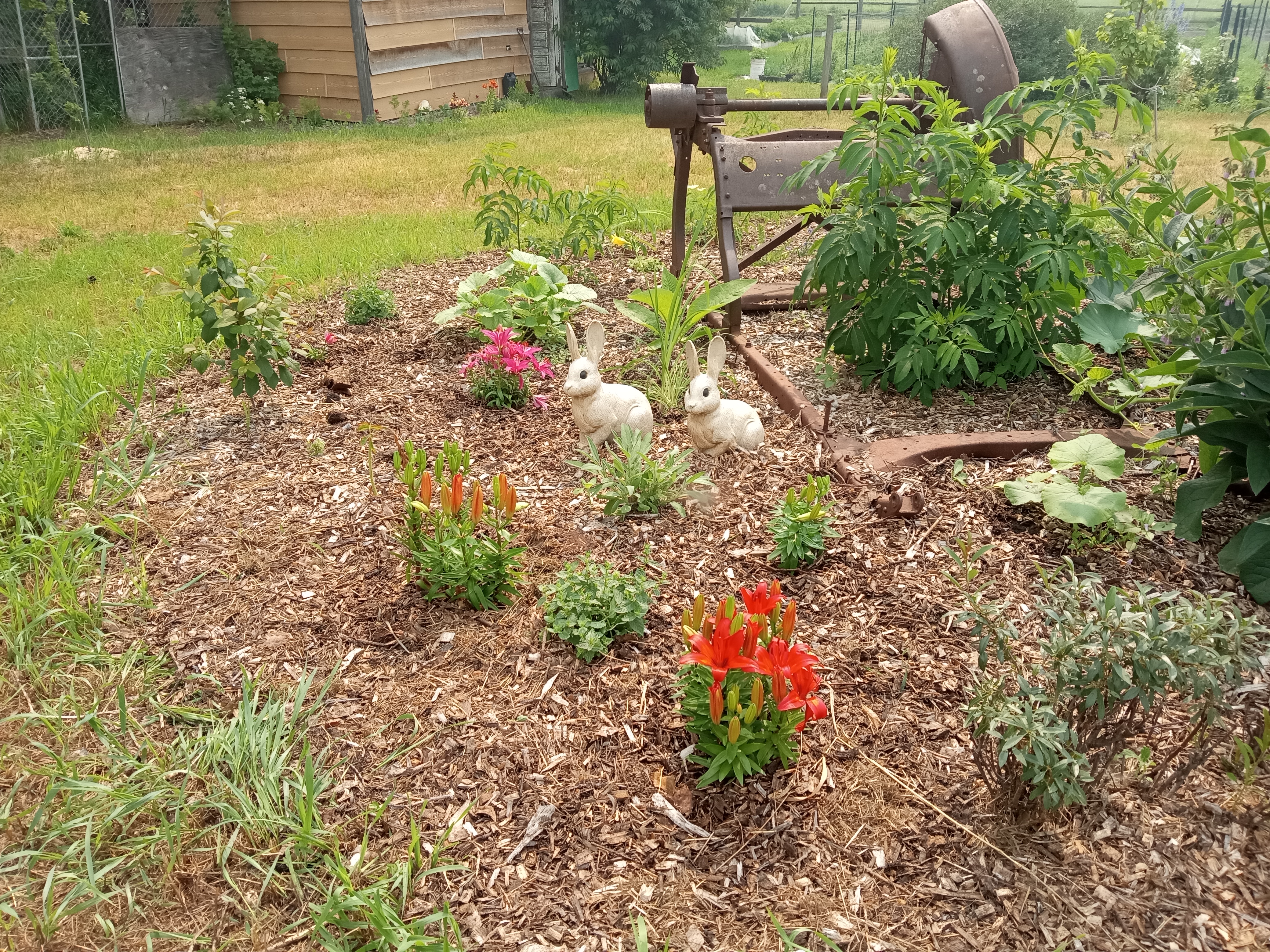
some more perennial herbs such as this Good-King-Henry (Blitum bonus-henricus),
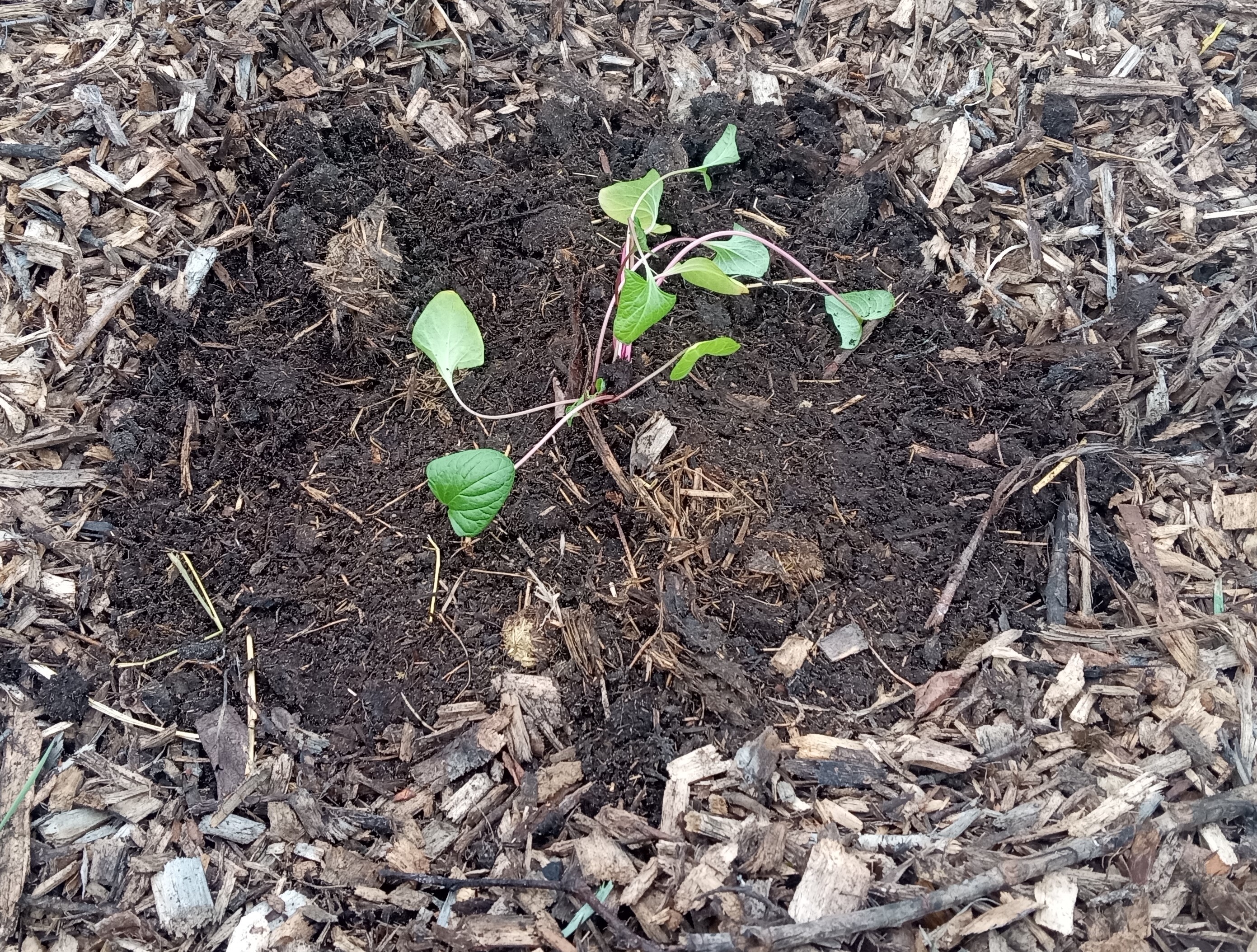
and transplanted a grape in hopes that it will use the saw for a trellis.
But as this guild is in it's infancy I wanted to plant some annual squash to fill in the gaps. To do this I simply made mini planting spots in which I planted three carefully selected squash plants. As I wanted to save seeds from two of the varieties, the squash were selected to ensure that they were not part of the same species and therefore would reduce the possibility of cross pollination of the squash. The bed is also about 100 feet (30.5 m) from the main squash bed. Maybe not the ideal for totally species secure seed saving, but certainly a lot safer than from within my main bed. I decided to plant two of my favorites, a Buttercup (Cucurbita maxima) and Spaghetti squash (Cucurbita pepo) and then trial a new variety, the Nutterbutter (Cucurbita moshata). Although I had them in the ground the end of May, I had to reseed the beginning of June. But by the middle of July, with some good watering, they were doing very well.
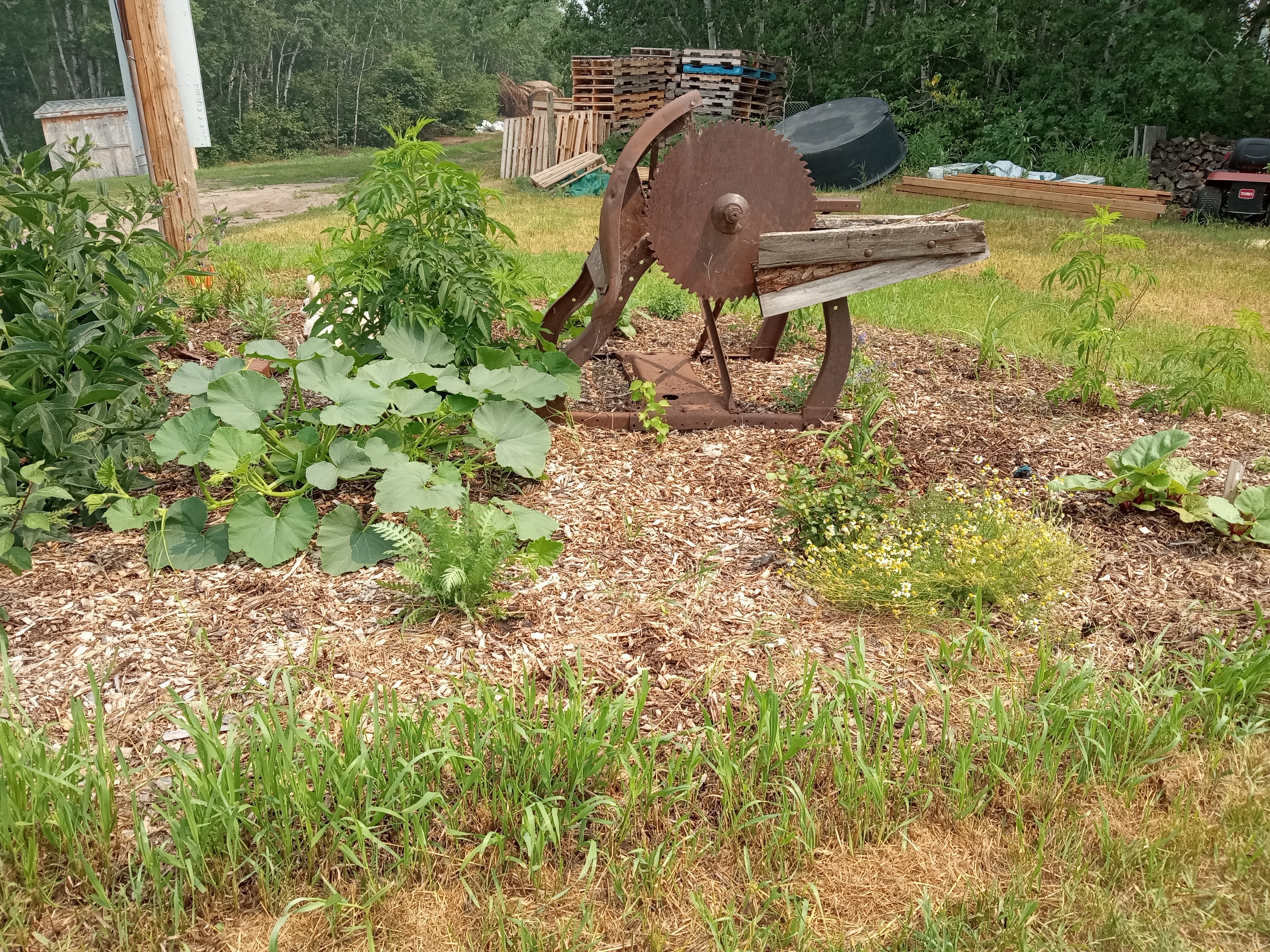
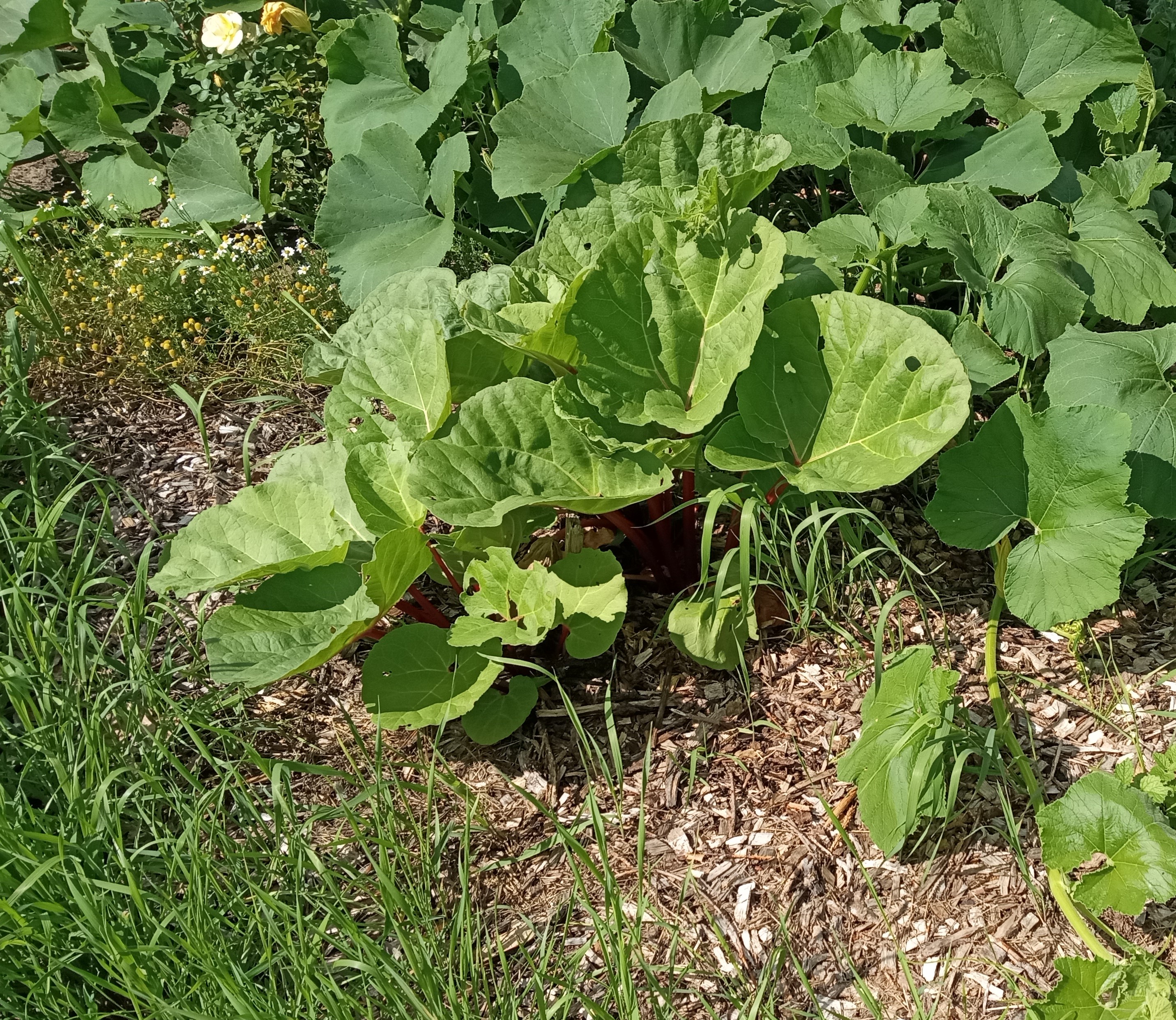
By the end of August the red rhubarb was doing very well.
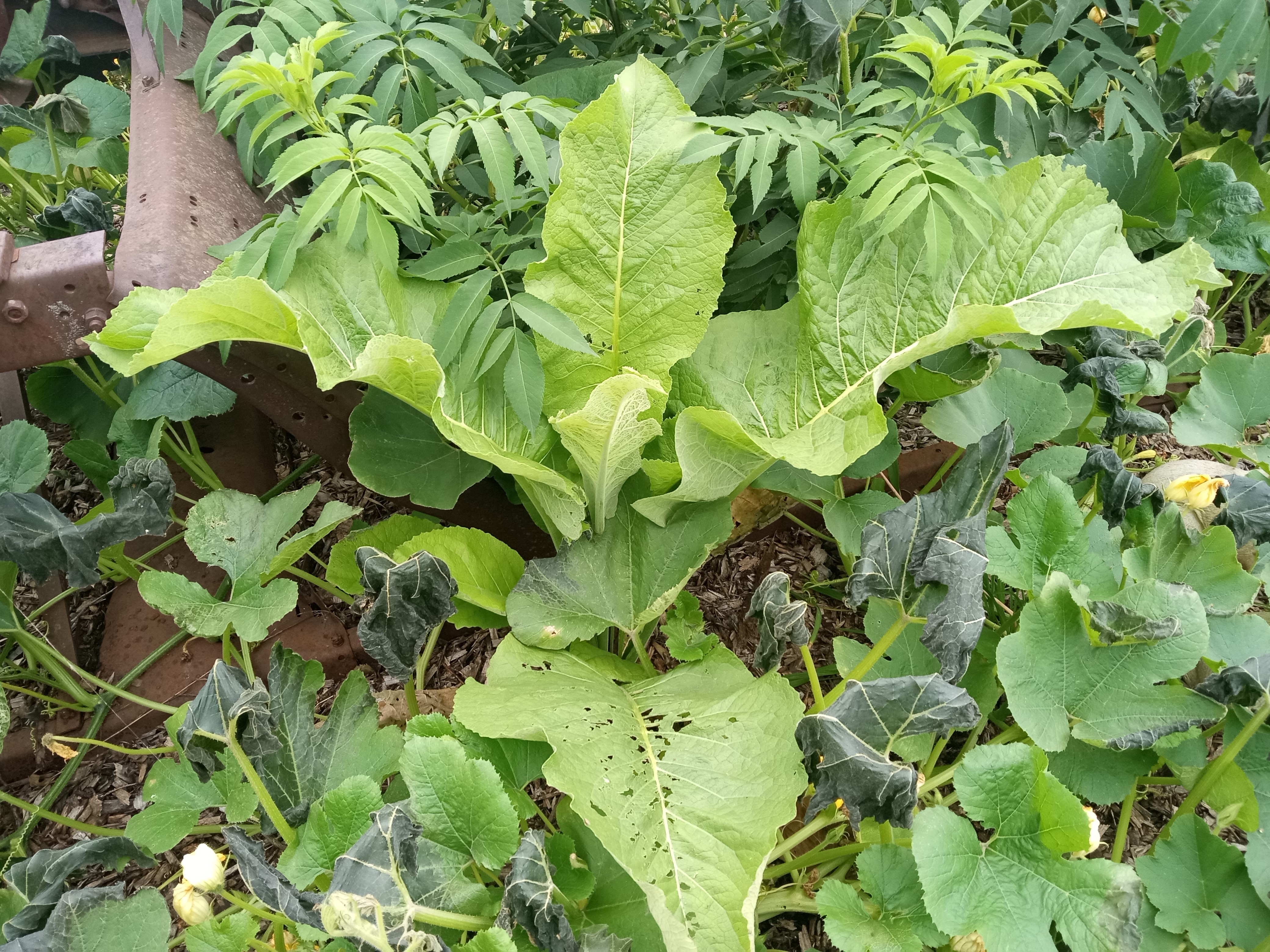
The Elecampane (Inula helenium) was doing superb.
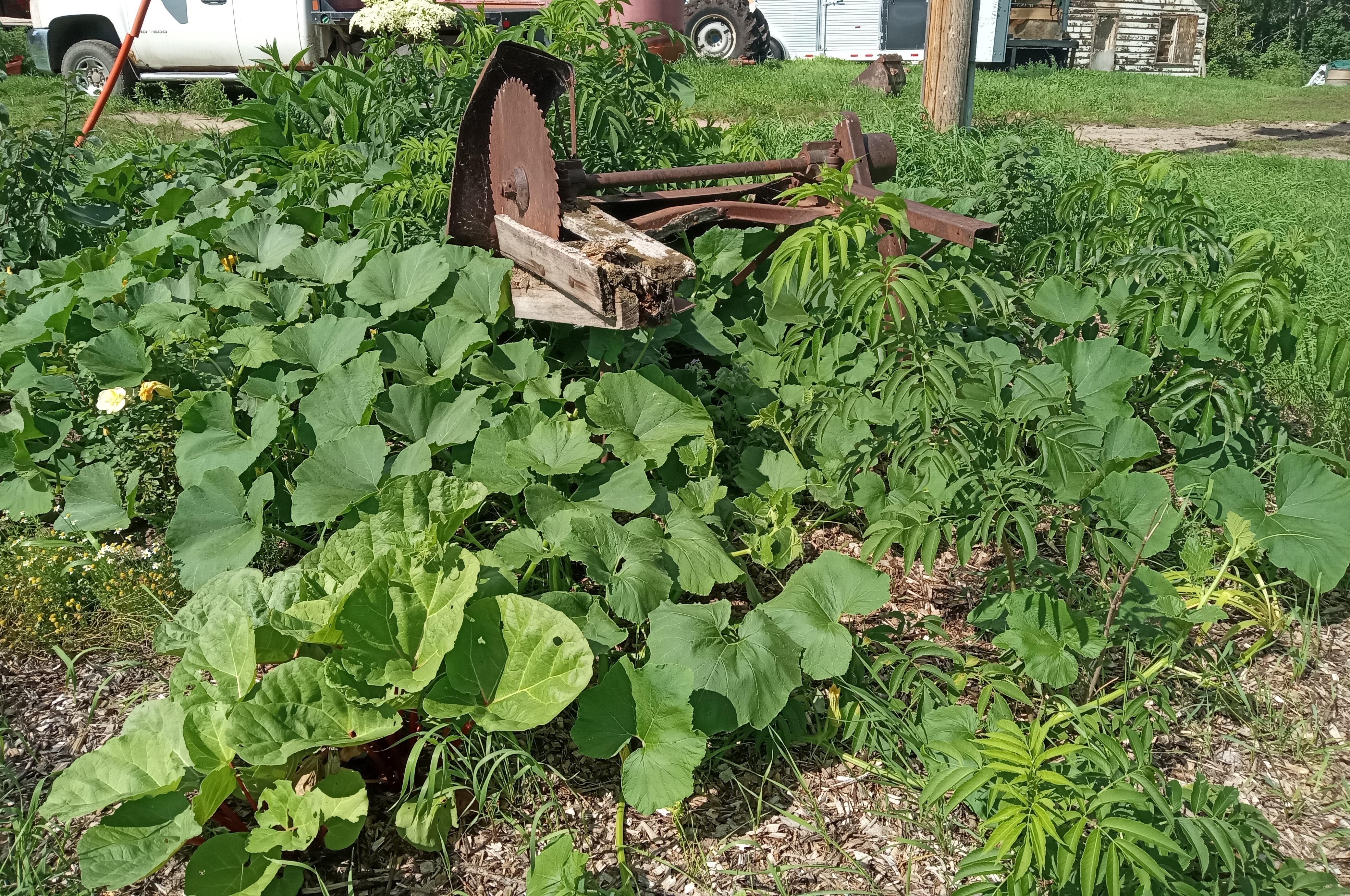
And the overall appearance of the fruit tree guild was certainly well on it's way to being what I had envisioned. Even the sterile Russian Comfrey (Symphytum × uplandicum) and elderberry were doing well.
Until it wasn't…
Interesting summer garden - The start of the end
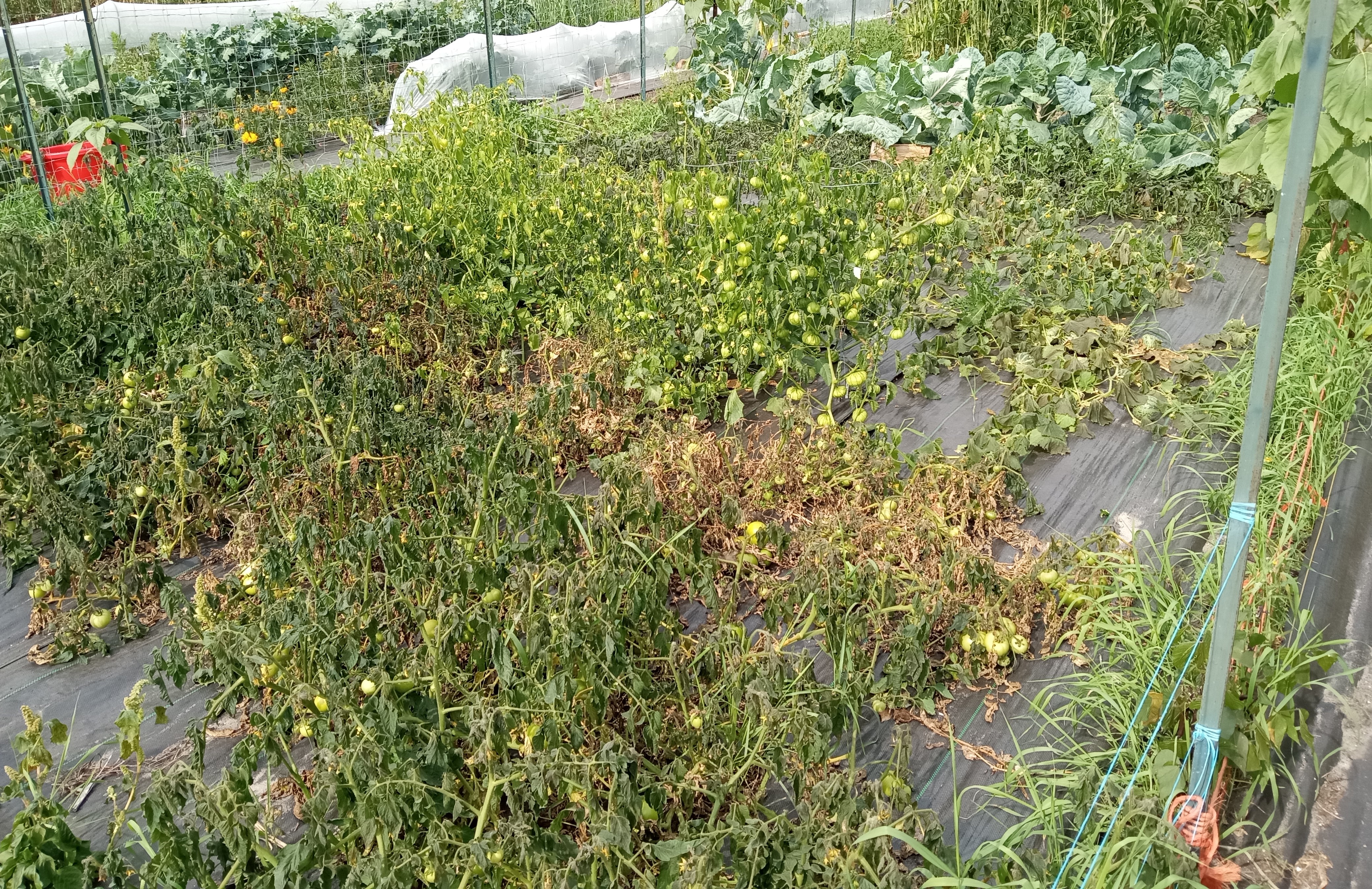
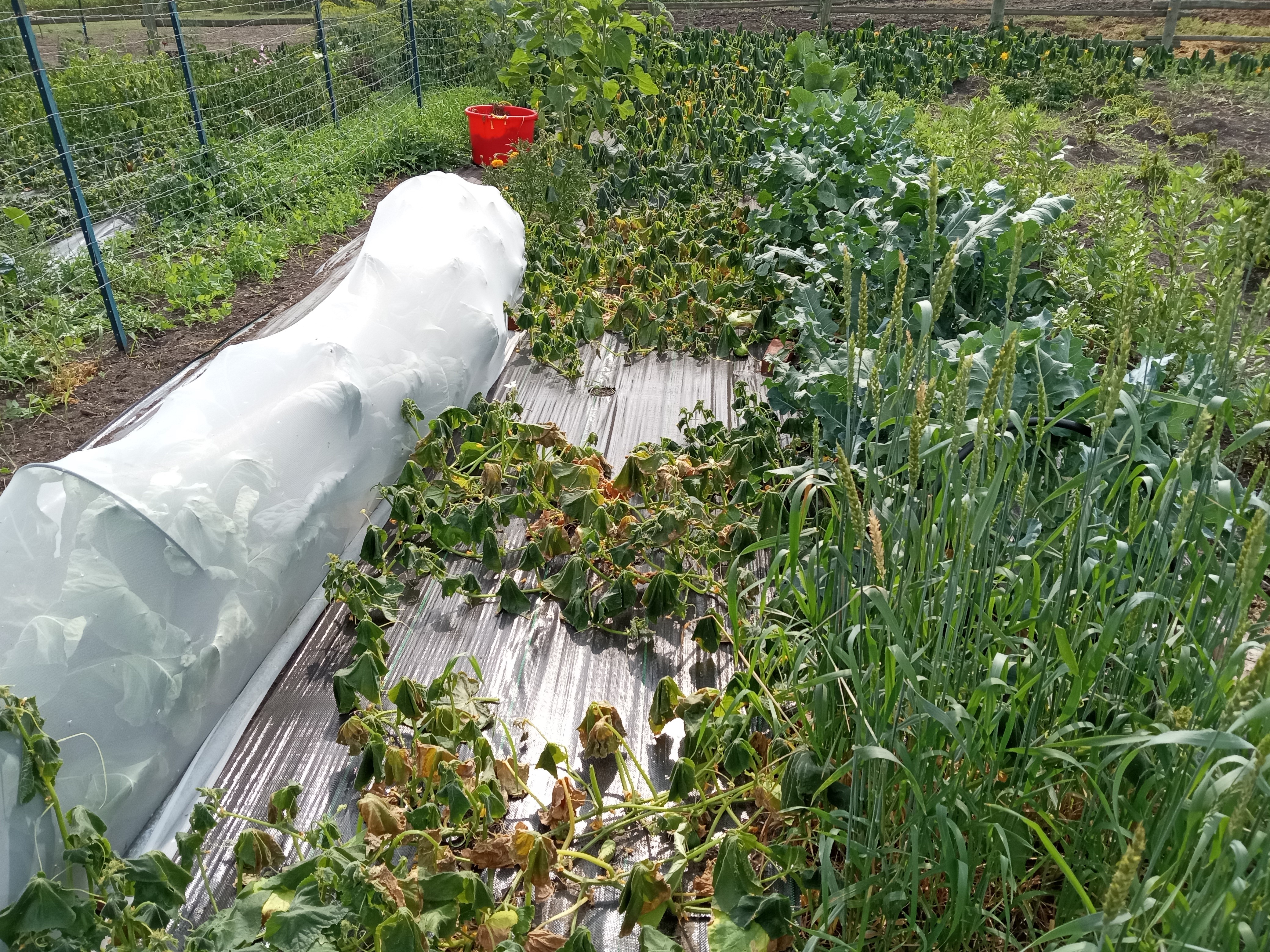
And then came the frost on the morning of September 3! It was not supposed to get that cold and so nothing was covered. And it froze fairly hard. The top leaves on all the squash were black as was all the frost tender plants.
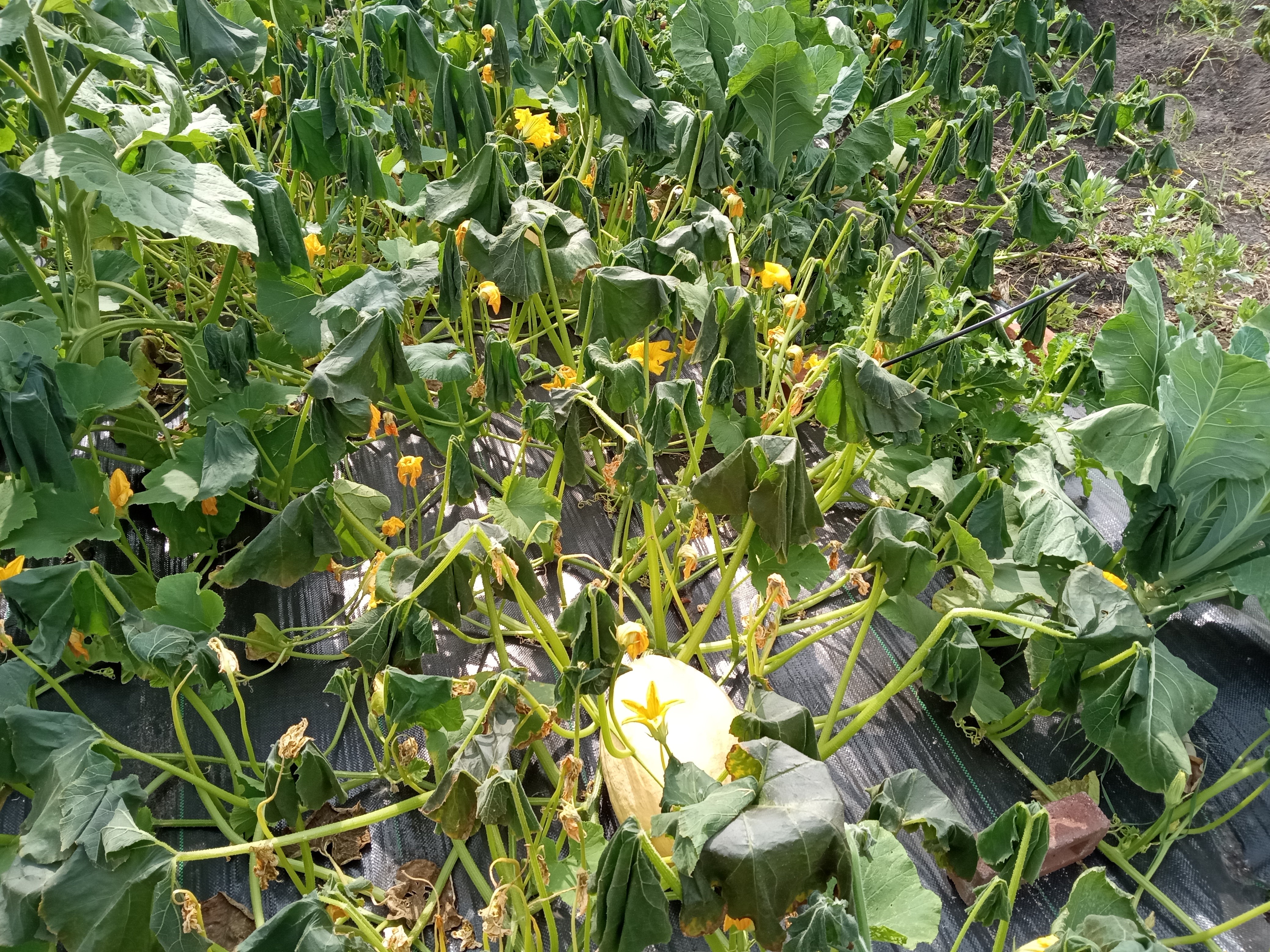
The squash in the fruit tree guild were not hit as hard due to being higher up on the slope. Still damaged though.
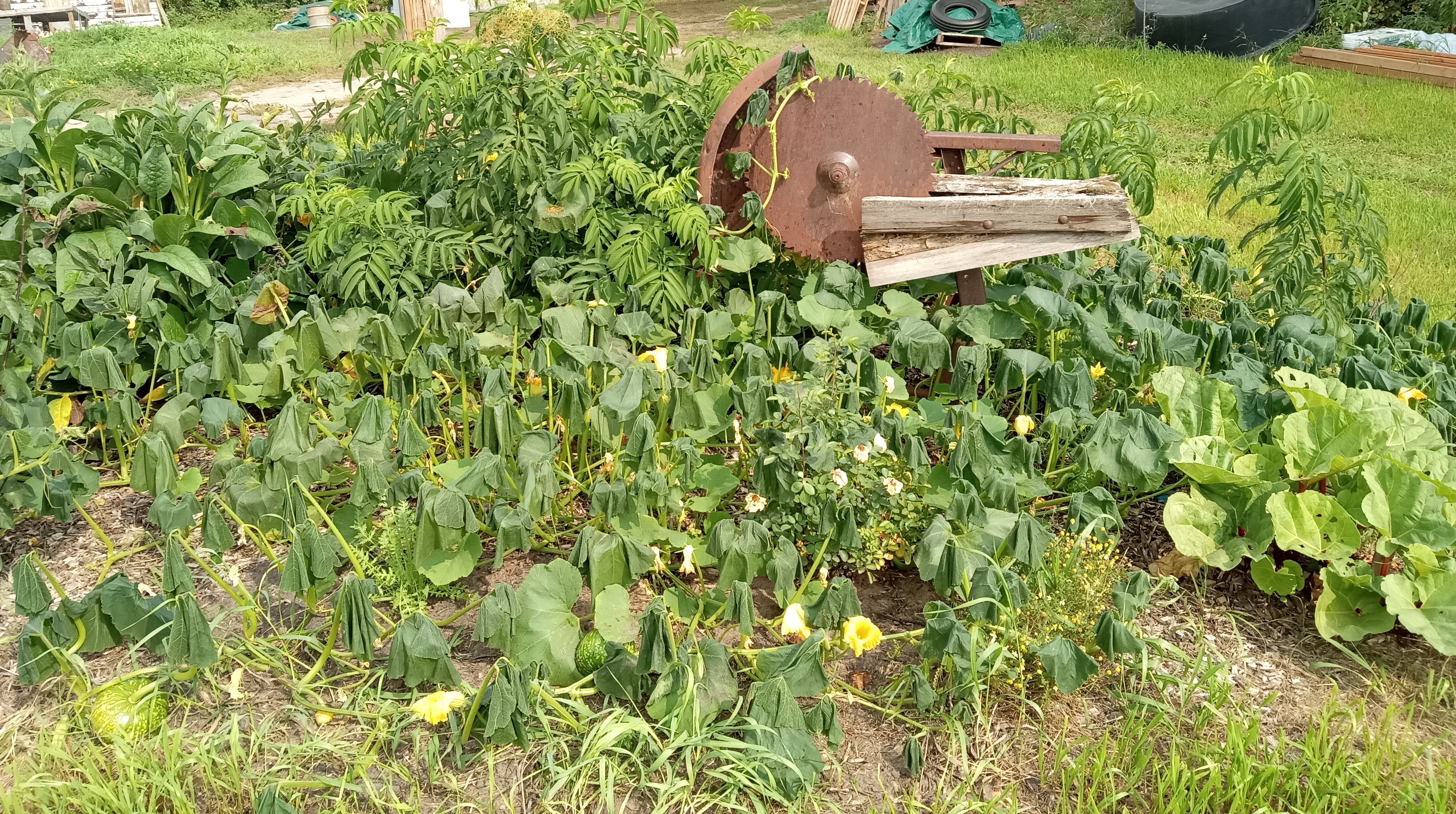
Because the tomatoes are trellised and/or between rows they did not seem to be hit as hard. But you can tell that they, and the melons, were definitely hit.
The frost tolerant plants were unaffected though. Can't say the same about the cucumbers.
Interesting summer garden - After the frost
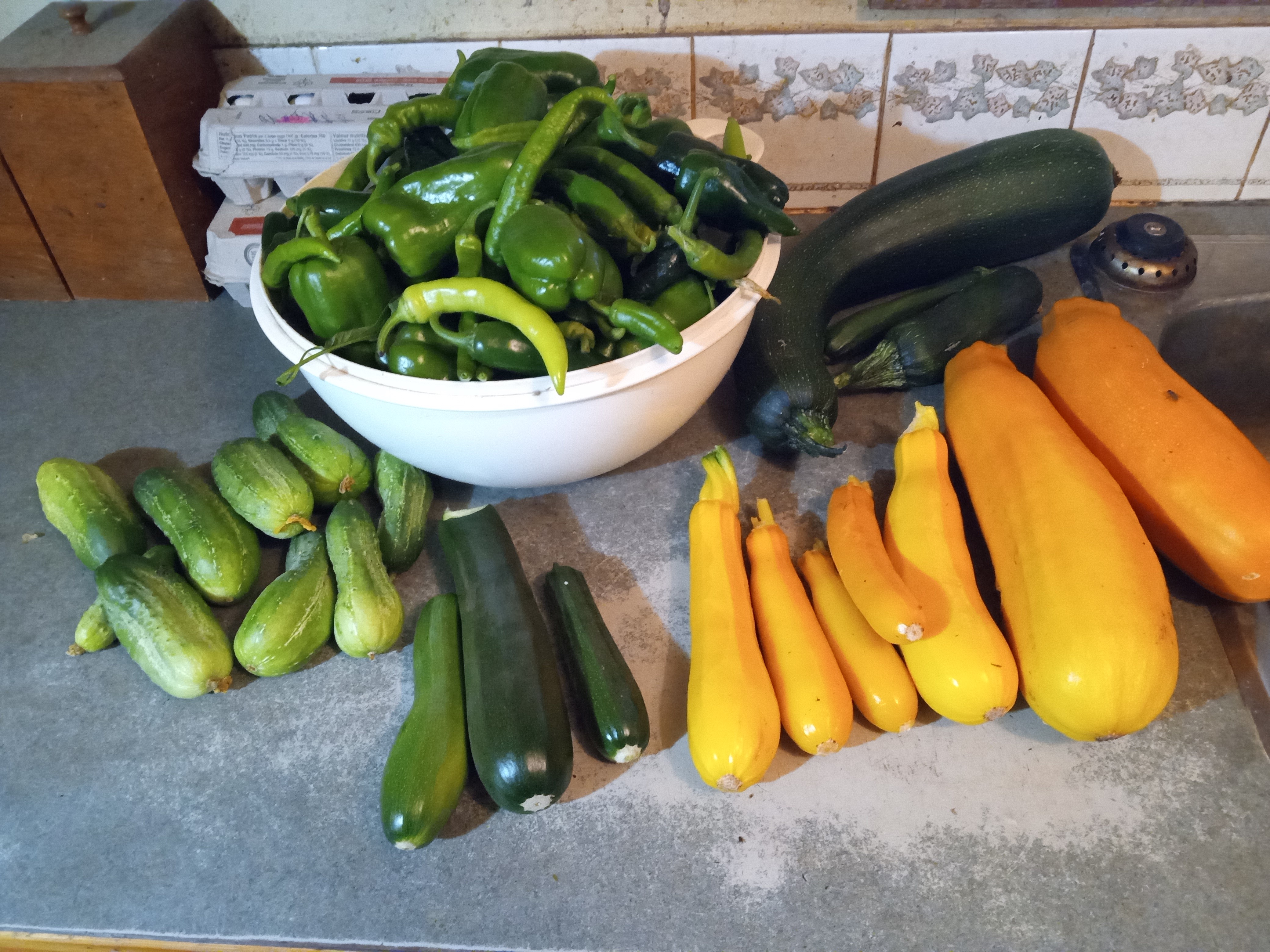
As the peppers were done, I picked what was ready and was able to put some into the freezer. I was also able to find some zucchini and cucumbers that were not affected.
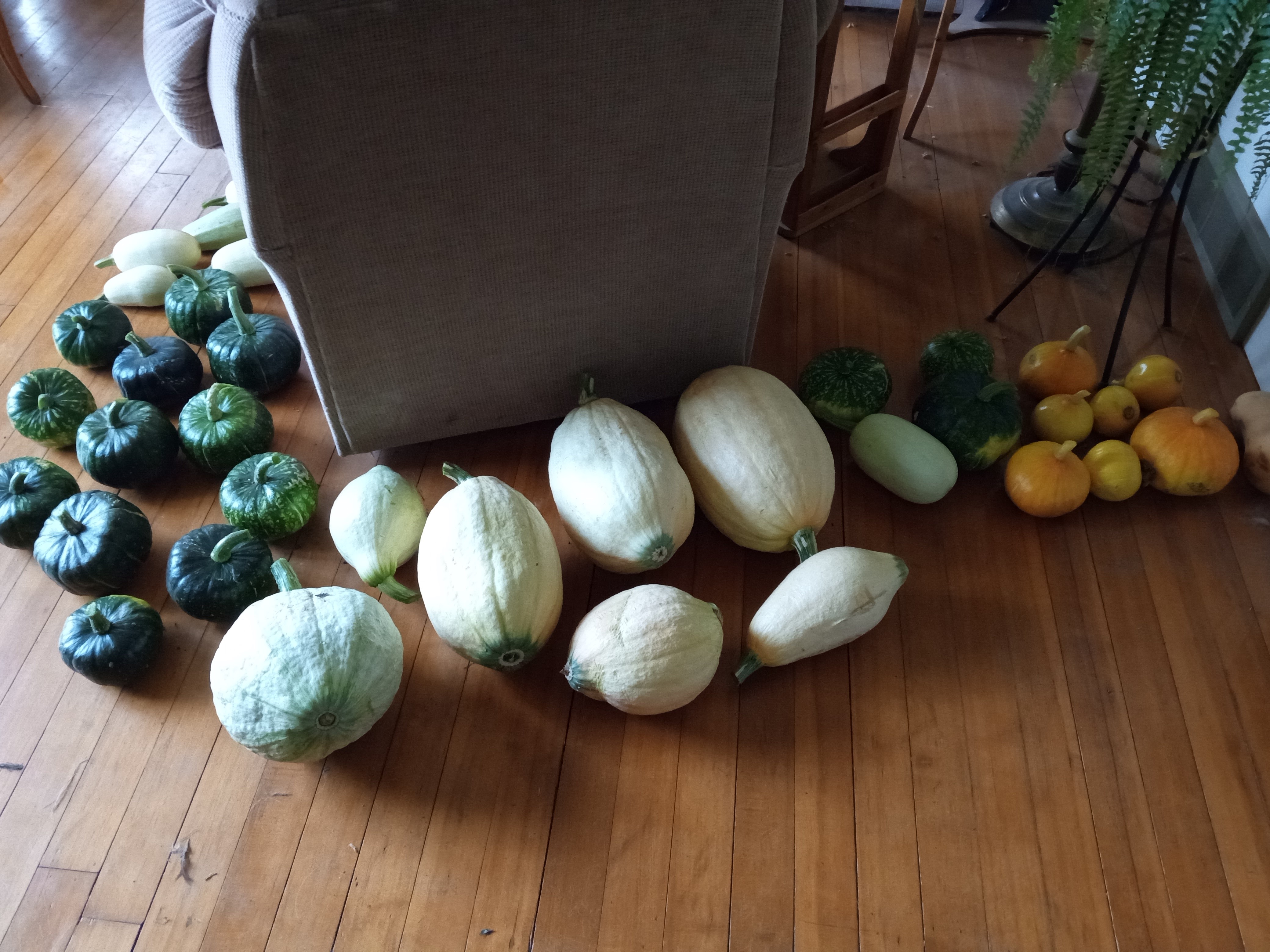
Because it was supposed to freeze again on September 4 and 5th, I decided to pick all the larger squash but decided to leave the rest just to see what would happen.
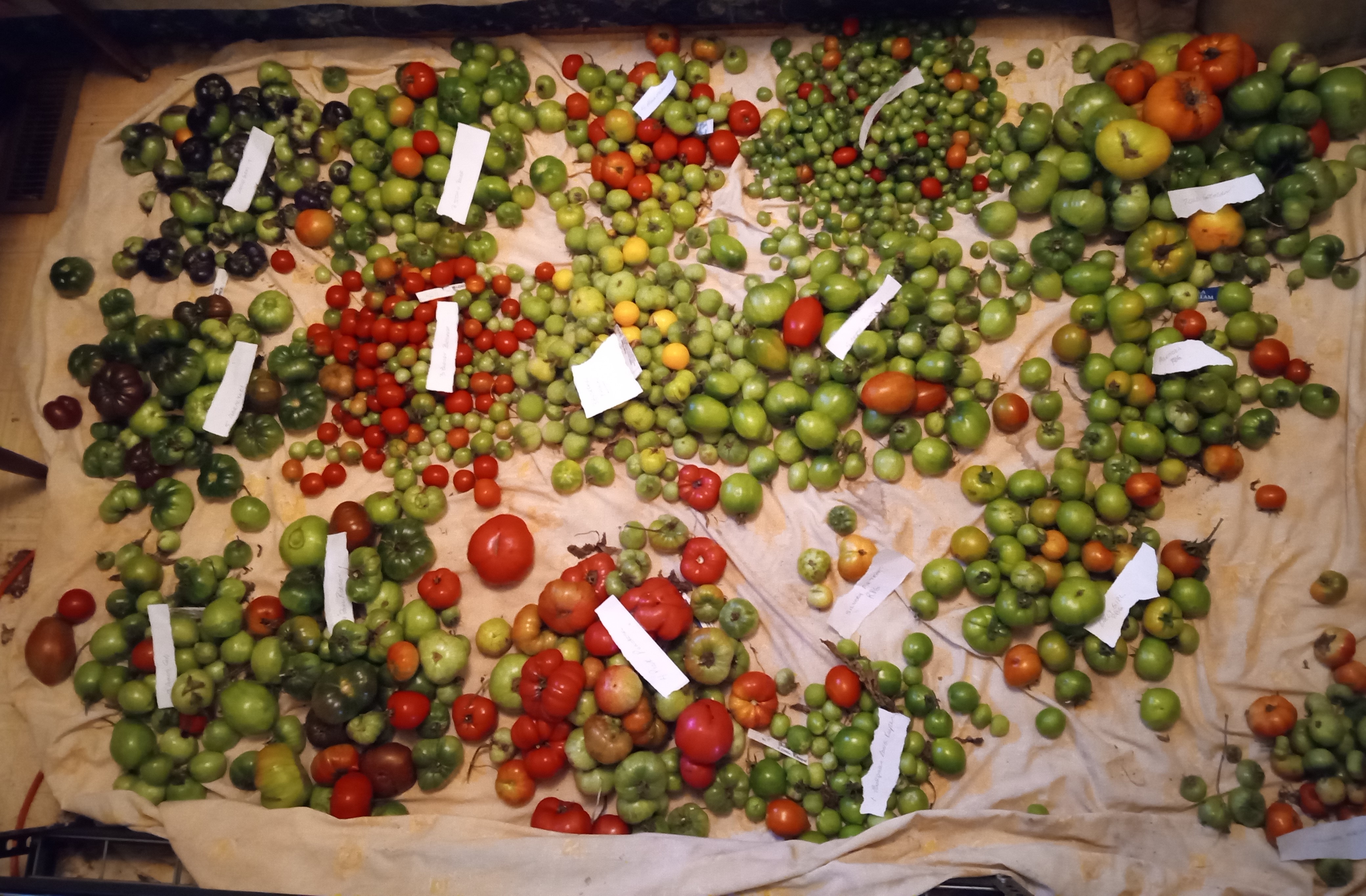
The tomatoes I decided to leave on the vine and to cover for the night of September 4. Although it did not freeze because the clouds rolled in, I left them covered all day on the 5th as it was supposed to clear off and freeze, which it did.
After the frosts the weather warmed and although the tomatoes started to ripen more on the vine, I was getting quite a few green ones just falling off. So on September 17 I decided to pick them all. Certainly not the harvest I have had in the past, but a harvest none the less.
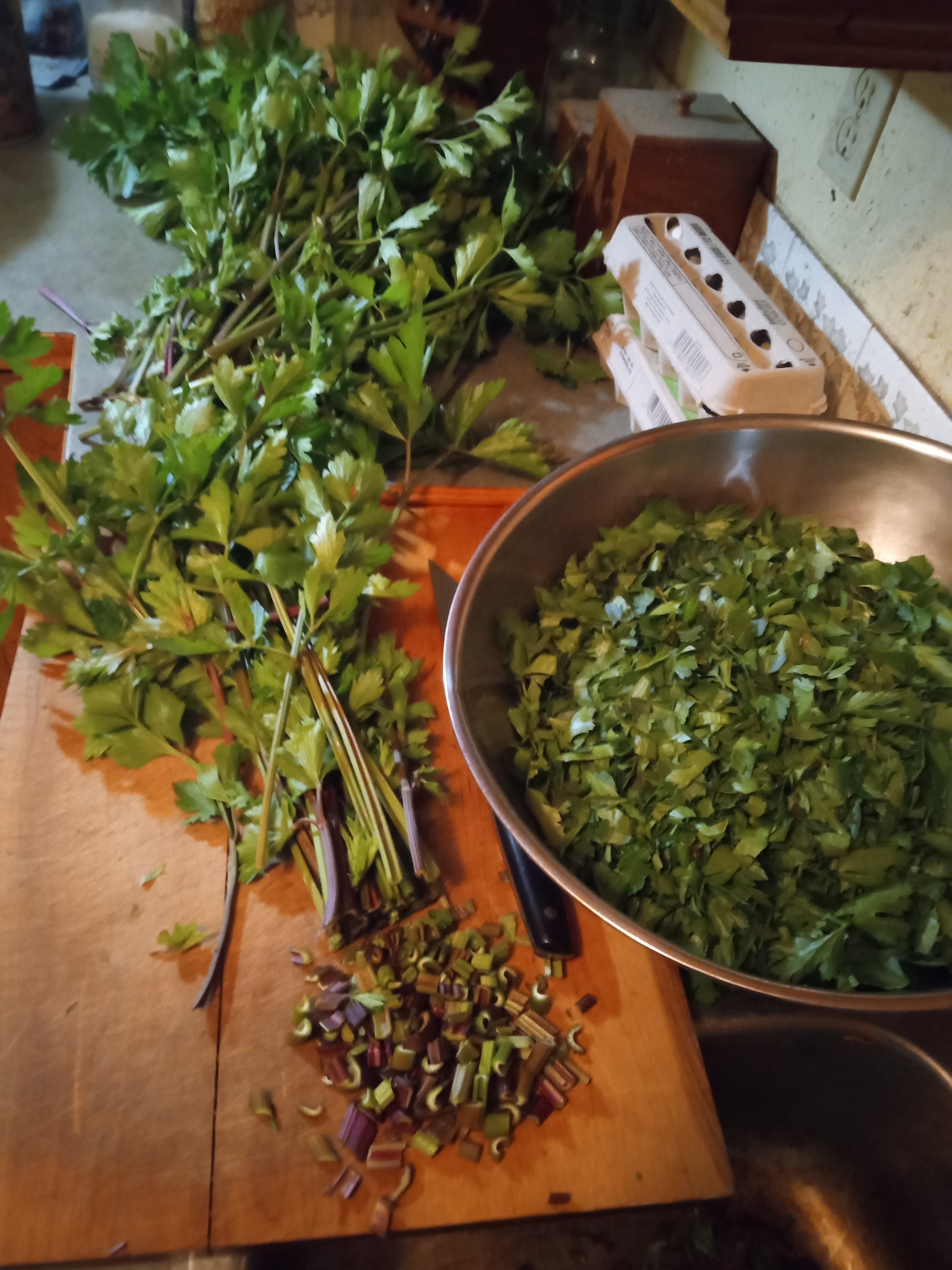
That same week I decided to harvest what celery I had. It had done surprisingly well. Not a single hollow stem.
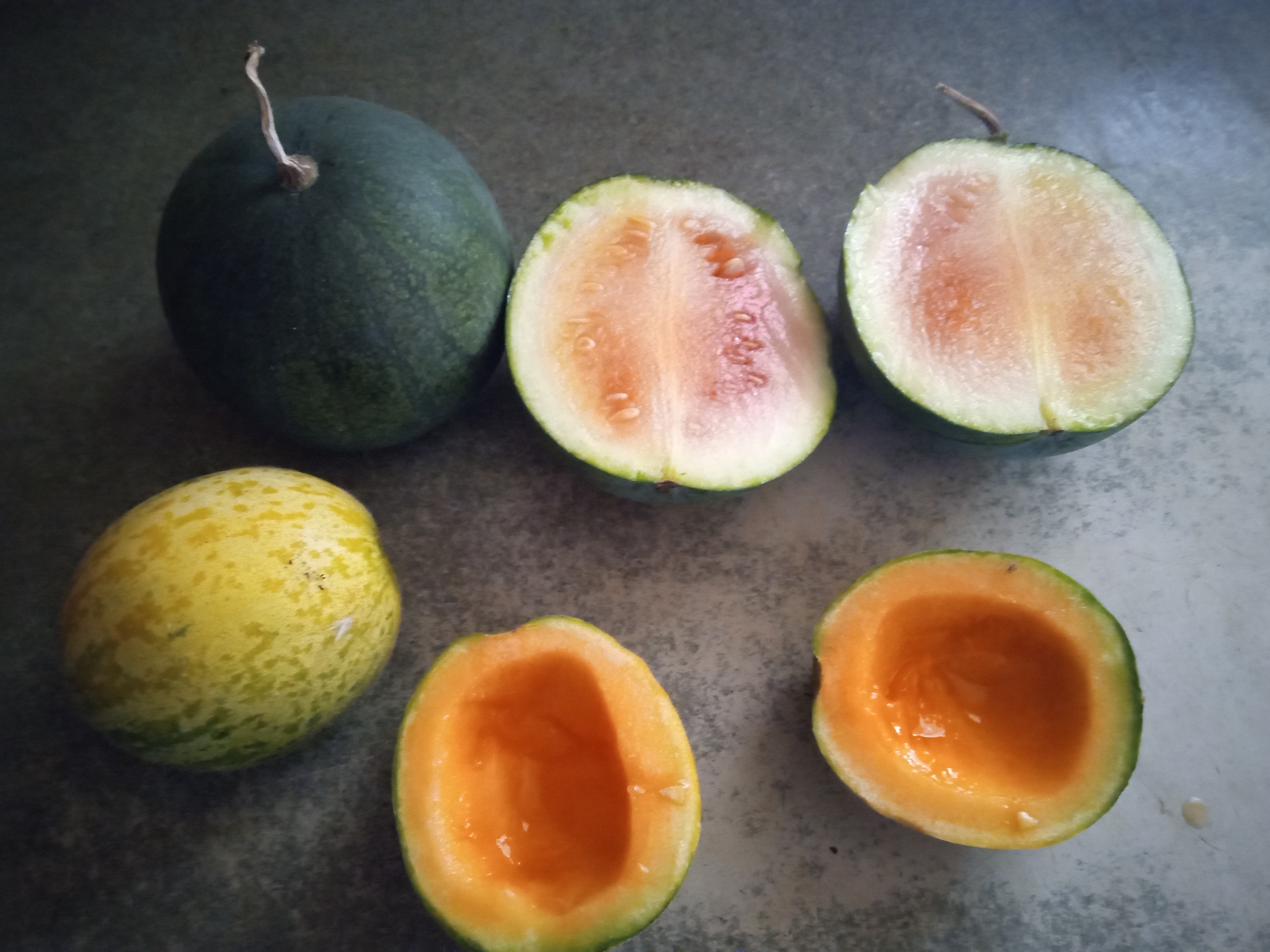
The squash and melons I had left in the garden to hopefully grow and/or ripen were interesting as well. Although the squash did not appear to grow more, they did cure more so I was able to harvest some of the smaller squash that maybe would have not cured indoors as I usually do. And the melons ripened, something I was not expecting. I'll tell you, you certainly can not beat standing in the middle of the garden eating a super juicy cantaloupe that you grew yourself.
The weather held through the remainder of September and into October. With the nicer weather the remaining brassica's continued to produce and the beans, which had only been touched by the frost, filled out a little more. I did give the garden another deep water to help finish off the wheat, beets, turnips, onions and brassica's.
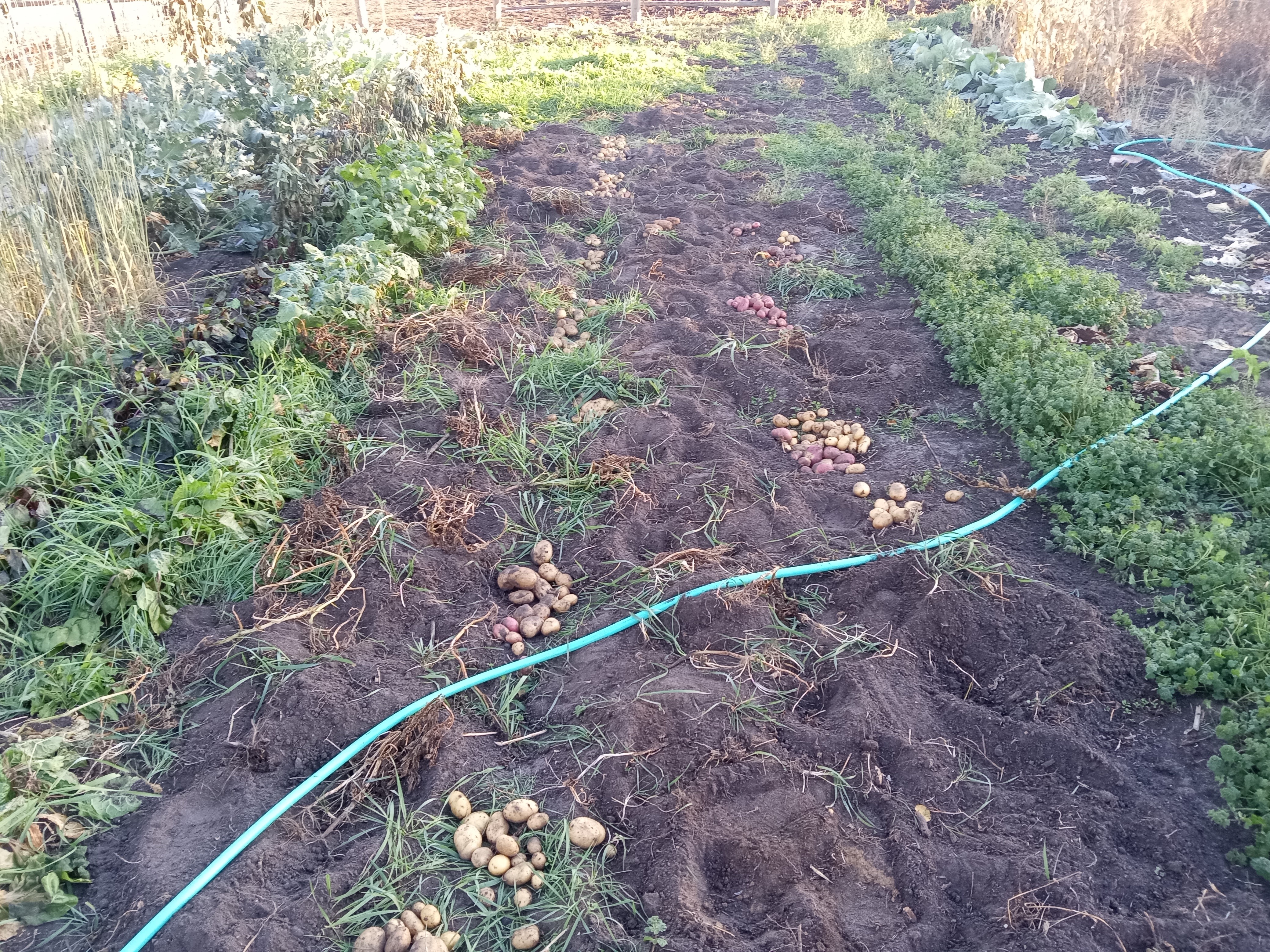
But all good things must come to an end. The potatoes, as they were, were harvested on October 8,
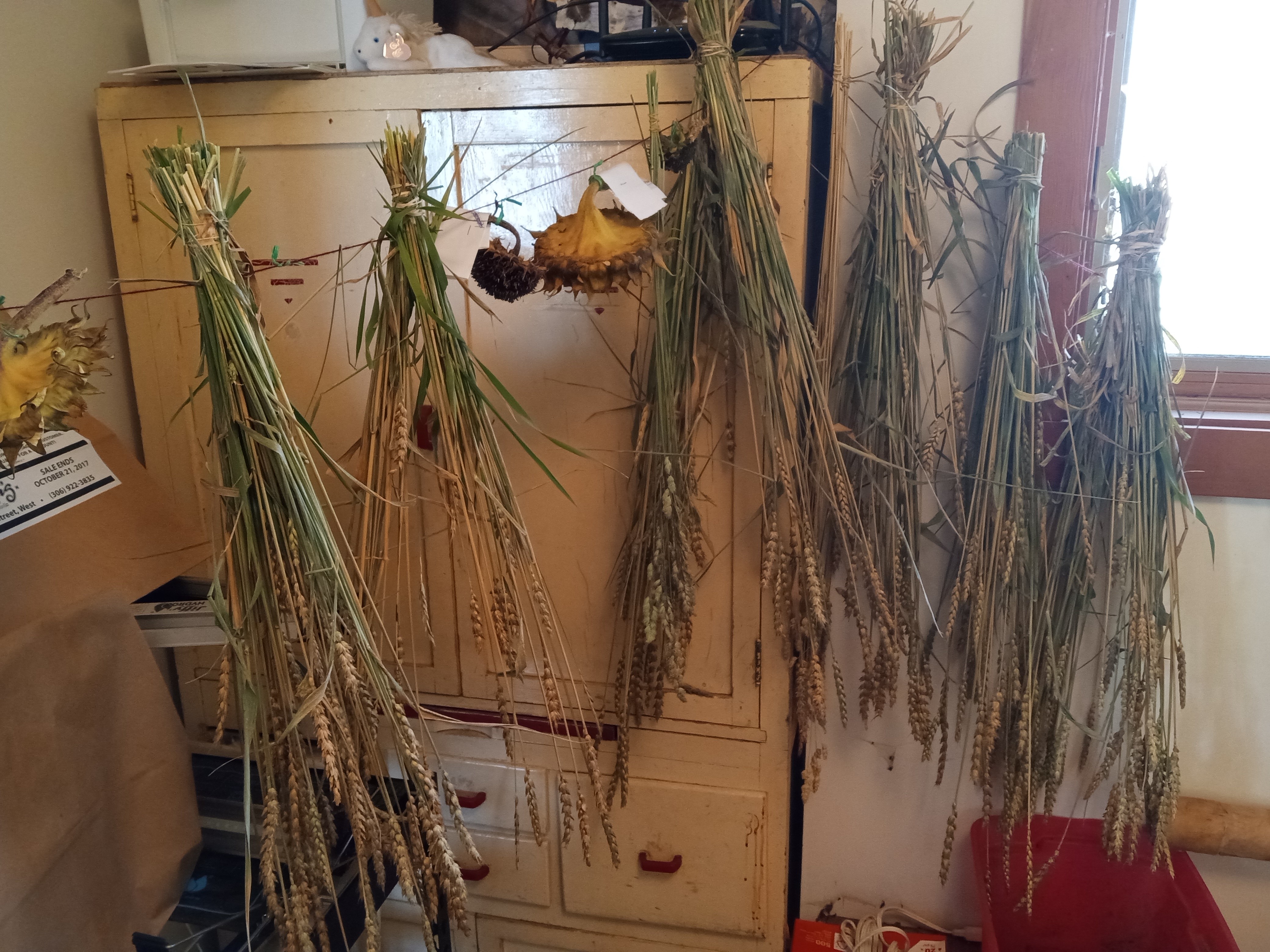
the few stalks of Prelude wheat and Rouge De Bordeoux wheat was harvested and hung to dry,
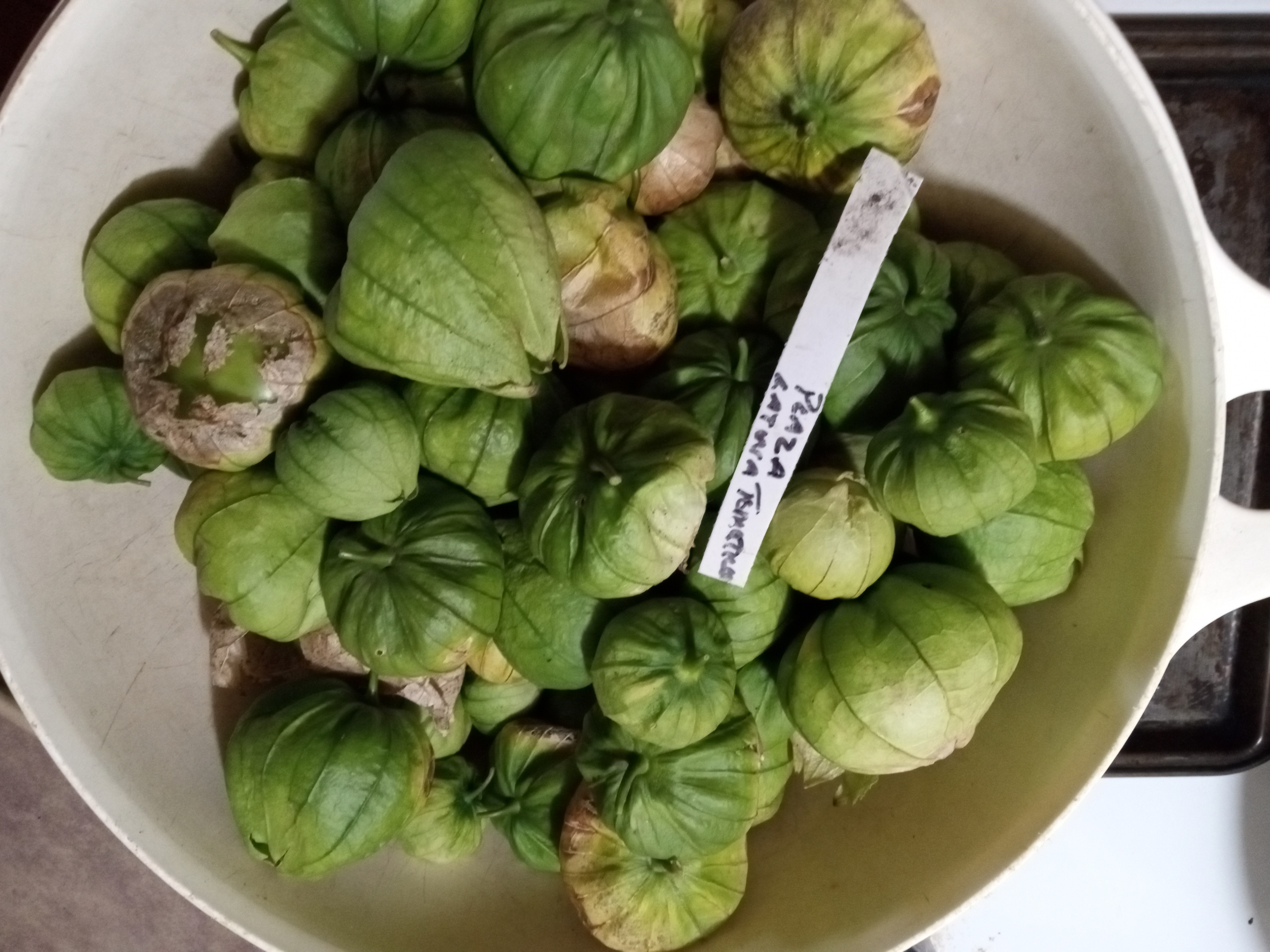
The tomatillos that were ready were picked,
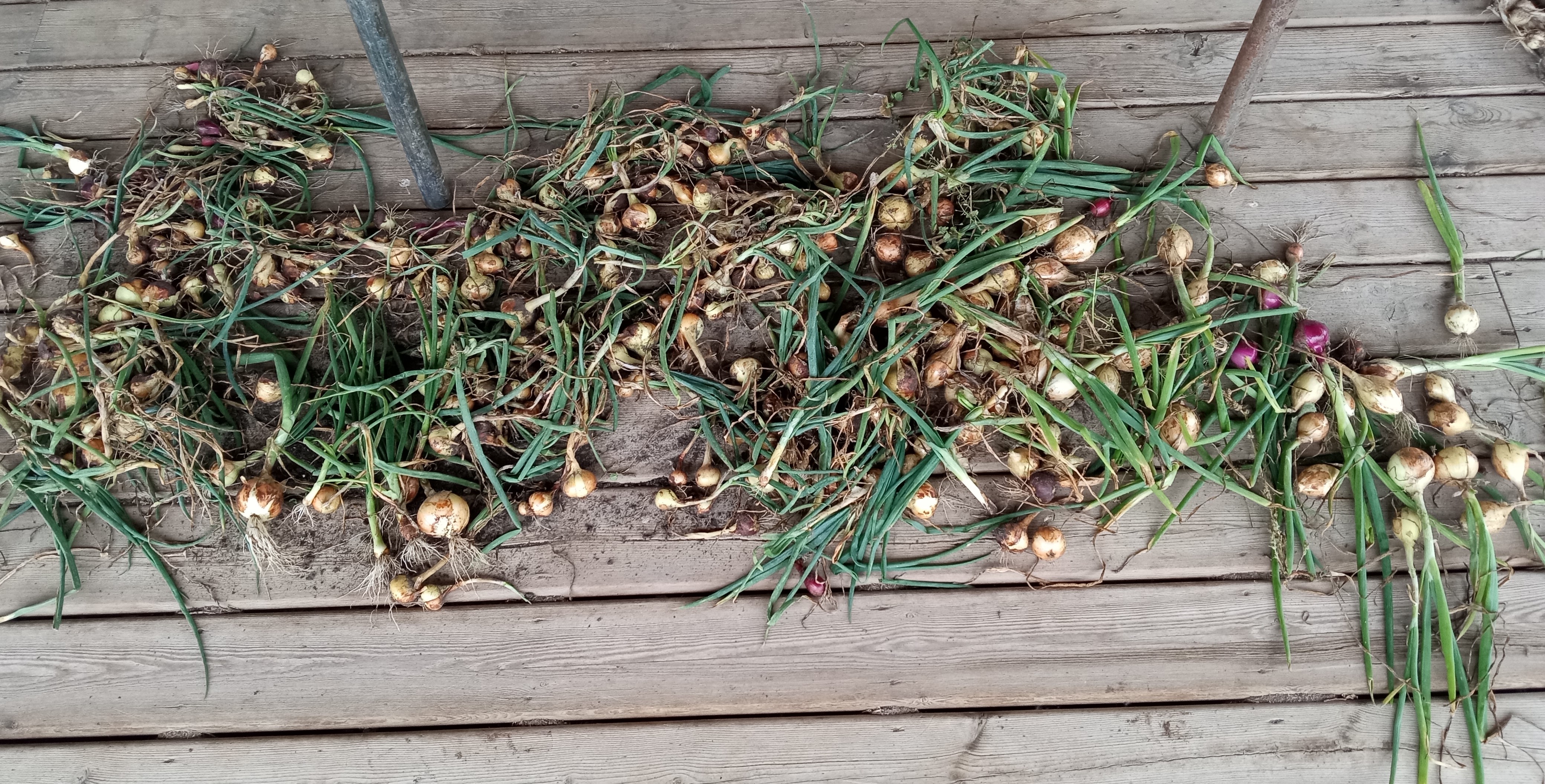
the pitiful onion harvest was brought in,
the last of the cabbage was brought in,
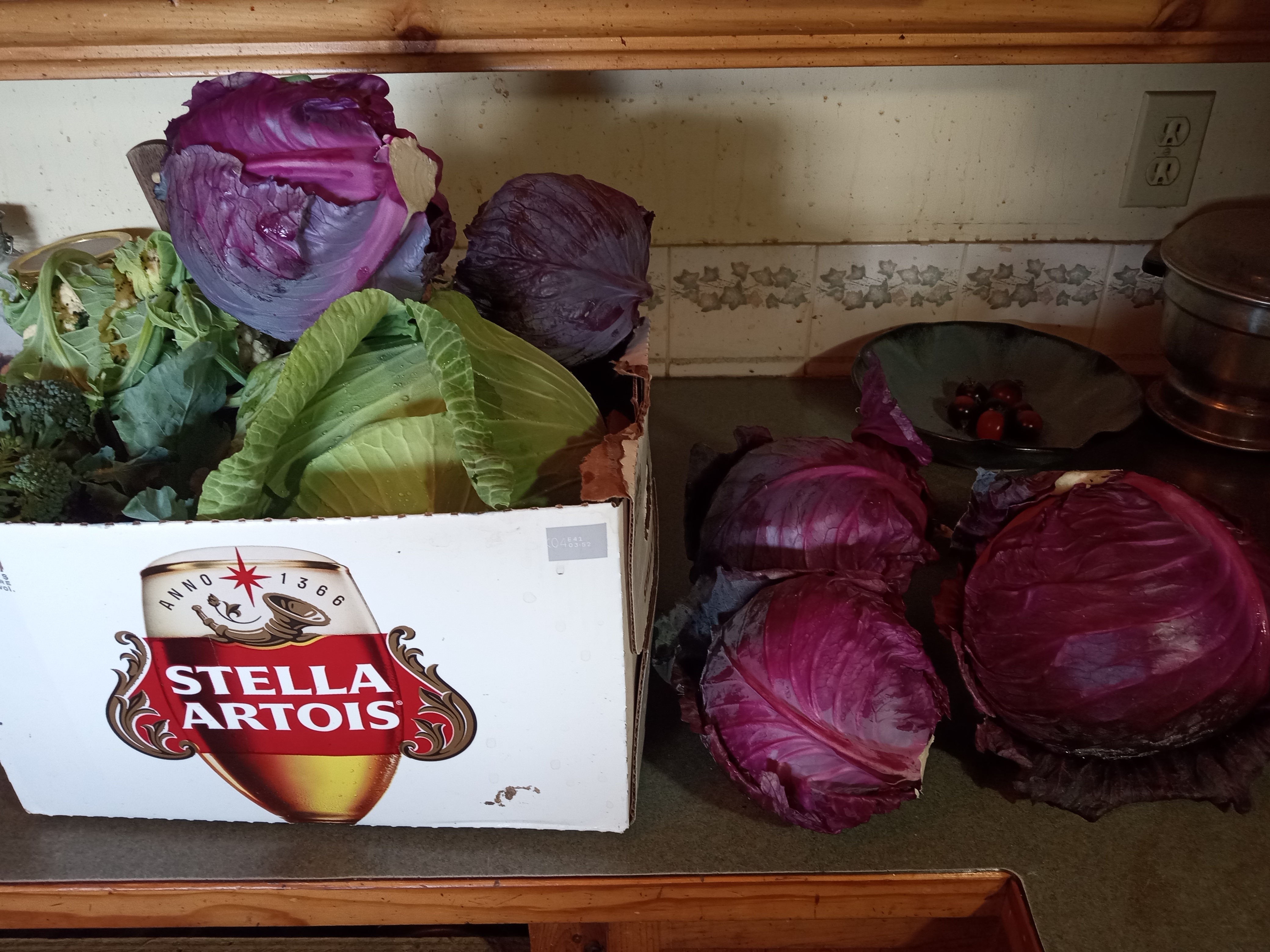
the last of the root crops, including these Black radish (Nero Tonada), were brought in for storage and use in the kitchen,
and the last glimpses of summer were enjoyed.
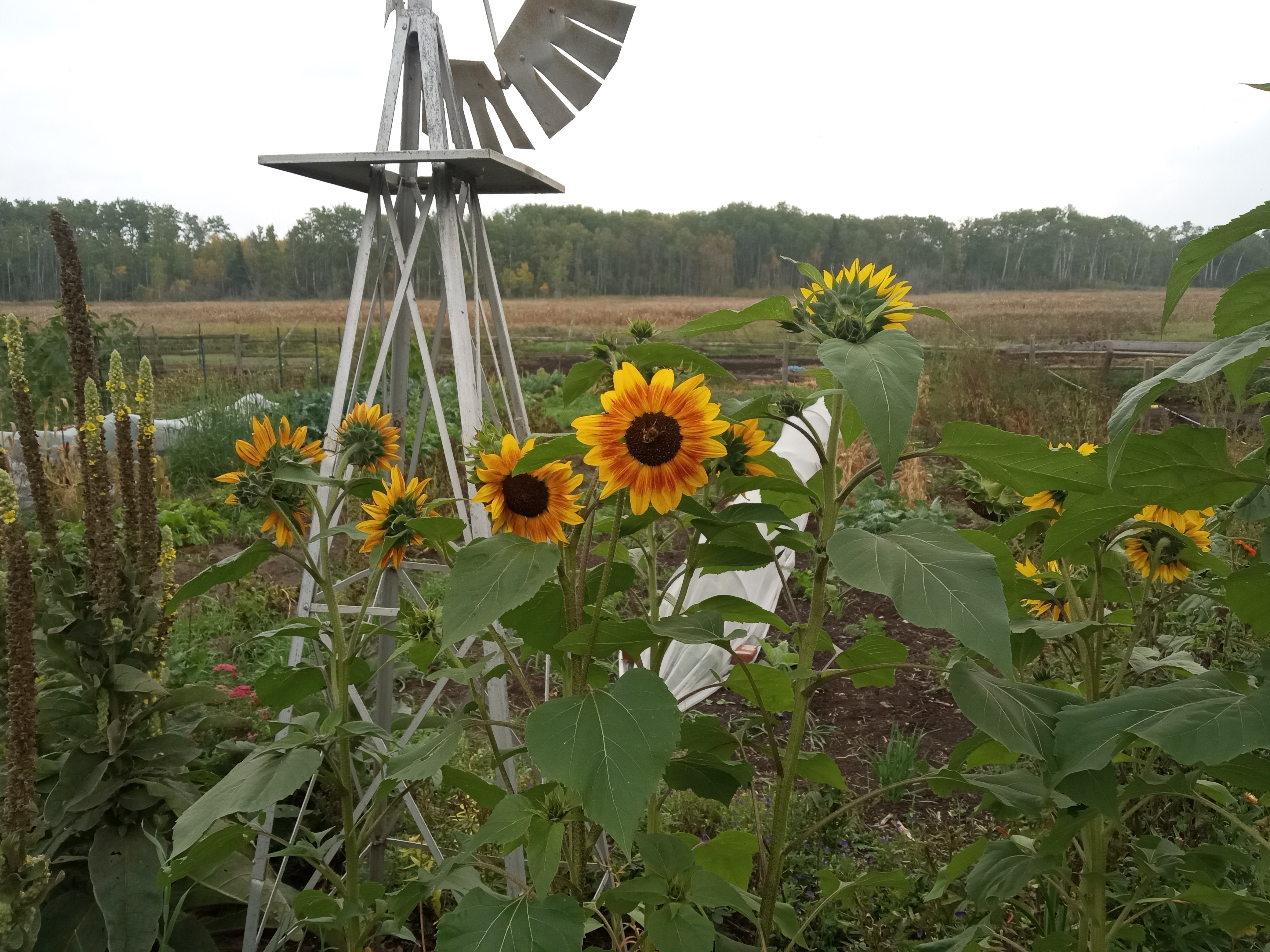
Because as quickly as it began in June, it was over in October, October 10 to be specific.
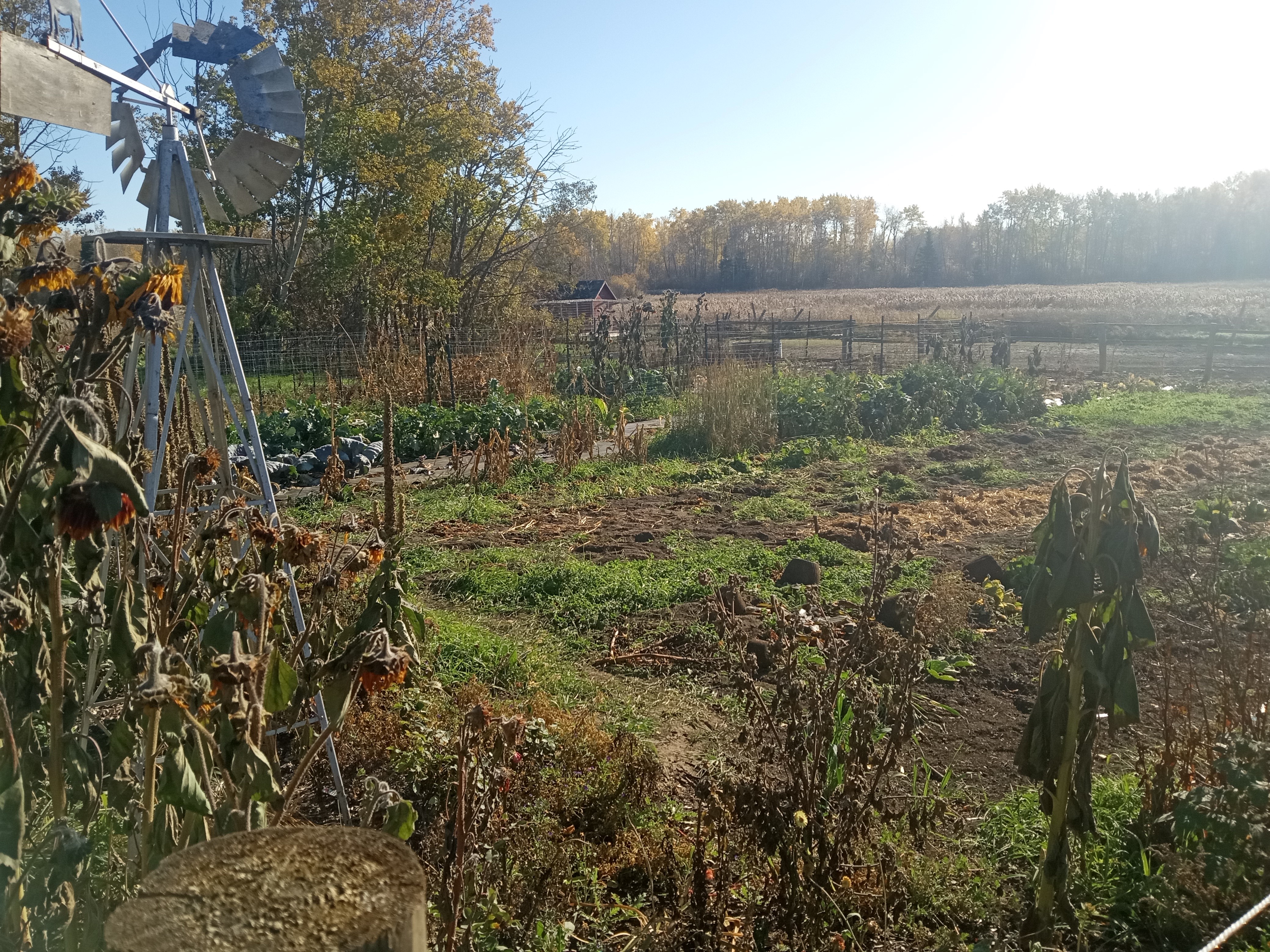
All in all, the garden did not produce as it has in the past. But despite the “interesting” summer, I am amazed at what can be produced in approximately 80 - 85 frost free days coupled with an additional 34 additional growing days. In this short, interesting growing climate, I was able to harvest over 82 kg (181.2 pounds) of squash, over 79 Kg (174.5 pounds) of tomatoes, over 2.2 Kg (4.8 pounds) of tomatillos, 8.9 Kg (19.6 pounds) of small onions, plus cabbage, broccoli, black radish, turnips, beets, dry beans, etc all entered my house to be consumed over the winter. All I had to do was try! It will be interesting to see how I make out when I do the analysis to see if the garden still saves me money as it did in Does Gardening Save Me Money - A Year In Review - 2024 Edition. Stay tuned for that!
In addition, this year I decided to see what I could grow in my three, 4X8 raised beds. Similar to the main in-inground garden and Food Forest Orchard Garden, keeping them watered was almost a full time job. As I was not able to stay on top of the watering which meant that I had to reseed the lettuce in the spring and that all but a couple onion starts wilted and died. But none the less, the beds produced. It is yet to be seen what the numbers will show.
Final Thoughts
Even when not faced with an interesting summer, a garden or gardens can certainly be some work, maybe even a lot of work. And, even if one does not necessarily follow all the “rules”, but finds it in them to simply try, the rewards can be great. With years like this, where everything seems to want to kill the garden, it makes the harvest I am blessed with all the more sweeter. The harvest may not be great and if I was relying solely on it, it would not be enough for the winter. But because as I mentioned at the start, how I plan, plant and preserve I have a buffer from years past that will carry me through. I suppose it is prepping in a manner of speaking, but rather I like the thought that I choose to live this lifestyle prepared. This method of gardening and living certainly helps to reduce the pressure of having a successful garden each year.
And part of living this lifestyle is also already making plans for the 2026 garden. Planning out how I am going to lay it out so that I can put the landscape fabric to use to deal with the brome and quack grass; and planning out what varieties I want to try and what varieties I won't plant again. The garden represents the hope for the future. With everything going on in the world, the garden gives me the solace I sometimes need, it illustrates that despite things being interesting there can still be blessings to be had. It not only feeds me physically, it feeds my soul.
But like all gardens, one has to try and one has to plant the seed to maintain that hope! Although we are going into winter here in Zone 3, there is still seed to be planted. Seed garlic! I have been trialing a number of varieties over the years and on October 21, 2024 I planted over 249 cloves of Red Russian, Music, Persian, Chesnok Red, Majestic, Transylvania and Big Boy varieties. Although the Transylvania variety did not come up at all, the other varieties that did sparingly come up struggled against the grass encroachment and the lack of water. But come August, although being late in harvesting, I was still able to harvest 95 bulbs of garlic. All by investing in hope of the future! They were not pretty as they were over mature but they certainly provided enough seed garlic and garlic for my use.
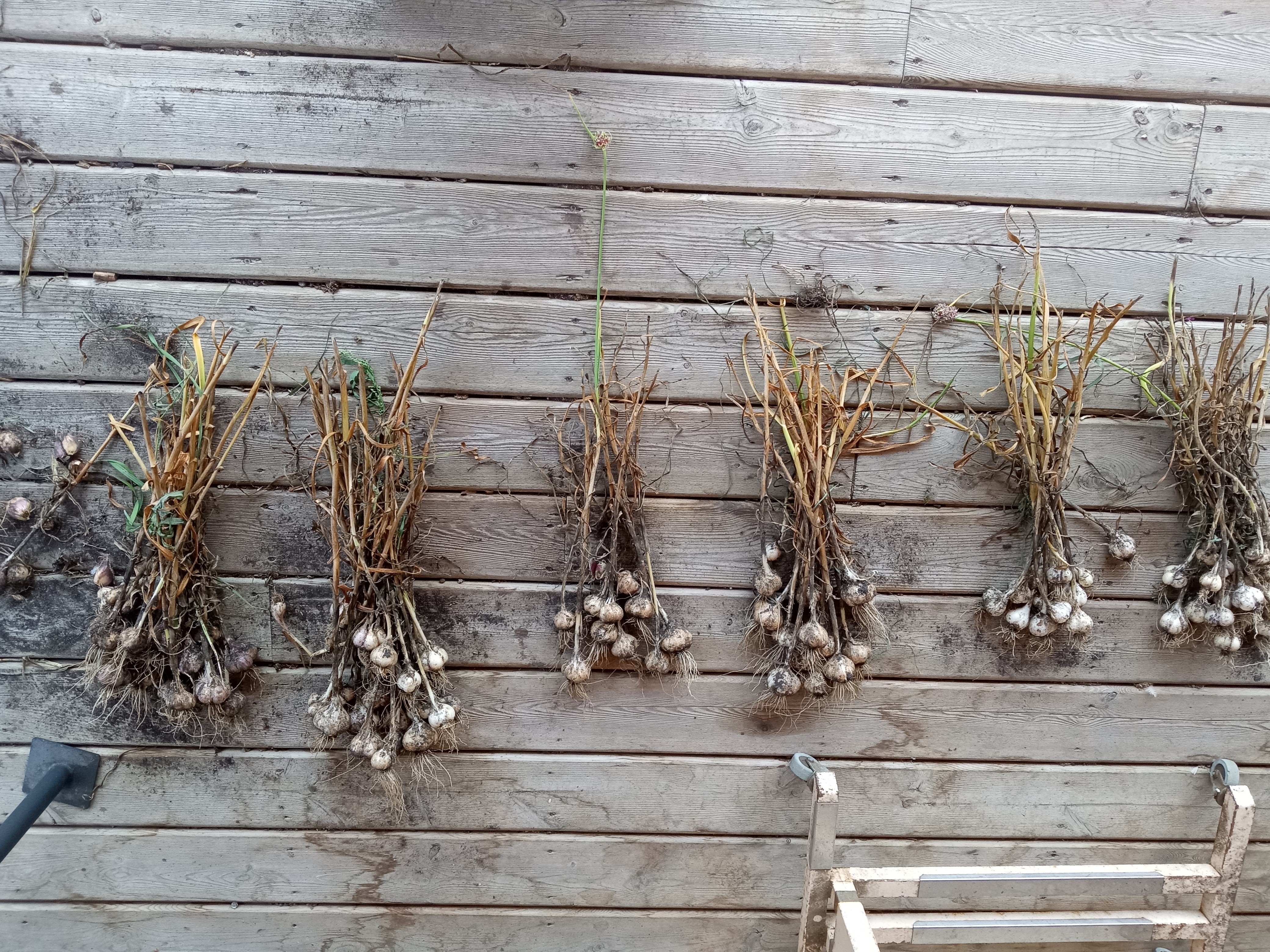
So on October 9, 2025, I took some of the better looking garlic and invested in the hope for the future by planting 156 cloves of the Big Boy, Chesnook Red, Majestic, Music, Persian and Russian Red Varieties for what I hope will be a good harvest in 2026.
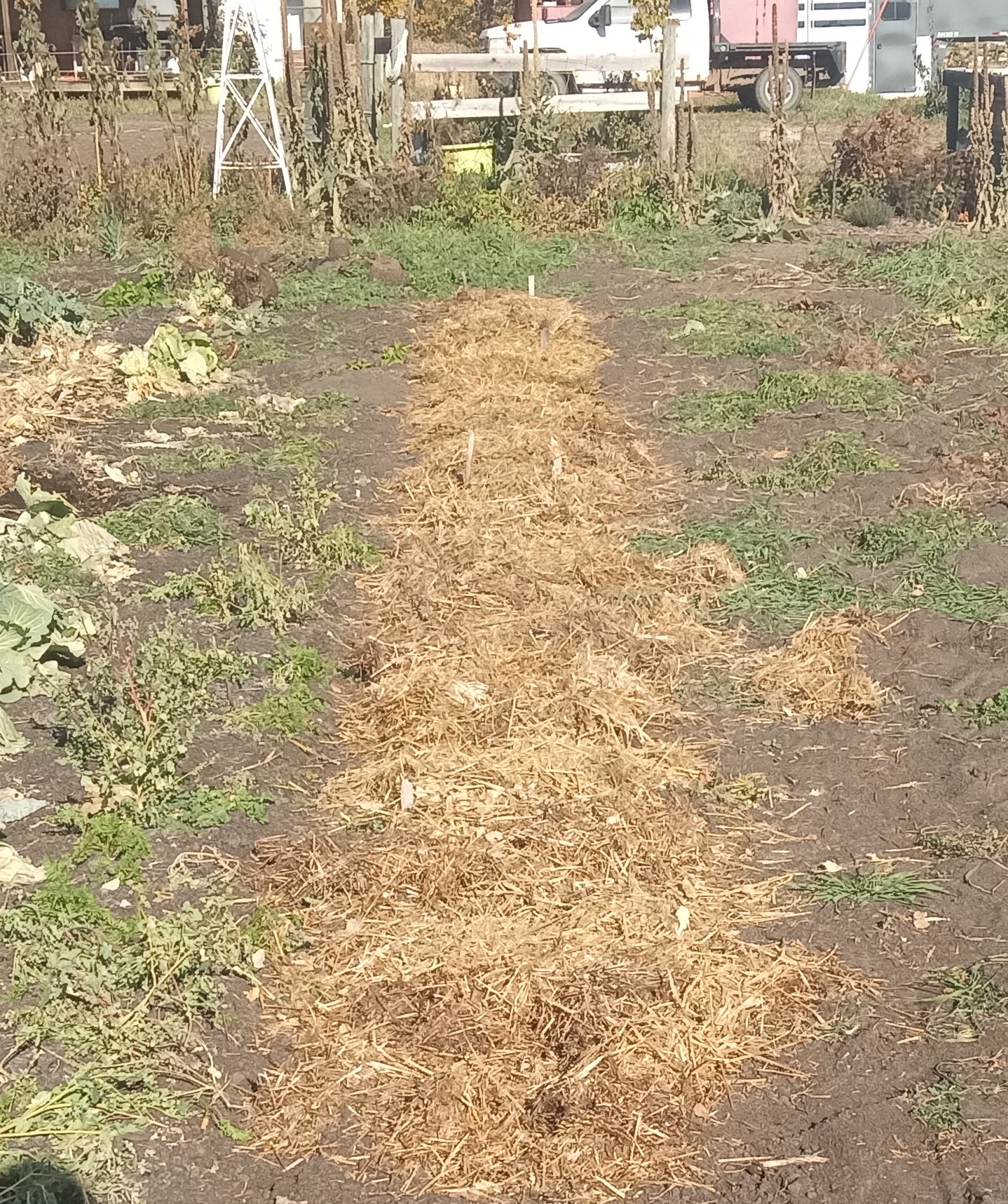
Although the interesting summer comes to a close and winter comes on faster than I would like, tucking that garlic in reminded me that all one has to do is try. It represents hope. There can certainly be learning opportunities but that combination can be stronger than any “interesting” thing that should come along. I hope you are hopeful for the future and are going to keep trying in your garden or a garden.
If you enjoyed this blog, please consider joining the My Boreal Homestead Life community. By supplying your email address at the bottom of the page and hitting "sign up" or by clicking Join the community, you will ensure you get an email notification when I post new blogs to the My Boreal Homestead Life site.
Thank you for joining me on the front porch of My Boreal Homestead Life as we explore this Homegrown, Homestead life, In a Modern World.
Additional Resources
- Seasonal Yard Clean up - Why I don't do much Fall Yard Clean up
- The Tomato Trials - pounds per plant, average fruit size, pH, and more - 2024 in review
- Does Gardening Save Me Money - A Year In Review
- Growing Garlic In Raised Bed Garden For Culinary and Medicinal Use
- Woven Landscape Fabric - A Homemade Woven Weed Fabric DIY project